

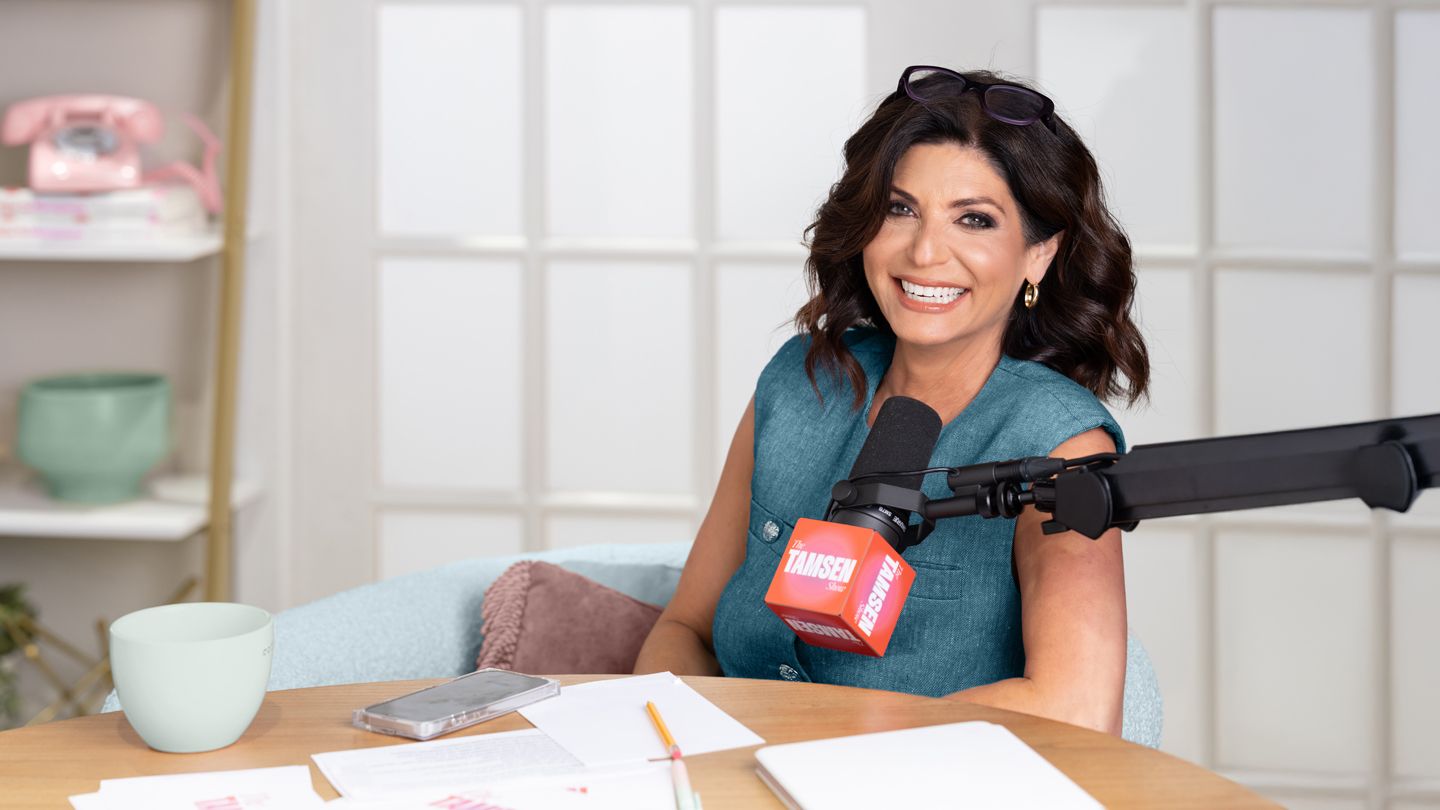
To understand why this decision is so significant — and what it does and doesn’t change for women — Everyday Health spoke with Tamsen Fadal, a longtime journalist, the author of How to Menopause, and an executive producer of the documentary The M Factor. When she was younger, Fadal watched her mom, who died at age 51 of breast cancer, struggle in silence with symptoms of menopause. More recently, she has spent years reporting on the issue, becoming a prominent voice in the movement to improve menopause care.

Culturally, this moment signals that women’s midlife health is no longer a side note. It’s an acknowledgment that we weren’t overreacting or being hysterical — we were underinformed and underserved. That’s a big shift.
What Was Your Reaction to the FDA’s Hormonal Therapy Black Box Reversal?
We’ve been talking for a long time about trying to get the black box removed from vaginal estrogen, so that was the conversation I thought we were going to have. To then see the broader change — and to wake up the next day and see every newspaper, blog, social media post, and podcast with the word “menopause” in it — that felt like a really big deal.
I don’t think we’ve had a moment like that in 23 years, where everyone was talking about menopause at the same time. That’s incredibly important. And alongside that, I think it’s really important that every woman knows she needs to see an educated provider who can help her talk through what’s best for her. That, above everything else, is critical.
What Is the Backstory of the Black Box Warning?
I think most of us grew up with the belief that hormone therapy caused breast cancer. A lot of that traces back to the Women’s Health Initiative in 2002. Many people had never even heard of the study itself; what they saw were the headlines that came afterward.
But what really landed for people in 2002 was fear. The message women heard was: hormone therapy causes breast cancer and heart disease. And that’s what stuck.
What happened next is just as important as the study. Before doctors even had a chance to sit with the data, it was everywhere in the media, and it was misinterpreted. Those headlines were like a siren going off. They told women that everything they thought hormone therapy was helping them with was suddenly dangerous. Overnight, women were pulled off their prescriptions, and many pulled themselves off. Use of hormone therapy went from roughly 44 percent to where we are now, about 4 to 5 percent.
Why Is This So Culturally Significant?
For 23 years, the official message was basically: Be afraid. And then … nothing. There weren’t many answers after that.
Culturally, this moment signals that women’s midlife health is no longer a side note. It’s an acknowledgment that we weren’t overreacting or being hysterical — we were underinformed and underserved. That’s a big shift.
Emotionally, women have felt afraid to talk about this. They weren’t sure who to talk to, or whether they were making too much of their symptoms. I think many of us have finally been heard, and that’s a big turning point — not just for women who are on hormone therapy right now, but for the generations coming up behind us. Those younger women will be able to say, “I remember when this happened, I remember this conversation, I remember what changed.”
My hope is that doctors will be more educated than ever before, and that they won’t have to go hunt down their own education in this area. Getting menopause into medical school curricula in a real, consistent way is the next step we have to take.
Based on Your Experience in Midlife, How Did That Initial 2002 Study Impact Women?
I can’t believe it’s been 23 years, but we heard the same patterns over and over. Women were told, “This is just part of aging.” They were more afraid of estrogen than almost anything else. At the same time, they were also afraid of not sleeping for years, of gaining weight, of hot flashes, of brain fog.
Many women felt ashamed to even ask about hormone therapy. They worried it meant they couldn’t “tough it out” or get through the suffering on their own. And then you add the reality of a 10-minute visit. A lot of women were told, “Everyone goes through this, you’ll get past it.” That’s not all doctors, but it’s a lot of them.
Behaviorally, there was a lot of avoidance. Women avoided care, avoided asking questions, and often didn’t even know what questions to ask. We avoided the word “menopause” altogether. “Perimenopause” wasn’t a word most people ever heard.
The good news is that now we do have women asking questions, and they have the ability to share their experiences. We didn’t have social media in 2002 where women could openly say, “Hey, this is happening to me, too,” or “This worked for me and that didn’t.” That sharing was happening even before the black box was removed, and I think it’s a big part of this moment. Whether someone is describing “good” symptoms or really difficult ones, at least they’re getting information and connecting with others.
What Has the Reaction Been to the FDA’s Reversal?
A lot of women felt relief. A lot felt confusion and curiosity. And many felt all three at once.
The relief comes from the fact that the decision acknowledges nuance. It says this isn’t a one-size-fits-all situation. The confusion comes from the reality that the story we’ve been told for 23 years was flipped in what felt like a single day. Many women didn’t realize this conversation had been going on among experts for a long time.
Now the big questions we’re getting on social media are: “Does this mean it’s safe for me?” “What if I wasn’t offered hormone therapy before?” “What about vaginal estrogen versus the patch?” Women are leaning in to much more specific questions: “What type of hormone therapy should I be using? Is it too late for me to start? If I’ve had breast cancer and I’m in remission, is there anything that might be appropriate for me?”
So the questions are becoming more individualized, which is exactly what we need. And I don’t want to leave men out — men are leaning in to this, too. You really couldn’t miss the news, and it’s a good thing that men are now part of the conversation.
How Do You Think This Will Impact How Women Approach Menopause Care?
I think advocacy is more important than ever. I actually just released something called the Menopause Action Plan so women can have an advocacy framework not only in the doctor’s office but in their own communities. That was part of what we wanted the film [The M Factor] to do as well: to give women something they could use to start conversations with each other.
This change doesn’t make advocacy less important. If anything, it gives women more leverage. Until [a few weeks] ago, a woman could walk into her appointment armed with all the information she had gathered, but that black box label still hung over the conversation. You can understand why a clinician would be afraid to prescribe, or a woman would be afraid to take, hormone therapy.
Removing the black box, while still acknowledging risk, gives women permission to say, “Okay, here are my individual risks, here are my symptoms, here are my options — and here’s what I’m going to decide to do for myself.” It opens the conversation and, I think, reinforces the idea that doctors need to engage with current evidence, not just old assumptions.
I never want it to be a one-size-fits-all approach; I always caution against that. But at least now we’re partnering around what we know today. That’s a good thing.
Are There Any Highlights — or Lowlights — From Your Advocacy Work Surrounding Hormone Therapy?
I remember Dr. Sharon Malone and Dr. Mary Jane Minkin both telling me they got phone calls the very next day after the WHI headlines [in 2002]. Women were screaming: “Why did you have me on this? What is going on? I’m flushing this down the toilet.” That image really stayed with me — this idea that overnight, people were terrified of a medication that had been helping them.
Another moment was being in a room with Dr. Avrum Bluming. I wrote about this in the book. He asked the women there, “Are you scared about heart disease? Are you worried about this? Are you worried about that?” And then he asked, “Are you worried about breast cancer?” The entire room raised their hands. I’ll never forget that.
It showed me how powerful a single conversation, or a single set of headlines, can be. Someone said to me once, and I never forgot it: “Once that bell is rung, it’s very hard to unring it.” Breast cancer fear is very real, and it’s going to take a long time for many of us to feel truly comfortable, safe, and informed again — and to rebuild trust.
Vaginal estrogen is another area where there’s been a lot of confusion. We tended to lump all types of hormone therapy together, and understanding that low-dose vaginal estrogen is essentially safe for almost all women — and that it can profoundly change quality of life and care — is a really big deal.
How Will This Decision Affect Workplaces, the Media, and Culture at Large?
I think it’s a recognition that menopause is not niche; it’s a public health issue. When we were raising money for the film, I heard over and over again: “That’s such a niche audience. It’s such a niche topic.” We heard it from one person after another. Whenever I tell that story now, people groan, but that’s really how it was perceived.
My hope is that this decision signals to workplaces, employers, health plans, and policymakers that they have more information now, and that they can act boldly when it comes to menopause support. Up until now, I’ve seen workplaces be very sheepish and timid about bringing this into the open. I’d love to see that change.
I also hope it changes how the media approaches menopause. I was in television news for more than 30 years, and we never talked about it. We covered every other health study you can imagine, but not this one. So I hope we’re revisiting those old assumptions that women’s midlife health doesn’t really matter. Because it does.
What Groups of Women Have Been Most Impacted by Outdated Messaging and Limited Menopause Care?
There are women living in true healthcare deserts with no ob-gyn care, and very limited access to menopause specialists — or to any clinician who feels comfortable treating menopause. At the same time, we have so many clinicians with so little training in this area. That’s across the board, no matter where you live.
We also don’t talk enough about women who go into surgical menopause, or women who have had cancer and are dealing with very specific constraints around hormone use. A lot of the time, they’re not part of the conversation at all.
I often think about my mother and wonder: If she were here today, would she be told, “I hope magnesium works,” or would she be told, “Here are some options for you”? That’s the difference we’re talking about.
I’m hopeful we’ll improve training and open up more access points, and that’s one reason I’m such a big fan of telehealth. It has already given many women access they wouldn’t have otherwise. If we can also bring menopause into the workplace and tie it to insurance coverage, even more women will be able to get the care they need. That’s a really big deal.
What About Women Who Have Been Left Out, Like Those With Hormone-Positive Cancers?
First, I would say: You are not an afterthought in this story, and you shouldn’t be made to feel like one. I go back to my mother again. Would she just be pushed aside, or would someone sit down and talk through her options?
There are evidence-based nonhormonal options for hot flashes and night sweats, and more are coming onto the market all the time. That’s incredible news. There are certain antidepressants, there’s gabapentin, there are nonhormonal strategies for sleep and mood and sexual health. Vaginal moisturizers and lubricants are part of this, too.
I feel like we haven’t put all those options into as neat a package as we have for hormone therapy, but they exist. I’m hopeful we’ll see a lot more research focused on improving nonhormonal options for women who can’t take hormones — and also, where appropriate and safe within oncology guidance, on whether there are any hormonal options that might be possible for some women in remission. Again, that’s where nuance really matters.
What Research Gaps Need to Be Addressed?
There are a few huge ones. Long-term brain health is a big area: What does hormone therapy or the lack of it mean for cognitive outcomes over time?
Cardiovascular outcomes by age and timing of hormone therapy are another. We need more clarity there. I also think we need a much better understanding of the role of testosterone — for libido and mood, which I find really interesting, and for muscle mass.
We need trials that actually reflect the diversity of women in the real world. There’s just no question about that. And we need more research on nonhormonal options as well.
I also don’t want us to ignore the impact on workplaces and social relationships. This isn’t just about prescriptions.
What Else Needs to Change?
I want menopause to be treated as part of standard healthcare, not a side project. That means training primary care doctors, not just ob-gyns. Oncologists and anyone who cares for women also need a basic level of menopause education.
I’d like to see insurance coverage that recognizes symptom relief as legitimate care, not something optional that only matters when things reach a crisis point.
And I want us to expand the story. Menopause is not the end of relevance. It’s a key inflection point in a woman’s life. How she’s supported ripples out into everything — families, workplaces, communities.
I think the real goal is that the next generation of women — and hopefully many of us, too — won’t have to recover from all this fear before they can get care. That’s what we’ve been doing: using so much energy just to get to the starting line, just to move past being afraid. I’d like to see a world where that’s no longer the first hurdle we have to clear.