

:max_bytes(150000):strip_icc():format(jpeg)/close-up-of-asian-woman-hands-using-lancet-on-finger-to-check-blood-sugar-level-by-glucose-meter--healthcare-medical-and-check-up--diabetes--glycemia--and-people-concept-687138912-a99dcf60cffd481ebc89cad0348b89b3.jpg)
Key Takeaways
- There are two main types of glucometers: standard blood glucose meters and continuous glucose monitors.
- Consider factors like size, screen size, and memory when choosing a glucometer.
- Speak with your healthcare provider or certified diabetes educator for guidance on which devices to use.
If you’re in the market for a glucometer (blood glucose monitor), you’ve got choices—and lots of them. Aside from the two main types of glucometers—basic/standard and continuous monitoring—there are dozens of brands and models, each with a variety of features.
Certain glucometers may suit your needs better than others. For example, one may be more advantageous if you use insulin. But whatever you use, regular glucose testing can greatly reduce the risk of developing long-term complications of the disease.
Read on to learn more about the various types of monitors, how they work, and how to choose a glucometer so you can make an informed decision about which one to buy.
Types of Glucometers
There are two main types of devices for checking your blood sugar. These types of glucometers and how they work are different, and choosing what’s best will depend on your specific situation.
The two main types of glucometers include:
- Standard blood glucose meters, used to check your blood sugar at a given moment
- Continuous glucose monitors that check your blood sugar at all times
Glucose meters are available over the counter at drugstores and other stores that sell pharmaceutical products. They can also be purchased online. Some healthcare providers and diabetes educators also stock glucometers.
Basic Blood Glucose Meters
A basic glucometer is a handheld device with a digital screen. It uses disposable test strips treated with chemicals that react to glucose.
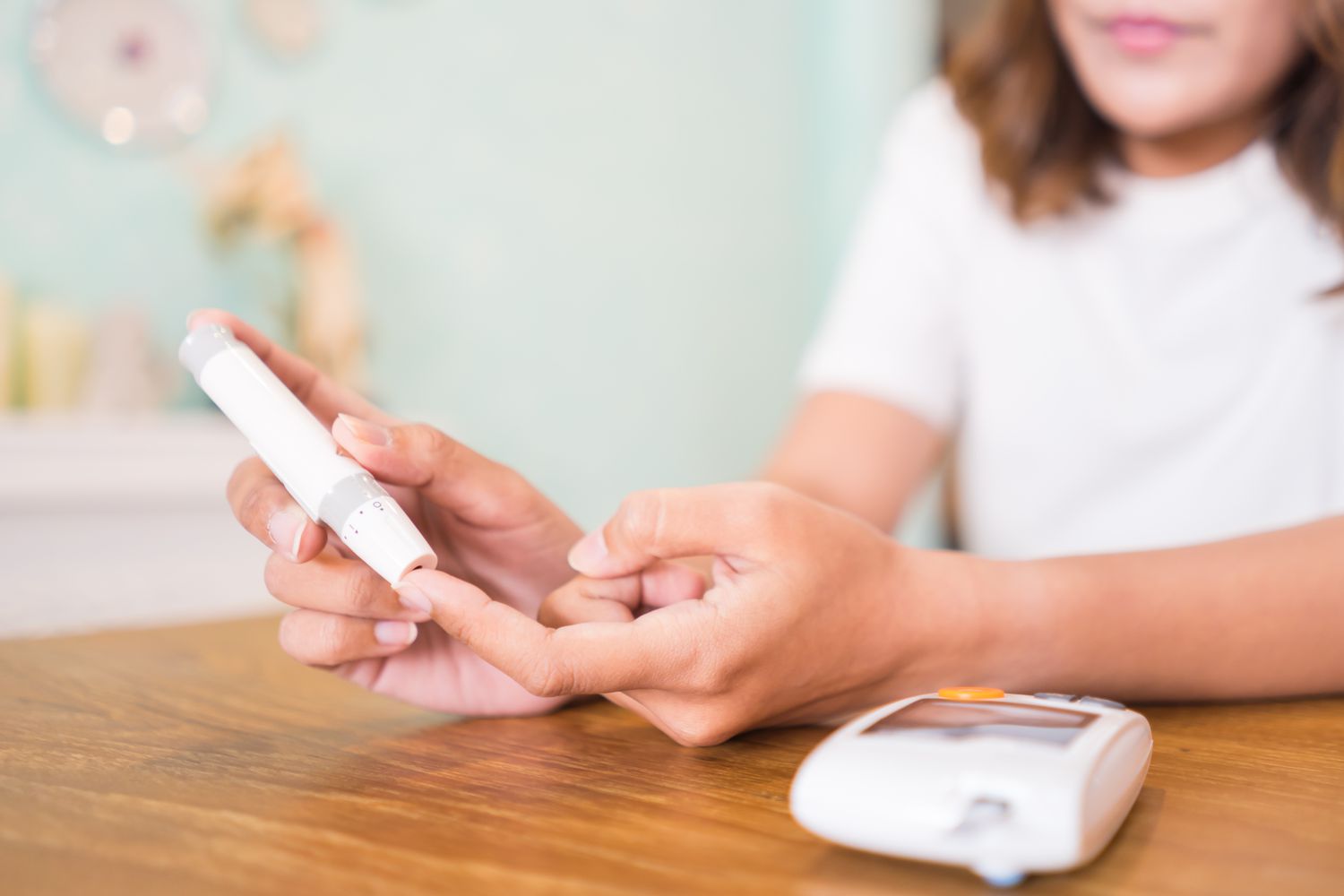
Some glucose meters include a lancing device, which is a tool with a spring-loaded needle to obtain a blood sample through a small skin puncture. You can buy lancing devices and lancets separately, and the lancet size can be adjusted for personal comfort.
To get a blood glucose measurement, a person draws a blood sample (usually from the side of a fingertip) and carefully touches it to a test strip that’s been inserted into the device. The test strip absorbs the blood, and then an electronic circuit detects the glucose on the strip, displaying it as a number on the screen, usually within seconds.
Most meters run on batteries and have at least a minimal amount of memory for storing results. With very few exceptions, most also have the capability to download and store results to a computer.
But there are other features to consider, such as:
- A backlit screen, which makes it easier to read results
- A portlight that illuminates where test strips are inserted
- Wireless Bluetooth capability, so that results can be downloaded to a smartphone app where data can be stored
- Cloud storage capability
- USB rechargeable batteries
- Ability to provide an accurate result with a 0.3-microliter blood sample (the smallest amount possible; particularly advantageous for testing children)
- Voice technology, meaning the meter can “say” the results aloud (a great feature for people with diminished eyesight)
- Alternate site testing, meaning blood can be sampled from a place on the body other than the fingertip, such as the forearm, palm, thigh, or calf, depending on the specifications of the meter
- Measures blood pressure (as well as blood sugar)
- Measures ketones (as well as blood sugar)
Keeping a log of your glucose meter readings can give you and your healthcare provider an overall picture of how your body responds to certain foods, exercise, medicine, and other factors.
Top Brands
American Diabetes Association’s 2020 Consumer Guide
- Freestyle Freedom Lite, Freestyle Lite, Freestyle Precision NEO (Abbot Diabetes Care)
- Advocate Redi-Code Plus Speaking Meter (Advocate)
- Jazz Wireless (Agamatrix)
- Presto, Presto Pro (Agamatrix)
- Choice, Choice Basic (Arcadia Group)
- Glucocard 01, Clucocard Expression, Glucocard Shine, Glucocard Shine Connex, Glucocard Shine XL, Glucocard Vital (Arkray)
- Contour Next, Contour Next EZ, Contour Next Link, Contour Next Link 2.4, Contour Next One (Ascensia Diabetes Care)
- CVS Health Advanced Blood Glucose Meter, CVS Health Bluetooth Glucose Meter (CVS)
- Dario Smart Glucose Meter (Dario Health)
- Diathrive Blood Glucose Meter (Diathrive)
- Fifty50 2.0, Fifty50 2.0 Sport (Fifty50 Medical)
- Fora D40D 2-in-1, Fora D40G 2-in-1, Fora G30A, Fora GD50, Fora MD, Fora Premium V10 & Fora Premium V10 BLE, For Premium V12 Voice, Fora Test n’ Go Advance Voice, Fora Test n’Go, Fora Test n’Go Voice, Fora V30 (Foracare)
- GHT Blood Glucose Meter (Genesis Health Technologies)
- Align, Smart Glucomonitoring System (iHealth)
- Onetouch Ultra 2, Onetouch Ultramini, Onetouch Verio Blood Glucose Monitoring System, Onetouch Verio Flex, Onetouch Verio IQ (Lifescan)
- Livongo Meter (Livongo Health)
- Nova Max Link, Nova Max Plus (Nova Diabetes Care)
- Easymax Light, EasyMax NG/LTC, Easymax Voice, Easymax Voice 2nd Generation (Oak Tree Health)
- FortisCare EM66, Fortis Care EMV3, Fortis Care MU, Fortis Care T1 (Oak Tree Health)
- Embrace, Embrace Evo, Embrace Pro (Omnis Health)
- One Drop Chrome (One Drop)
- Prodigy Autocode, Prodigy iConnect, Prodigy Pocket. Prodigy Voice (Prodigy Diabetes Care)
- Accu-Chek Aviva Plus, Accu-Chek Compact Plus, Accu-Check Guide, Accu-Chek Nano (Roche)
- iGlucose (Smart Meter)
- Telcare BGM (Telcare)
- True Metrix, True Metrix Air, True Metrix Go, TrueTrack (Trividia Health)
- EasyGluco, Infinity, Verasens (U.S. Diagnostics)
- Relion All-in-One, Relion Confirm, Relion Micro, Relion Premier Blu, Relion Premier Voice, Relion Prime (Walmart)
Continuous Glucose Monitors (CGMs)
A CGM works through a tiny sensor inserted under the skin. Usually, it’s placed on the abdomen or back of the upper arm. Every few minutes, the sensor measures the levels of glucose in the fluid between cells in the body.
This information is sent to a monitor via a wireless transmitter, or directly to a smartphone or tablet. Many also come with the capability to wirelessly download meter results to a computer or upload them to a care management system.
Examples include:
- Freestyle Libre System (Abbott Diabetes Care)
- G4 Platinum (Dexcom)
- G5 Mobile (Dexcom)
- G6 (Dexcom)
CGM-Insulin Pump Combos
Some CGMs function as both a continuous blood glucose monitor and insulin pump. Test results are sent wirelessly to the insulin pump, which uses the information to calculate a precise bolus dose of insulin that needs to be delivered with meals.
Examples include:
- T Slim Basal (Dexcom)
- Control IQ (Dexcom)
- MiniMed 530G System (Medtronic Diabetes)
- MiniMed 630G System (Medtronic Diabetes)
- MiniMed 670G System (Medtronic Diabetes)
- MiniMed Paradigm Revel (Medtronic Diabetes)
- T:slim X2 (Tandem Diabetes Care)
- Omnipod 5 (Dexcom)
Things to Consider When Choosing a Glucometer
Most of the factors that play into choosing a glucometer relate to practicality and lifestyle.
Size
You’ll be keeping your meter with you throughout the day, so think about how you’ll be carrying it. If you always have a purse or backpack with you, any size glucometer should be fine. But if you plan to carry your meter in your pocket or need it to fit into a small carrying case, then you should shop for a small meter.
Screen size
Meters with very small display screens may not be practical if you have trouble reading things close up. Shop for a meter that has a large backlit display screen.
Memory
All glucose meters have memory, but a few offer minimal data banking (10 to 125 tests). Most record between 250 and 500 tests, with one meter (One Touch UltraSmart) able to record up to 3,000 tests.
Computer compatibility
This is a feature virtually all meters offer, along with the ability to e-mail your test results to your healthcare provider. Keep in mind that some products are not compatible with Apple systems.
Cost/Insurance Coverage
Meters can be purchased from a pharmacy for between $20 and $90; be on the lookout for rebate offers from pharmacies.
But before purchasing one, check with your insurance company (if enrolled in a plan) to see if the cost of the device (and test strips) will be covered. Some insurance companies only provide coverage for particular meters.
You may also be able to get a meter for free from your healthcare provider.
Are Home Glucose Meters Accurate?
Home blood glucose meters are considered clinically accurate if the result is within 20% of what a lab test would indicate. For example, a glucose meter result of 100 milligrams per deciliter (mg/dL) could vary between 80 mg/dL and 120 mg/dL and still be considered accurate.
All home glucose meters measure whole blood, but newer versions automatically convert the result into plasma results. The instructions that came with your glucose meter should tell you whether your meter is calibrated for whole blood or plasma results. You also can find out by contacting the manufacturer’s customer service.
To measure the accuracy of your meter, take it with you when you have a lab glucose test and check your blood immediately after. To ensure the most accurate results, ask the lab to process your blood sample within 30 minutes.
In 2018, the Food and Drug Administration (FDA) released updated recommendations for blood glucose meters, including specific guidelines regarding accuracy.
According to the FDA, glucose meter values should be within 15% of results obtained from a lab 95% of the time, and within 20% of lab measurements 99% of the time.