

Key Takeaways
- Protein fortified breakfast cereals pack the most protein per serving, but whole grain options deliver more than you think.
- Pair breakfast cereals with cow or soy milk for an extra boost of protein.
- Including protein at breakfast encourages satiety and supports muscle mass and blood sugar levels.
Cereal is often viewed negatively because of its carbohydrate content. But some cereal options can deliver a good amount of protein.
1. Fortified Breakfast Cereals
Elena_Danileiko / Getty Images
Some breakfast cereals are fortified with soy, pea, or whey protein isolate to boost protein content, delivering 10 to 20 grams per serving. This makes them some of the highest-protein cereals available. Fortified breakfast cereals can be a great choice for individuals who want a quick, high-protein breakfast without additional preparation.
However, protein content varies between cereals, so check the Nutrition Facts label if you’re trying to hit a specific protein amount at breakfast. Pairing with milk can also boost the total protein content.
2. Homemade Granola
Arx0nt / Getty Images
Homemade granola is the perfect vehicle for creating a high-protein breakfast cereal. Start with oats, then add nuts, seeds, and even beans to your granola to boost the protein content. You can even add protein powder to the mix; make sure to include enough liquid ingredients to help it stick and balance the texture. Unlike store-bought granola, homemade versions let you control the ingredients, added sugars, and portion size.
3. Old Fashioned Oats
Arx0nt / Getty Images
Oats are a classic breakfast choice for all life stages. Not only are they high in dietary fiber, but they’re also a good source of protein. A 100-gram serving (roughly one cup) of old-fashioned rolled oats delivers 13.5 grams of protein. Cook oats with cow or soy milk to add 7 to 8 grams of protein, bringing this breakfast dish up to 20 grams of protein. Adding toppings like nuts, seeds, or nut butter can further increase protein while improving satiety.
4. Muesli
Vlad Fishman / Getty Images
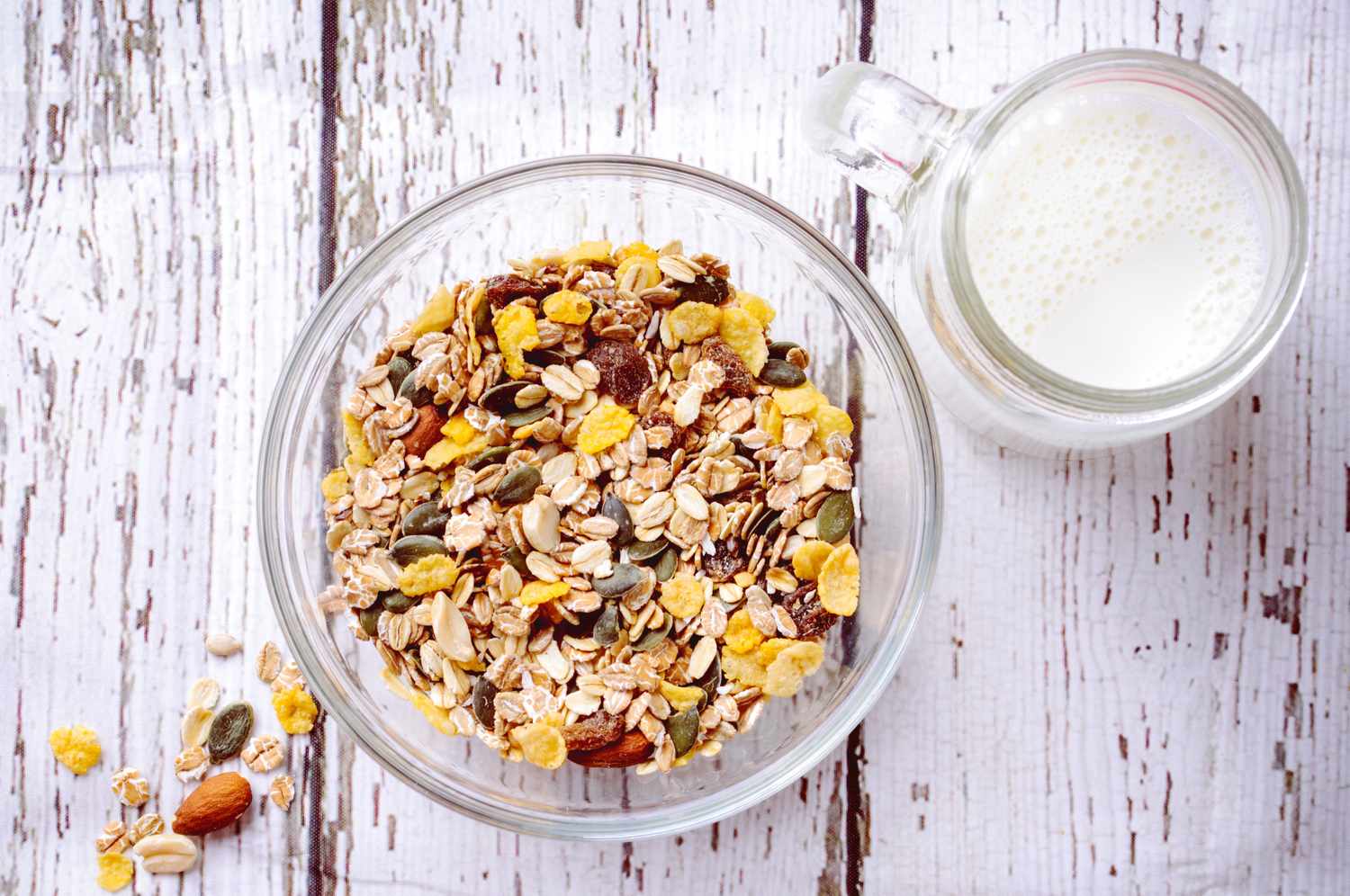
A classic European breakfast option, muesli combines old-fashioned oats with nuts, seeds, and dried fruit for a satiating, wholesome meal. Thanks to the mix of grains and plant-based proteins, muesli generally provides more protein than plain flaked cereal. Protein content varies depending on the ratio of nuts and seeds, but many versions deliver nearly 12 grams per serving.
5. Breakfast Porridge
Hanasaki / Getty Images
Hot cereal doesn’t need to be reserved for oats. Instead, try making a breakfast porridge with quinoa, teff, or amaranth, which pack 8, 10, and 9 grams of protein per cooked cup, respectively. Whole grains naturally contain more protein than their refined counterparts because they retain the nutrient-rich bran and germ layers. Experiment with different whole grains to add variety to your breakfast porridge. Cooking whole grains in milk can help round out the protein content and make breakfast more filling.
Why Protein Is Vital at Breakfast
- A protein-rich breakfast is linked to better satiety, appetite control, and health benefits.
- Higher breakfast protein intake is associated with greater lean and muscle mass in older adults.
- Higher-protein breakfasts increase levels of hormones associated with fullness, leading to greater satiety.
- In healthy adults, a high-protein breakfast lowers post-meal blood sugar levels after breakfast, lunch, and dinner compared to a normal-protein breakfast. Additionally, a higher-protein breakfast is associated with fewer blood sugar fluctuations than a lower-protein breakfast.
How to Boost Protein Content of Your Breakfast Cereal
- Use cow, soy, or pea protein milk, which provides 7-8 grams of protein per cup.
- Mix in chia, hemp, or flax seeds for a dose of protein and healthy fats
- Add nuts, such as almonds, pistachios, cashews, or walnuts.
- Stir in Greek yogurt, which delivers 16 grams of protein per cup.
- Stir in Greek yogurt, which delivers 20 grams of protein per cup.
:max_bytes(150000):strip_icc()/AmyBrownsteinMSRDN-db78b6b8ad074434b19ec5f9ca0a4313.jpg)