

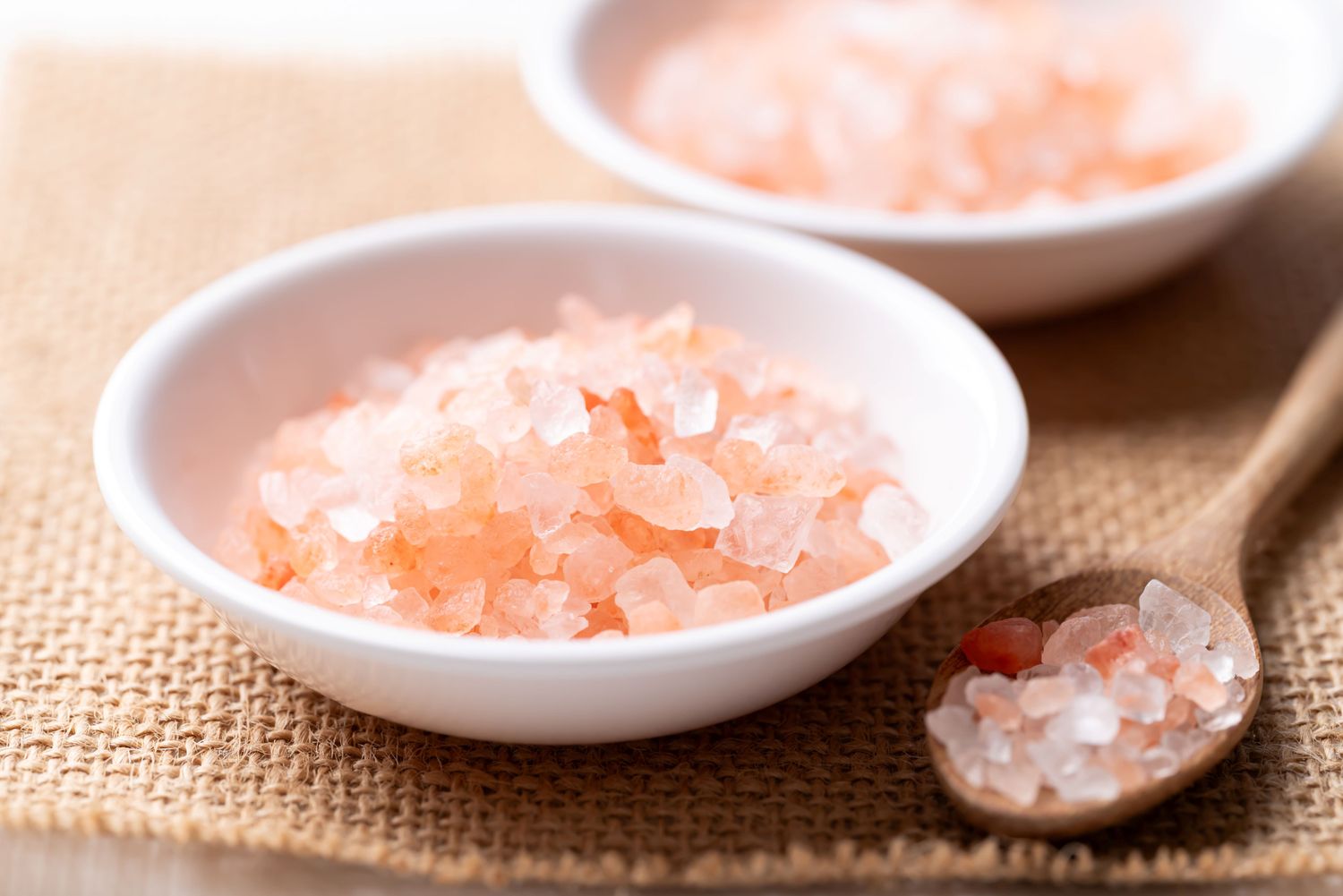
- Himalayan salt is a less-processed alternative to table salt that contains higher levels of essential minerals, such as magnesium, potassium, and calcium.
- Himalayan salt could support hydration levels and mineral intake when consumed within a well-balanced diet.
- Taking in too much of any type of salt can negatively impact your health.
Himalayan salt, a pink-hued variety with trace minerals, is a popular cooking ingredient and is sometimes used therapeutically. How does consuming this table salt alternative impact your body?
1. You May Support Hydration Levels
Your body tightly regulates water, sodium, and other charged minerals (electrolytes) to maintain fluid balance. You lose sodium through sweating, so when rehydrating after sweating, you will need to replenish both sodium and water.
Like all other forms of salt, Himalayan salt contains the essential mineral sodium (as sodium chloride) and can support rehydration efforts. Himalayan salt also provides trace amounts of other electrolytes, like potassium and magnesium, which are key for balancing fluid levels in the body.
Some electrolyte supplement powder packets contain Himalayan salt.
2. Too Much of Any Salt Is Not Advised
Keep in mind that consuming too much of any type of salt contributes to high blood pressure, which raises the risk of heart disease and stroke. It’s best to consume Himalayan salt only at levels appropriate for you, and to count it as part of your daily sodium intake.
Most adults should aim for about 1,500 mg of sodium daily, and try not to exceed 2,300 mg. Talk with a healthcare provider or registered dietitian to determine how much sodium you should consume daily, especially if you have a risk of high blood pressure, heart disease, or kidney disease
3. Your Mineral Intake May Increase Slightly
While Himalayan salt is made up of mostly sodium chloride, there are also some levels of calcium, magnesium, iron, potassium, and manganese—which are more prevalent than in other salt varieties, like table salt.
That said, you’d likely need to consume a large amount of Himalayan salt to make a substantial impact on these mineral levels, which could excessively increase your daily sodium intake.
Though some Himalayan salt may support a slight boost of key minerals, the mineral intake benefit may be better accomplished through other aspects of your diet to avoid overdoing it on the sodium.
4. It’s a Less-Processed Salt Option
Standard table salt undergoes a refining process before it’s placed on the market in order to remove minerals other than sodium chloride and any impurities.
Himalayan salt is mined with a natural harvesting process via salt rocks, rather than being sourced from lakes, wells, salt springs, or seawater like regular table salt. This allows for Himalayan salt to retain its numerous natural minerals and trace elements.
A downside of less-processed salt is that it often isn’t iodized. Table salt is commonly iodized to prevent goiter, a thyroid condition caused by iodine deficiency. If you use only non-iodized salt, consider ensuring you get enough iodine through other dietary measures.
Tips for Using Himalayan Salt
Here are some tips for consuming—and using—it in your daily routine:
- Keep Himalayan salt stored in a cool, dry container to avoid salt crystal clumping and maintain freshness.
- Use it as a cooking ingredient by adding Himalayan salt to meats, veggies, soups, and stews in moderation for flavor purposes.
- Be mindful of overdoing it, and start with small amounts of Himalayan salt, as too much sodium can have a potentially harmful impact on health.
It’s good practice to check with your healthcare provider before making dietary changes, such as adding Himalayan salt to your daily routine, to ensure it fits with your individual sodium needs and overall diet.
:max_bytes(150000):strip_icc()/IMG_5047-9727550a95404c49a7515e66930004ef.JPG)