

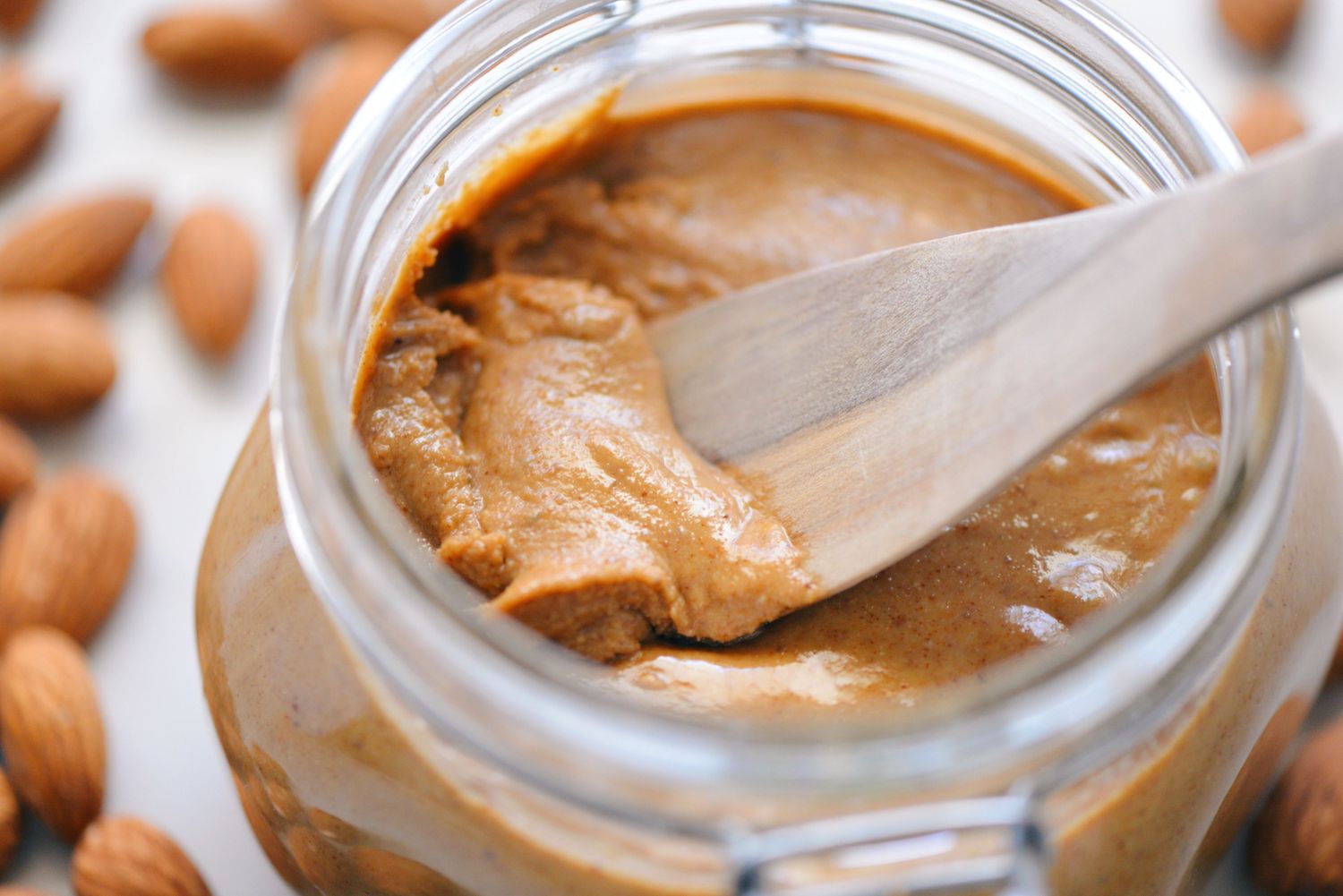
Almond butter provides your body with plant-based protein, fiber, healthy fats, and minerals. While you can make almond butter with almonds only, commercial brands may contain additives such as salt, oils, sugar, or other sweeteners that alter its nutrition and potential benefits.
1. Can Be a Whole-Food Source of Nutrients, But May Have Additives
Almond butter is made with crushed or ground almonds. You can make it at home or use an in-store grinder at some supermarkets or health food stores to make unadulterated almond butter from raw or roasted almonds. This is a good option for a whole-food spread.
However, commercially-made almond butter is often mixed with oil, salt, sugar, other sweeteners, and various additives. Check the nutrition label for the ingredients and the nutrients.
Here are two examples of commercially available almond butter and the nutrients in a 2-tablespoon serving.
| Nutrients totals and % daily value | Nature almond butter | Classic almond butter |
|---|---|---|
| Ingredients | Dry roasted almonds | Dry roasted almonds, palm oil, cane sugar, sea salt |
| Calories | 190 | 190 |
| Fat | 17 g (22%) | 17 g (22%) |
| Saturated fat | 1.5 g (8%) | 2.5 g (12%) |
| Protein | 7 g (14%) | 6 g (12%) |
| Sugar | 2 g (4%), no added sugar | 3 g (6%), includes 1 g added sugar |
| Fiber | 3 g (11%) | 3 g (11%) |
| Iron | 1.1 mg (6%) | 1.1 mg (6%) |
| Calcium | 60.2 mg (4%) | 60.2 mg (5%) |
| Potassium | 140.2 mg (3%) | 140.2 mg (3%) |
| Sodium | 0 mg (0%) | 65 mg (3%) |
2. Can Help Meet Your Daily Protein Needs With Plant-Based Protein
Almond butter is a plant-based protein source that can help meet protein needs, especially for those on a vegan or vegetarian diet.
Almonds are lower in a couple of the nine essential amino acids (building blocks of protein you must get through food). But when you eat other plant-based protein sources within the same day, such as legumes (beans and lentils), they complement each other to provide the essential amino acids your body needs.
3. Supports Heart Health
The almonds in almond butter support heart health in several ways:
4. Supports a Healthy Gut
The fiber, unsaturated fats, and other bioactive compounds in almonds promote a healthy gut. It can help manage gut bacteria, resulting in improved immunity.
However, note that the effects can vary depending on how the almonds are processed. For example, there’s a slight difference in how almond butter and almonds affect gut bacteria.
5. Provide Antioxidants and May Lower Risk of Cancer
Almonds and almond butter are good sources of antioxidants, which protect cells and their genetic material from damage. Studies have found that increased nut intake is associated with a reduced risk of some types of cancer.
6. Affects Allergy Triggers
If you or a member of your household is allergic to peanut butter, almond butter can be an alternative. Many people with a peanut allergy can safely eat tree nuts, such as almonds. Check with a healthcare provider if this is a concern.
However, some people are allergic to almonds, so they must avoid almonds and almond butter.
7. High in Calories But May Quell Hunger
Almond butter is calorie-dense due to its high fat and protein composition. A typical 2-tablespoon portion provides almost 200 calories. However, because almond butter is low in sugars (unless you are eating a variety with added sugar) and high in protein, fat, and fiber, it may help promote satiety and reduce hunger.
How Can You Use Almond Butter?
You can use almond butter as a spread or a dip.
You may also be able to use it in recipes that normally call for peanut butter, such as:
- As an ingredient in cookies, cakes, or other desserts
- In a smoothie
- Added to yogurt, cottage cheese, or ice cream
- In salad dressing or as a topping for cold pasta dishes
- As a flavoring for pasta sauce, stir-fry, or meat dishes
:max_bytes(150000):strip_icc()/Heidi-Moawad-MD-1000-2792fc644ba54e05a6e82c8a25ae988f.jpg)