
What Happens When You Mix Green Tea and Matcha?

What Happens When You Mix Green Tea and Matcha?

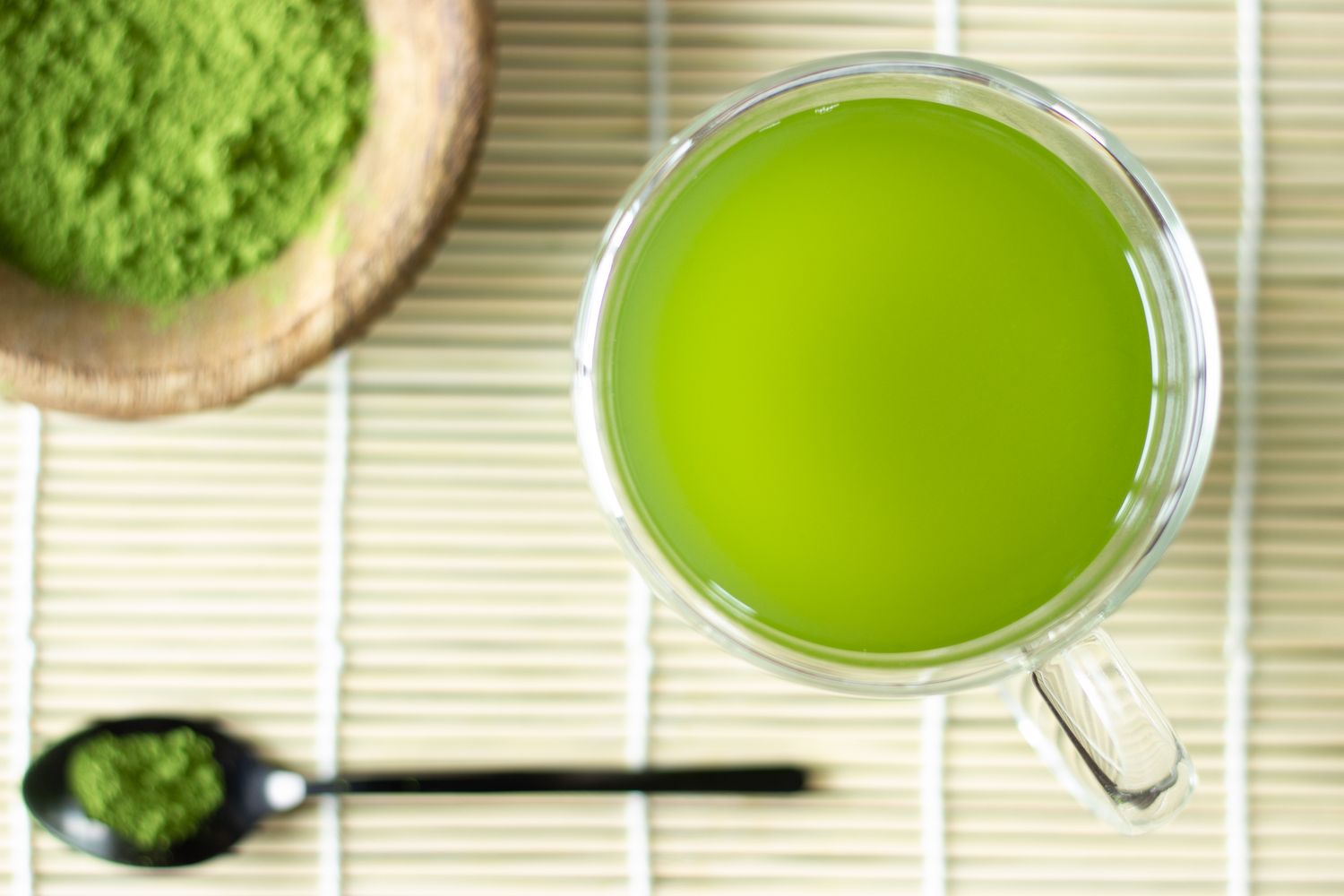
Green tea and matcha, which is a type of green tea, come from the same plant (Camellia sinensis). Mixing them combines the antioxidants from steeped leaves with the concentrated phytonutrients and added caffeine in matcha’s whole-leaf powder. The result is a slightly richer drink that’s more caffeinated and higher in concentrated plant compounds than green tea alone.

1. You May Get More Antioxidants

Matcha generally contains more antioxidants per gram than steeped green tea because the entire leaf is consumed. Adding even a small amount of matcha to brewed tea can increase total intake of antioxidants like EGCG (epigallocatechin gallate).

EGCG is a catechin antioxidant associated with anti-inflammatory activity and cellular protection in laboratory and observational studies. Because matcha is made from the entire leaf, it typically contains higher concentrations of EGCG than standard steeped green tea.

Mixing these two Camellia sinensis products increases overall exposure to this plant-based compound compared to drinking green tea alone. The blend provides quickly extracted catechins from brewed tea and additional phytochemicals that are released more slowly from tea made from matcha powder.

2. You May Have Steadier Energy

The energizing effect of this combination differs from that of coffee or green tea alone due to its higher L-theanine concentration. Matcha naturally contains more of this amino acid, which may alter how caffeine is absorbed and experienced, reducing jitteriness.

When combined with brewed green tea, L-theanine may subdue caffeine’s stimulating effects. This can lead to steadier alertness and fewer energy crashes compared to consuming other caffeinated beverages.

3. It May Help Protect Against Cancer

Matcha’s vibrant green color comes from chlorophyll, which accumulates in higher amounts in shade-grown matcha leaves than in sun-grown green tea leaves. Chlorophyll is known for its antioxidant properties. Some studies suggest that chlorophyll may help limit the absorption of certain carcinogens, which may help protect against cancer.

However, most of this research comes from laboratory and animal studies. Evidence from human research remains limited.

4. It May Support Better Heart Health

Both green tea and matcha contain flavonoids and other polyphenols (plant compounds) that help protect cells from oxidative stress. These compounds are associated with improved blood flow and healthier cholesterol levels.

Regular intake of tea-derived polyphenols may lower the risk of certain cardiovascular and metabolic issues. Mixing green tea and matcha allows for a higher intake of these plant compounds in a single serving.

5. It Boosts Caffeine Intake

For most healthy adults, a blend of matcha and green tea is safe when consumed in moderation. However, it contains more caffeine than standard green tea. Drinking multiple cups per day may increase the risk of restlessness, anxiety, or sleep disruption.

The U.S. Food and Drug Administration (FDA) suggests a daily caffeine limit of up to 400 milligrams for healthy adults. Here’s how the caffeine content breaks down per cup:

  • Steeped green tea: About 25-50 milligrams of caffeine
  • Match powder: About 40-90 milligrams of caffeine
  • Mixed combination: About 50-100 milligrams

Risks and Considerations

Talk with a healthcare provider before regularly drinking this blend if you have heart disease, high blood pressure, or a history of caffeine sensitivity. Because green tea and matcha contain vitamin K, they may interfere with blood-thinning medications such as warfarin (Coumadin).

Additional precautions may be needed if you have iron deficiency or are prone to anemia. Drinking lots of green tea may interfere with iron absorption.

Verywell Health uses only high-quality sources, including peer-reviewed studies, to support the facts within our articles. Read our editorial process to learn more about how we fact-check and keep our content accurate, reliable, and trustworthy.
  1. Chelliah R, Kim DG, Vijayalakshmi S, Gun K, Yeon SJ, Oh DH. Camellia sinensis (Green tea): Unveiling the anti-inflammatory and antioxidant symphony in inflammatory bowel diseases, harmonizing with molecular pathways of therapeuticPharmacological Research – Natural Products. 2025;9:100435. doi:10.1016/j.prenap.2025.100435

  2. Kochman J, Jakubczyk K, Antoniewicz J, Mruk H, Janda K. Health benefits and chemical composition of matcha green tea: a reviewMolecules. 2020;26(1):85. doi:10.3390/molecules26010085

  3. Devkota HP, Gaire BP, Hori K, et al. The science of matcha: Bioactive compounds, analytical techniques and biological propertiesTrends in Food Science & Technology. 2021;118:735-743. doi:10.1016/j.tifs.2021.10.021

  4. Ohishi T, Goto S, Monira P, Isemura M, Nakamura Y. Anti-inflammatory action of green teaAIAAMC. 2016;15(2):74-90. doi:10.2174/1871523015666160915154443

  5. Sivanesan I, Muthu M, Kannan A, Pushparaj SSC, Oh JW, Gopal J. Identification of epigallocatechin-3-gallate (EGCG) from green tea using mass spectrometrySeparations. 2022;9(8):209. doi:10.3390/separations9080209

  6. Mokra D, Joskova M, Mokry J. Therapeutic effects of green tea polyphenol (‒)-epigallocatechin-3-gallate (EGCG) in relation to molecular pathways controlling inflammation, oxidative stress, and apoptosisIJMS. 2022;24(1):340. doi:10.3390/ijms24010340

  7. Payne ER, Aceves-Martins M, Dubost J, Greyling A, De Roos B. Effects of tea (Camellia sinensis) or its bioactive compounds L-theanine or L-theanine plus caffeine on cognition, sleep, and mood in healthy participants: a systematic review and meta-analysis of randomized controlled trialsNutrition Reviews. 2025;83(10):1873-1891. doi:10.1093/nutrit/nuaf054

  8. Dashwood R, Visioli F. L-theanine: from tea leaf to trending supplement – does the science match the hype for brain health and relaxation? Nutrition Research. 2025;134:39-48. doi:10.1016/j.nutres.2024.12.008

  9. Harvard Health Publishing. Matcha: A look at possible health benefits.

  10. Manikharda, Shofi VE, Betari BK, Supriyadi. Effect shading intensity on color, chemical composition, and sensory evaluation of green tea (Camelia sinensis var Assamica)Journal of the Saudi Society of Agricultural Sciences. 2023;22(7):407-412. doi:10.1016/j.jssas.2023.03.006

  11. Uğuz AC, Rocha-Pimienta J, Martillanes S, Garrido M, Espino J, Delgado-Adámez J. Chlorophyll pigments of olive leaves and green tea extracts differentially affect their antioxidant and anticancer propertiesMolecules. 2023;28(6):2779. doi:10.3390/molecules28062779

  12. Al Mijan M, Sim WJ, Lim TG. Physiological effects of green-colored food-derived bioactive compounds on cancerApplied Sciences. 2021;11(23):11288. doi:10.3390/app112311288

  13. Alsenani F, Alotaiq N, Dermawan D, et al. Understanding the role of green tea and matcha consumption in cardiovascular health, obesity, and diabetes: Insights from a Saudi Arabian populationHuman Nutrition & Metabolism. 2025;40:200302. doi:10.1016/j.hnm.2025.200302

  14. Xue J, Liu P, Xu Y, et al. Effect of cultivar and process on the astringency of matcha based on flavonoids-targeted metabolomic analysisFood Research International. 2025;204:115954. doi:10.1016/j.foodres.2025.115954

  15. Wan C (Craig), Hu X, Li M, Rengasamy KRR, Cai Y, Liu Z. Potential protective function of green tea polyphenol EGCG against high glucose-induced cardiac injury and agingJournal of Functional Foods. 2023;104:105506. doi:10.1016/j.jff.2023.105506

  16. Baba Y, Inagaki S, Nakagawa S, Kobayashi M, Kaneko T, Takihara T. Effects of daily matcha and caffeine intake on mild acute psychological stress-related cognitive function in middle-aged and older adults: a randomized placebo-controlled studyNutrients. 2021;13(5):1700. doi:10.3390/nu13051700

  17. U.S. Food and Drug Administration. Spilling the beans: how much caffeine is too much?

  18. Ge B, Zhang Z, Zuo Z. Updates on the clinical evidenced herb-warfarin interactions. Evid Based Complement Alternat Med. 2014;2014:957362. doi:10.1155/2014/957362

  19. Fan FS. Iron deficiency anemia due to excessive green tea drinkingClinical Case Reports. 2016;4(11):1053-1056. doi:10.1002/ccr3.707

Additional Reading

Headshot

By Christopher Bergland

Bergland is a retired ultra-endurance athlete turned medical writer and science reporter. He is based in Massachusetts.