

Glyphosate, the active ingredient in Roundup — the most widely used weed killer in the world — has reemerged at the center of both political and scientific debate.
A few days after the announcement, Kennedy posted on X that he supported the president’s action for the reasons Trump stated in his executive order.
The news comes as the Supreme Court prepares to hear arguments in a case that could determine whether federal pesticide law shields manufacturers from certain health lawsuits. Bayer, which acquired Monsanto in 2018, has already paid billions of dollars to settle claims from plaintiffs who say Roundup caused non-Hodgkin lymphoma, a type of cancer that develops in the lymphatic system.
Here’s what science says about glyphosate and the risks it may pose to your health, as well as how to limit your exposure if you have concerns.
How Are People Exposed to Glyphosate?
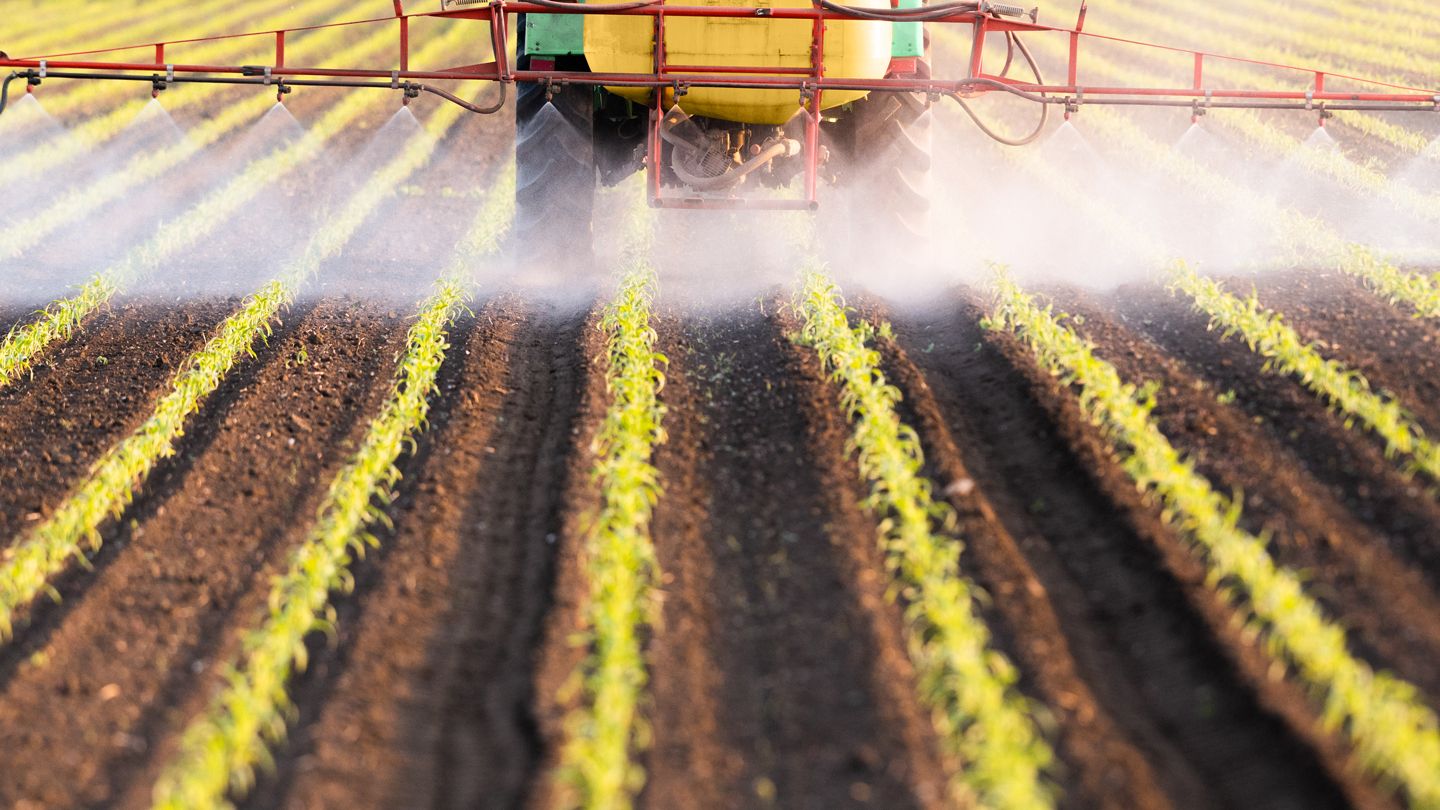
Glyphosate is sprayed on hundreds of millions of acres of farmland each year. It’s widely used on crops such as corn, soybeans, wheat, oats, cotton, and almonds, and it is sold for residential lawn and garden use.
The main way most people are exposed to the chemical is through the food they eat, says Melissa Perry, ScD, a researcher, epidemiologist, and the dean of the college of public health at George Mason University in Fairfax, Virginia.
“Residues have been detected in a range of conventionally grown crops,” says Dr. Perry, meaning from farms that do not follow organic-certification guidelines.
Farmworkers and people who spray the chemical on crops are also exposed to glyphosate, she says.
But exposure is much more widespread than that. National biomonitoring studies show glyphosate is commonly measurable in human urine, indicating widespread low-level exposure, she says.
An International Agency Has Classified Glyphosate as a ‘Probable’ Carcinogen
In 2015, the International Agency for Research on Cancer (IARC), part of the World Health Organization, classified glyphosate as “probably carcinogenic to humans.”
The agency cited “limited” evidence of cancer in humans — particularly non-Hodgkin lymphoma — and “sufficient” evidence of cancer in studies that looked at the effect of pure glyphosate in mice and rats.
IARC classifications identify whether something can cause cancer under some conditions (hazard), not how likely it is to cause cancer at typical exposure levels (risk).
The EPA Says Glyphosate Is ‘Not Likely’ to Cause Cancer
European regulators have similarly concluded that current exposure levels are unlikely to pose a cancer hazard.
What Does Human Research Show?
The human evidence of the link between glyphosate and cancer is under debate. The most consistent signal — when increased risk appears — involves non-Hodgkin lymphoma among people who are directly exposed to the chemical, such as farm workers, Perry says.
Some large agricultural studies have not found a statistically significant overall association. But pooled analyses combining multiple studies have suggested a modest increase in risk in people with the highest cumulative exposure.
What Have Animal Studies Found?
The chemical is easier to study in animals in a lab setting, and those findings play a major role in ongoing health concerns.
In a long-term study published in 2025 in the journal Environmental Health, researchers reported increased rates of multiple tumor types in rats exposed to glyphosate and glyphosate-based herbicides.
Importantly, there were increased rates of multiple tumor types at doses near current regulatory limits, says Perry, who coauthored the study. “That pattern, combined with mechanistic evidence of genotoxicity and oxidative stress, strengthens concerns that ‘low dose’ does not necessarily mean ‘low risk,’” she says.
The findings support IARC’s decision to classify glyphosate as a “probable human carcinogen” and align with other animal and human studies that have linked higher glyphosate exposure to certain cancers, particularly blood cancers such as non-Hodgkin lymphoma, says Perry.
Does Glyphosate Pose Other Health Concerns?
Beyond cancer, some experimental research has suggested that glyphosate has possible endocrine and reproductive effects, as well as potential impacts on the gut microbiome, says Perry.
“While not every study finds the same outcomes, the toxicologic profile suggests biological activity at exposure levels previously assumed to be benign,” she says.
Regulatory agencies have concluded that glyphosate does not meet criteria for endocrine disruption at approved exposure levels.
Is It Possible to Grow Crops Without Roundup?
Yes, says Perry. “Organic systems do so routinely, and conventional growers can rely on crop rotation, cover crops, mechanical cultivation, and alternative herbicides,” she says.
Glyphosate is widely used in “no-till” farming, a method in which farmers plant crops without plowing the soil, a cost-saving, labor-sparing method that, when feasible, helps prevent erosion and protect soil health, says Perry.
In that scenario, farmers would need to adjust and use different tools or practices, but it can be done, says Perry.
How Can You Limit Glyphosate Exposure?
For now, it appears that U.S. farmers can choose to use glyphosate on many conventionally grown crops.
If you are worried about exposure to glyphosate in the food supply, Perry suggests that you:
- Wash fruits and vegetables thoroughly and peel produce when appropriate to reduce pesticide residues.
- Choose organic options (especially for your favorite foods) to potentially lower dietary exposure.
Produce with the highest pesticide exposure, including types known as the “dirty dozen,” may warrant extra attention — particularly fruits and vegetables that can’t be peeled or that have edible peels.
Another way to limit your exposure is to reduce or avoid home use of glyphosate-based herbicides, says Gunnar Boysen, PhD, an associate professor of environmental health sciences at the University of Arkansas for Medical Sciences in Little Rock.
If you decide to apply Roundup to your lawn or garden, wear gloves, long sleeves, and protective equipment. Minimizing the spray drift will also meaningfully reduce exposure, says Dr. Boysen.
Workers on farms that utilize Roundup and people who apply the weed killer to crops should carefully follow label instructions and use recommended protective gear.