

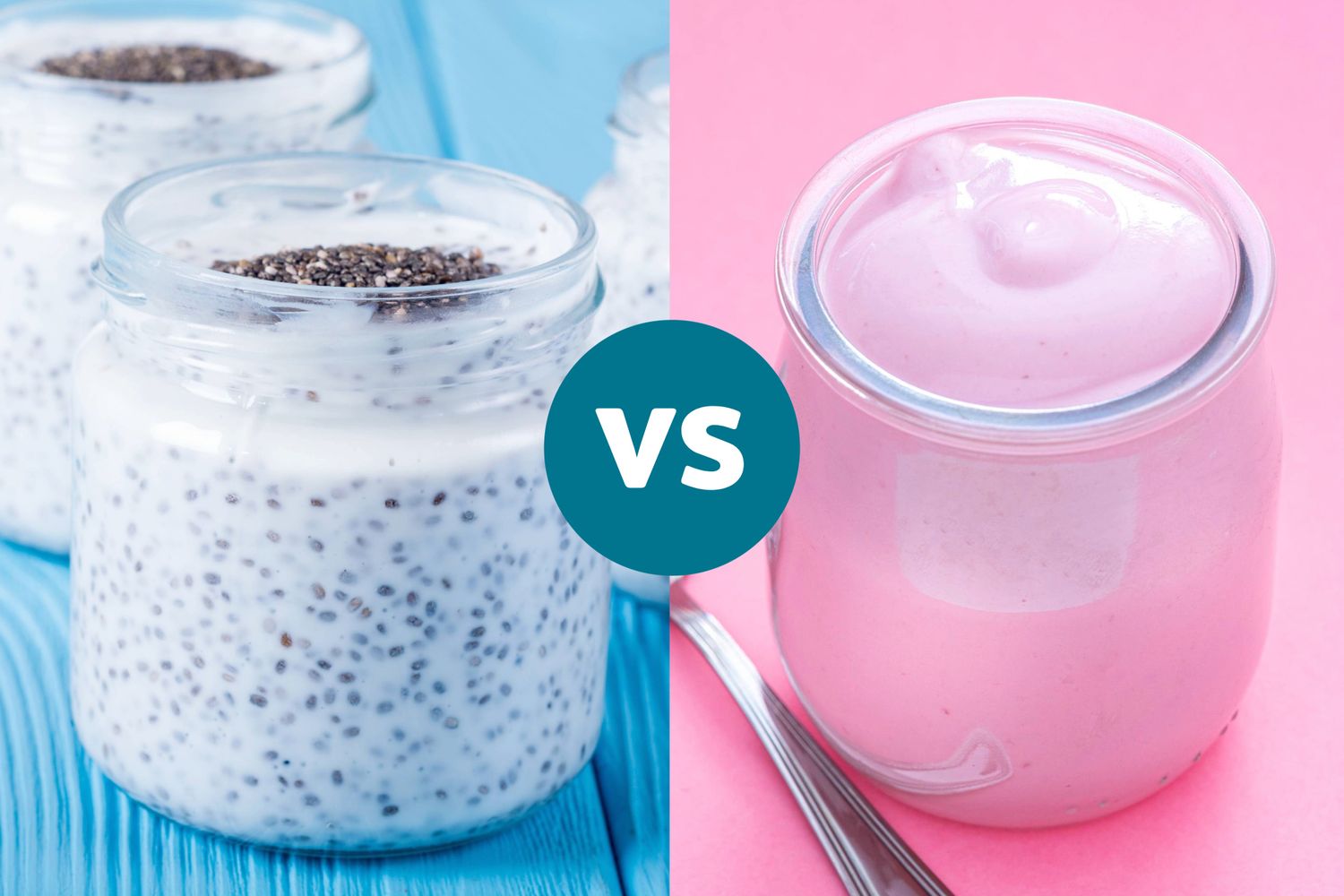
| Nutrient | Chia Seed Pudding | Yogurt |
|---|---|---|
| Omega-3s | Excellent source | None unless fortified |
| Protein | 10 grams in 1/2 cup | 18 grams in 1 cup Greek yogurt |
| 8.5 grams in 1 cup plain yogurt | ||
| Fiber | 10 grams in 1/2 cup | None unless plant-based |
What’s in Chia Seed Pudding vs Yogurt?
Chia Seed Pudding
Chia seeds come from an annual plant (Salvia hispanica) in the mint family. Chia seeds are a trendy ingredient, but they’ve been part of the human diet for thousands of years.
The base of chia seed pudding is chia seeds, plus either animal- or plant-based milk. Recipes for chia seed pudding call for about 2 tablespoons of chia seeds and 1/2 cup of milk.
Other ingredients added for taste and preference include honey, maple syrup, agave, cinnamon, or nutmeg. Other common chia seed pudding toppers include fruit, nuts, seeds, nut butters, and granola.
Yogurt
Yogurt is a fermented food, usually made by heating milk and adding a bacterial culture. The milk thickens and becomes creamy. Yogurt is lower in lactose than milk and contains probiotics (beneficial living microbes).
Greek yogurt has some whey removed, making it thicker and more concentrated in some nutrients, such as protein.
Yogurt from plant sources, such as soy milk or coconut milk, may contain less calcium than cow’s milk yogurt, but is lactose-free and may be higher in fiber. Check the nutrition label for plant-based yogurts.
Chia Seed Pudding Beats Yogurt for Omega-3s
Chia seeds contain several fatty acids, including alpha-linoleic acid (ALA), which is an omega-3 fatty acid. The body doesn’t produce omega-3s, so they must be gotten from food or supplements. Chia seeds contain more omega-3 fatty acids than yogurt and even flaxseeds (another good source of omega-3s).
Some of the health benefits of omega-3s include:
- Lowering inflammation
- Reducing pain
- Reducing the risk of diabetes
- Supporting heart health
- Supporting brain function
Yogurt Has Less Omega-3s
One cup of plain, full-fat Greek yogurt contains a trace amount of omega-3 fatty acids (0.046g). This is far fewer omega-3s than chia seeds, so unfortified yogurt is not a good source of this nutrient.
Some yogurt brands come fortified with omega-3s. The source could be fish, flaxseed, or algal oils (oil from algae).
One solution to getting the nutrients from both sources is to use yogurt as the base for chia seed pudding. The combination offers the benefits of plant-based omega-3 fatty acids and the probiotics in yogurt.
How Do They Compare for Protein?
Chia seeds are a good source of plant protein. About 19% of chia seeds is protein. When making chia pudding, the animal or plant milk used may also add some protein:
- Chia seed pudding made from 2 tablespoons of chia seeds (6 grams of protein) and 1/2 a cup of cow’s milk (4 grams of protein) has a total of 10 grams of protein.
- People might also increase the protein content of chia seed pudding by adding protein powder or other toppings such as a nut butter. Also, eating a larger serving will provide more protein.
Protein in Yogurt Depends on the Type
One cup of plain, full-fat Greek yogurt contains 18 grams of protein. This is significantly more protein than chia pudding made from a typical recipe of chia seeds and 1/2 cup of cow’s milk. However, 1 cup of plain whole milk yogurt has about half the protein as Greek yogurt at 8.5 grams per cup.
Soy milk Greek yogurt may also be a good source of protein, but check any plant-based milk yogurts for their protein content.
Chia Seed Pudding Wins for Fiber
Chia seeds contain a significant amount of fiber. One ounce of chia seeds, about 2 tablespoons, contains almost 10 grams of fiber. That’s 35% of the recommended daily fiber intake.
Plain, unfortified yogurt from cow’s milk doesn’t contain any fiber. Commercial yogurt may contain added fiber, which can range from 3 to 4 grams. Adding granola or fruit to yogurt will increase the fiber content.
Some plant-based yogurt varieties contain fiber. One cup of coconut milk yogurt contains about 3 grams of fiber. One cup of soy milk yogurt contains about 2 grams of fiber.
FODMAPs in Chia Seed Pudding and Yogurt
Carbohydrates found in many foods, called FODMAPs (fermentable oligosaccharides, disaccharides, monosaccharides, and polyols), may cause symptoms of bloating and gas. Irritable bowel syndrome is sometimes managed partially by restricting FODMAPs.
Chia seed pudding, which contains about 2 tablespoons of chia seeds, is low FODMAP. However, Monash University, which tracks the FODMAP level of foods, reports that some people living with IBS tolerate chia seeds better than others.
Yogurt from soy milk is high FODMAP, while cow’s milk yogurt is low FODMAP.
:max_bytes(150000):strip_icc()/AmberJ.Tresca_1000-03288146de15463da9ec7713d9c70c40.jpg)