

Key Takeaways
- Oranges provide more vitamin C and fiber per cup than grapefruit.
- Pink and red grapefruit contain more beta-carotene and lycopene, antioxidants that support eye and skin health.
- Eating whole citrus fruits instead of juice helps you get more fiber and maintain steady blood sugar levels.
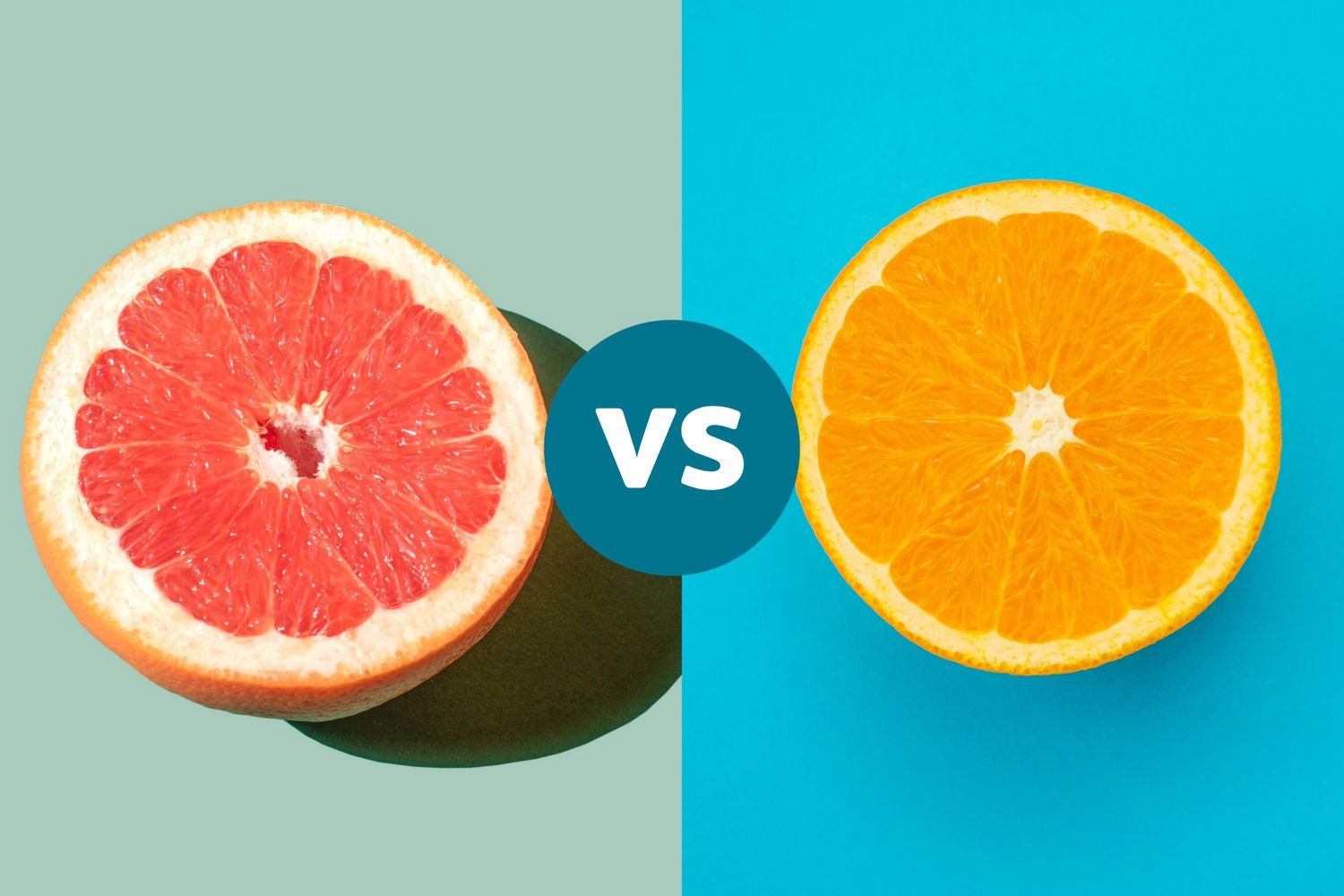
Both oranges and grapefruit are refreshing, tangy, and packed with vitamin C—but they aren’t identical when it comes to nutrition or health effects. While both offer unique benefits, there are some important differences—especially if you take certain medications.
Which Has More Vitamin C?
Per 1 cup of fruit:
- Grapefruit: 85 miligrams (mg)
- Orange: 120 miligrams (mg)
That means oranges deliver a bigger boost of vitamin C per cup, helping support immune function, collagen production for healthy skin, and antioxidant protection against cell damage.
Grapefruit still provides a generous amount of vitamin C, but oranges bring you closer to meeting the full daily recommended intake in just one serving. Getting enough vitamin C through foods like citrus fruits may also enhance iron absorption from plant-based foods and support wound healing.
Both fruits are excellent options for adding brightness, hydration, and immune-supporting nutrients to your day — whether eaten on their own, tossed into a salad, or blended into a smoothie.
Which Has More Fiber?
Per 1 cup of fruit:
- Grapefruit: about 3 g of fiber
- Orange: about 4.3 g of fiber
Both fruits can be part of a high-fiber, nutrient-rich diet. Oranges offer more soluble fiber, which supports heart health and helps manage cholesterol levels, while grapefruit provides slightly fewer calories and a refreshing, tart flavor.
Whichever you choose, aim to eat the whole fruit rather than just the juice — that’s where most of the fiber and nutrients are found. Including a variety of fiber-rich fruits like oranges, grapefruit, berries, and pears can help improve digestion, keep you feeling full longer, and promote balanced blood sugar levels. Pairing these fruits with protein or healthy fats, such as yogurt or nuts, can make for a satisfying, nutrient-dense snack.
Nutrition Breakdown
According to data from the U.S. Department of Agriculture (USDA), both fruits are low in calories and rich in essential nutrients like vitamin C, potassium, and fiber. Here’s a closer look at one cup of each (about 165 g of orange sections or 230 g of grapefruit segments):
| Nutrition Breakdown | ||
|---|---|---|
| Nutrient | Orange (Navel) | Pink/Red Grapefruit |
| Calories | 85.9 kcal | 69 kcal |
| Carbohydrates | 19.5g | 17.2 g |
| Fiber | 3.3 g | 2.53 g |
| Sugar | 14.1 g | 16 g |
| Vitamin C | 97.5 mg | 85.1 mg |
| Potassium | 274 mg | 292mg |
Both fruits are hydrating and nutrient-dense. Oranges provide a bit more fiber and vitamin C, while pink or red grapefruit contain slightly more potassium.
Vitamin A and Antioxidant Differences
Pink and red grapefruit stand out for their carotenoid content, especially beta-carotene and lycopene—antioxidants that the body can convert into vitamin A. This makes grapefruit particularly beneficial for eye and skin health.
Oranges, on the other hand, are rich in flavanones such as hesperidin, which may improve circulation and support vascular function. Both contribute to overall antioxidant intake, helping protect cells from oxidative stress.
Whole Fruit vs. Juice: The Healthier Choice
When it comes to nutrition, whole fruit wins every time. Whole oranges and grapefruit retain fiber, which slows digestion and promotes satiety. Juicing removes most of that fiber and can concentrate calories and sugars.
:max_bytes(150000):strip_icc()/Pe_Photographic_elements_photo_4004_65-03e93e03913047838bfa0ca549c75c8d.jpg)