

:max_bytes(150000):strip_icc():format(jpeg)/Salmon-vs-Tuna-Which-Fish-Is-Better-for-Heart-Health-23d43cc4d8604f78add3cd6ae1421c4e.jpg)
- Salmon packs more omega-3s and an antioxidant called astaxanthin that support heart health.
- Tuna offers heart-healthy selenium and coenzyme Q10 but may be higher in mercury.
- Switching between salmon and tuna allows you to reap the heart benefits from each.
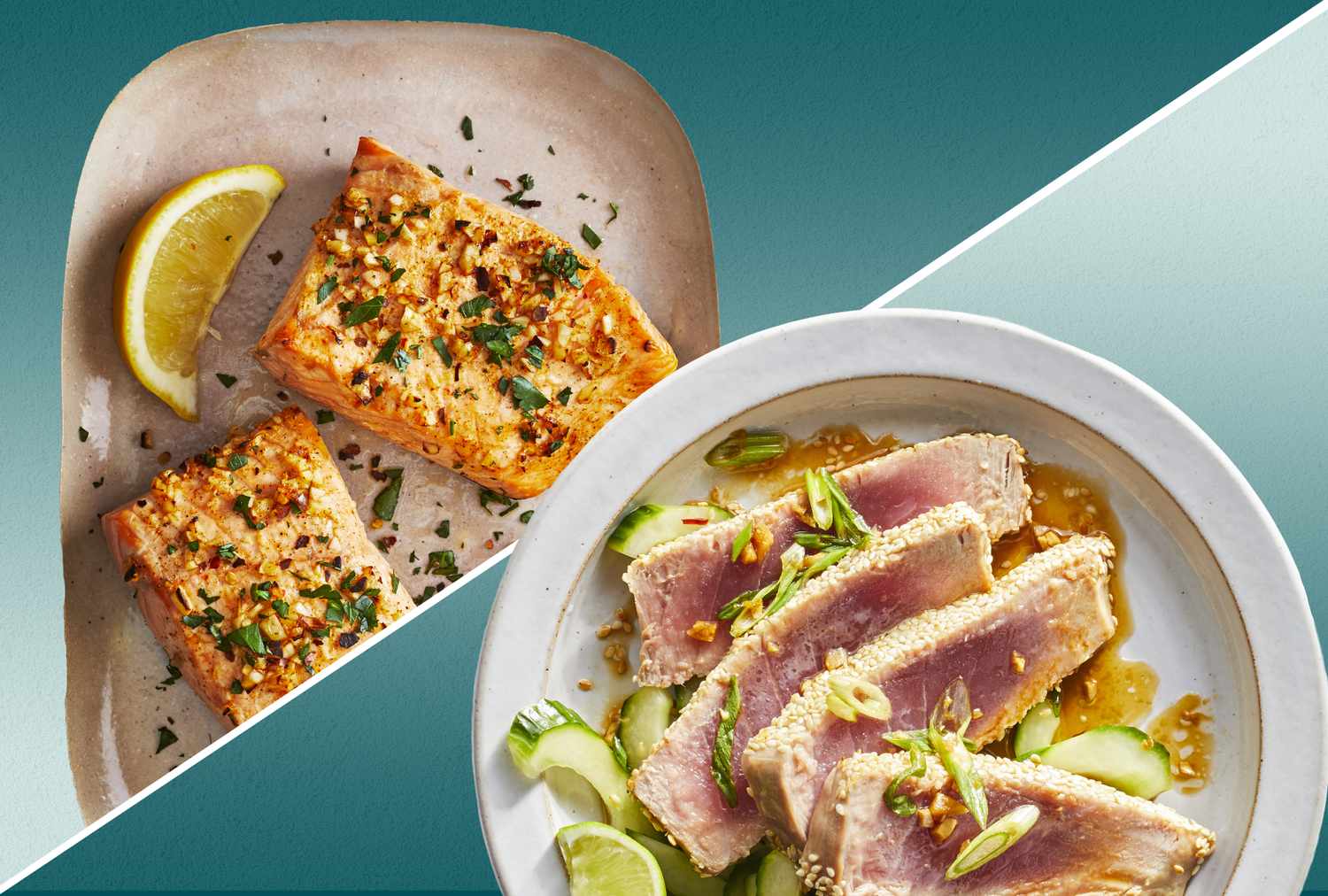
Fish is a staple in many heart-healthy diets, with salmon and tuna among the top choices. “Both salmon and tuna share many features that support heart health, including being sources of DHA and EPA omega-3 fatty acids, which are linked to healthy blood pressure, lower triglycerides and even a reduced risk of heart disease,” shares Whitney Stuart, M.S., RDN. But here’s where it gets interesting: while both are heart-health superstars, they each bring something unique to the table. Understanding these differences can help you make the best choice for your heart-health goals. Ready to dive in? Let’s explore how these two fish stack up and what makes each one a standout for your well-being.
Health Benefits of Salmon
Known for its vibrant pink hue and rich flavor, salmon is a nutritional powerhouse. Its benefits for heart health go beyond just its omega-3 content, offering a unique combination of nutrients that work together to help protect your cardiovascular system.
An Excellent Source of Omega-3s
While both salmon and tuna are impressive sources of omega-3 fatty acids, salmon is the clear standout in this category. A 3-ounce serving of cooked Atlantic salmon delivers 1.24 grams of DHA and 0.56 grams of EPA. In comparison, a 3-ounce serving of light canned tuna provides just 0.16 grams of DHA and 0.06 grams of EPA.
These essential fatty acids are crucial for heart health. They help lower triglycerides, reduce inflammation, slow the development of plaque in arteries and can even help lower blood pressure slightly. Consistent intake of omega-3s is strongly linked to a reduced risk of heart attack and stroke.
Rich in the Antioxidant Astaxanthin
Have you ever wondered what gives salmon its reddish-pink color? It comes from an antioxidant called astaxanthin. This compound is part of a group of pigments called carotenoids and is found in the algae that salmon consume. Astaxanthin has been studied for its potential to reduce oxidative stress and inflammation, two key drivers of heart disease. Wild salmon get astaxanthin naturally from their diet of algae-eating crustaceans, while farmed salmon are typically fed astaxanthin supplements or feed enhanced with this antioxidant to achieve similar benefits. Without astaxanthin, salmon would have a grayish color.
In a small three-month study with heart failure patients, astaxanthin supplementation was linked to reduced oxidative stress, improved heart pumping ability (ejection fraction) and increased exercise capacity (distance walked in six minutes). The study found a link between lower oxidative stress and better heart function, suggesting that astaxanthin could have potential as a supportive therapy for heart failure. “In addition, a 2023 published study found that people with prediabetes and dyslipidemia who supplemented with astaxanthin for 24 weeks had significantly lower LDL (“bad”) cholesterol and total cholesterol compared to people who took the placebo,” shared Toby Amidor, M.S., RD.
Packed with Potassium
Many people associate bananas with potassium, but salmon is another source of this vital mineral. “Salmon is packed with potassium, providing about 534 milligrams per 3-ounce cooked serving, which is roughly 11% of the Daily Value,” says Mackenzie Burgess, RDN. This mineral plays a crucial role in maintaining cardiovascular health. “Potassium helps regulate blood pressure by balancing sodium levels in the body,” Burgess shares. By helping your body flush out excess sodium, potassium eases tension on your blood vessel walls. As Burgess notes, “Keeping blood pressure in a healthy range is essential for reducing strain on the heart and supporting long-term cardiovascular health.”
Health Benefits of Tuna
Tuna is a versatile and budget-friendly fish that also offers a wealth of heart-healthy benefits. Whether you enjoy it fresh as a steak or canned in a salad, tuna provides unique nutrients that support your cardiovascular system in different ways than salmon.
A Boost of Coenzyme Q10
Tuna, especially darker varieties like bluefin, is an impressive source of coenzyme Q10, a compound that helps generate energy in your cells. The heart is one of the most energy-demanding organs in the body, and it relies on adequate CoQ10 to function properly.
CoQ10 also acts as an antioxidant, protecting cells from damage. Some research suggests that CoQ10 supplementation may play a role in lowering blood pressure. Including tuna in your diet can contribute to your body’s natural supply of this heart health–supporting coenzyme.
While salmon contains CoQ10 as well, it doesn’t have as much as certain varieties of tuna, most notably darker and fattier varieties like bluefin.
High in Selenium
Tuna stands out for its exceptionally high selenium content. “Tuna is an excellent source of selenium, offering about 92 micrograms per 3-ounce cooked serving, which is an impressive 167% of the Daily Value,” per Burgess. This powerful mineral is essential for overall health, particularly for your heart. As Burgess explains, “Selenium is an antioxidant that helps protect the heart by reducing oxidative stress and inflammation.” Chronic inflammation and oxidative stress can damage blood vessels and contribute to heart disease, making antioxidants like selenium a critical part of a heart-protective diet. One study shows that people with moderate selenium intake had a 16% lower risk of CVD compared to those with lower intake.
Supports Thyroid and Metabolic Health
In addition to selenium, tuna also provides iodine. Both selenium and iodine are essential for thyroid health. The thyroid gland regulates metabolism, influencing factors like heart rate. Selenium supports the activity of thyroid enzymes that protect the gland and aid in hormone production, while iodine is critical for synthesizing thyroid hormones. A well-functioning thyroid helps maintain a balanced metabolism and energy levels, which are important factors for overall health, including cardiovascular health.
Which Is Better for Heart Health?
So, should you choose salmon or tuna? The truth is, you don’t have to pick just one. Both fish are fantastic additions to a heart-healthy diet, and the “better” choice really depends on your specific health goals, nutritional needs and even how you prepare them.
However, when choosing your fish, it’s important to consider mercury levels, particularly with tuna. While tuna offers impressive features like selenium and coenzyme Q10, it can also contain higher levels of methylmercury, especially in larger species like albacore or yellowfin. High mercury exposure has been linked to potential cardiovascular risks, such as oxidative stress and inflammation, which could counteract some of tuna’s heart-health benefits. To minimize this risk, opt for light canned tuna, which is lower in mercury, and enjoy it in moderation.
Salmon, on the other hand, is generally lower in mercury, making it a safer choice for frequent consumption, especially for pregnant women, children and those with existing heart conditions.
“The best approach is to incorporate a variety of fish into your diet while being mindful of how you prepare them and the portion sizes you consume. By alternating between salmon and tuna and making smart choices in how you enjoy these fish, you can take advantage of their unique benefits while minimizing potential risks,” Stuart explains.
Our Expert Take
“Both salmon and tuna can be a part of a balanced and heart-healthy diet. Both provide high-quality protein, healthy omega-3 fats, vitamins and minerals,” shares Amidor.
Salmon is particularly noteworthy for its high levels of anti-inflammatory omega-3 fatty acids and its unique antioxidant, astaxanthin. Its potassium content also makes it a great choice for helping to manage blood pressure. Tuna, while lower in omega-3s, is an exceptional source of the antioxidant selenium and provides coenzyme Q10, both of which protect the heart from cellular stress and support its function.
Instead of viewing it as a competition, consider salmon and tuna as a powerful team. Incorporating both into your regular meal rotation ensures you receive a wider spectrum of heart-protective nutrients.