

Key Takeaways
- Grapes and bananas are a great source of energy, antioxidants, and potassium.
- Eating a variety of whole fruits and vegetables provides a range of antioxidants.
- Both provide potassium, but bananas provide twice as much as grapes.
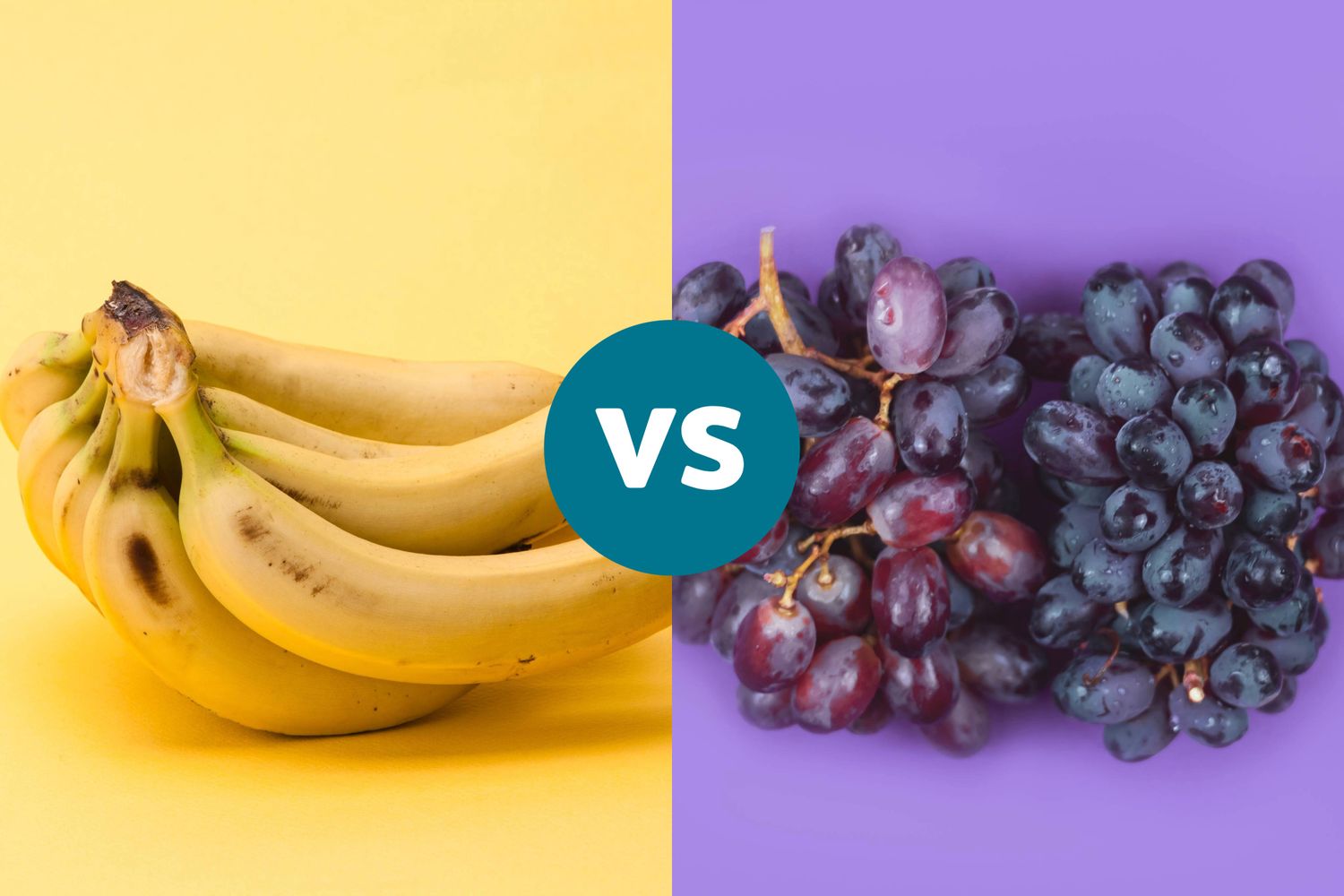
Bananas and grapes are both rich in antioxidants, potassium, and many other vitamins and minerals. Bananas are higher in potassium, vitamin C, and calories than grapes, but each fruit has a different combination of antioxidants.
How Do Bananas and Grapes Compare for Antioxidants?
Antioxidants are substances naturally present in many fruits and vegetables, including bananas and grapes. Antioxidants neutralize destructive free radical molecules that can harm cells and contribute to inflammation, cancer, and chronic diseases. Many vitamins and some minerals have antioxidant actions.
| Nutrients with antioxidant properties | Bananas, 100 grams (g) | Green grapes,100 g | Red grapes,100 g |
|---|---|---|---|
| Vitamin C | 12.3 mg | 3 mg | 3.3 mg |
| Vitamin A | 1 microgram (mcg) | NA | NA |
| Thiamine | 0.056 milligram (mg) | NA | NA |
| Folate | 14 mcg | NA | NA |
| Niacin | 0.662 mg | NA | NA |
| Riboflavin | less than 0.1 mg | NA | NA |
| Zinc | 0.16 mg | 0.03 mg | 0.04 mg |
| Magnesium | 28 mg | 7.1 mg | 8.6 mg |
| Manganese | 0.258 mg | 0.084 mg | 0.098 mg |
Other antioxidants in bananas and grapes include:
- Grapes: Resveratrol, quercetin, kaempferol, catechin, epicatechin, and anthocyanins
- Bananas: Polyphenols, flavonoids, palmitic acid, linoleic acid, oleic acid, campesterol, stigmasterol
Different types of grapes have varying combinations of antioxidants. Bananas at different levels of ripeness also have different antioxidant profiles.
It’s recommended to get antioxidants from your diet through eating a variety of whole, plant-based foods. While you might compare bananas and grapes for specific antioxidants, what counts is having variety in your diet and getting antioxidants from whole foods.
How Much Potassium Is in Bananas and Grapes?
Grapes and bananas each provide your body with potassium, an important mineral that has many roles. Bananas have about twice the potassium per cup as grapes.
| Potassium in Grapes and Bananas | ||
|---|---|---|
| 1 cup | Potassium | % Daily value |
| Bananas | 537 mg | 11% |
| Green grapes | 218.1 mg | 5% |
| Red grapes | 229.4 mg | 5% |
What potassium does in your body includes:
- Maintains the stability of nerve cells
- Supports bone formation and strength
- Facilitates heart function
- Enables muscle movement
- Regulates blood pressure
Blood Potassium Level
A standard blood electrolyte test measures the concentration of potassium and other minerals in your blood. Your blood potassium concentration has to remain at a target range of 3.6 to 5.2 millimoles per liter (mmol/L) for optimal health. Your body works hard to maintain the ideal balance of potassium.
Your kidneys respond to your potassium concentration by:
- Saving the potassium you need so that it can circulate in your blood and get to your organs
- Filtering excess potassium to be removed from your body through your urine
How Much Potassium Do You Need?
You obtain potassium through food.
Your daily potassium intake recommendations per age:
- Birth to 6 months: 400 milligrams (mg)
- 7-12 months: 860 mg
- 1-3 years: 2,000 mg
- 4-8 years: 2,300 mg
- 9-13 years: 2,300 mg females, 2,500 mg males
- 14-18 years: 2,300 mg females, 3,000 mg males
- 19-50 years: 2,600 mg females, 3,400 mg males
- Pregnant: 2,600 to 2,900 mg
- Lactating: 2,500 to 2,800 mg
- 51 and older: 2,600 mg females, 3,400 mg males
Can You Have Too Much Potassium?
It’s highly unlikely that you could be harmed by eating foods that are high in potassium if you are healthy. But if you have certain health problems that prevent your body from balancing mineral levels, you need to be careful about your potassium intake.
You may need to monitor and limit your potassium if you have any of the following health conditions:
If you are in doubt or have questions about your specific risks, check with a healthcare providerl who can review your blood tests and health history, and provide personalized recommendations.
Calories in Grapes and Bananas
Grapes and bananas are a source of calories. Your body uses calories for energy, and you store excess calories as fat. The calories in both fruits come primarily from carbohydrates, with only a small amount of protein and very little fat.
Calories from grapes or bananas:
- Banana, sliced, 1 cup: 134 calories
- Green grapes, seedless, 1 cup: 80 calories
- Red grapes, seedless, 1 cup: 86 calories
There are several types of bananas and grapes, and each varies slightly in calorie and nutrient content.
Additionally, the ripeness of bananas can change the calorie and nutrient content. A slightly ripe banana, 115 grams (g) provides about 113 calories, while an overripe banana 115 g provides about 93.5 calories.
:max_bytes(150000):strip_icc()/Heidi-Moawad-MD-1000-2792fc644ba54e05a6e82c8a25ae988f.jpg)