

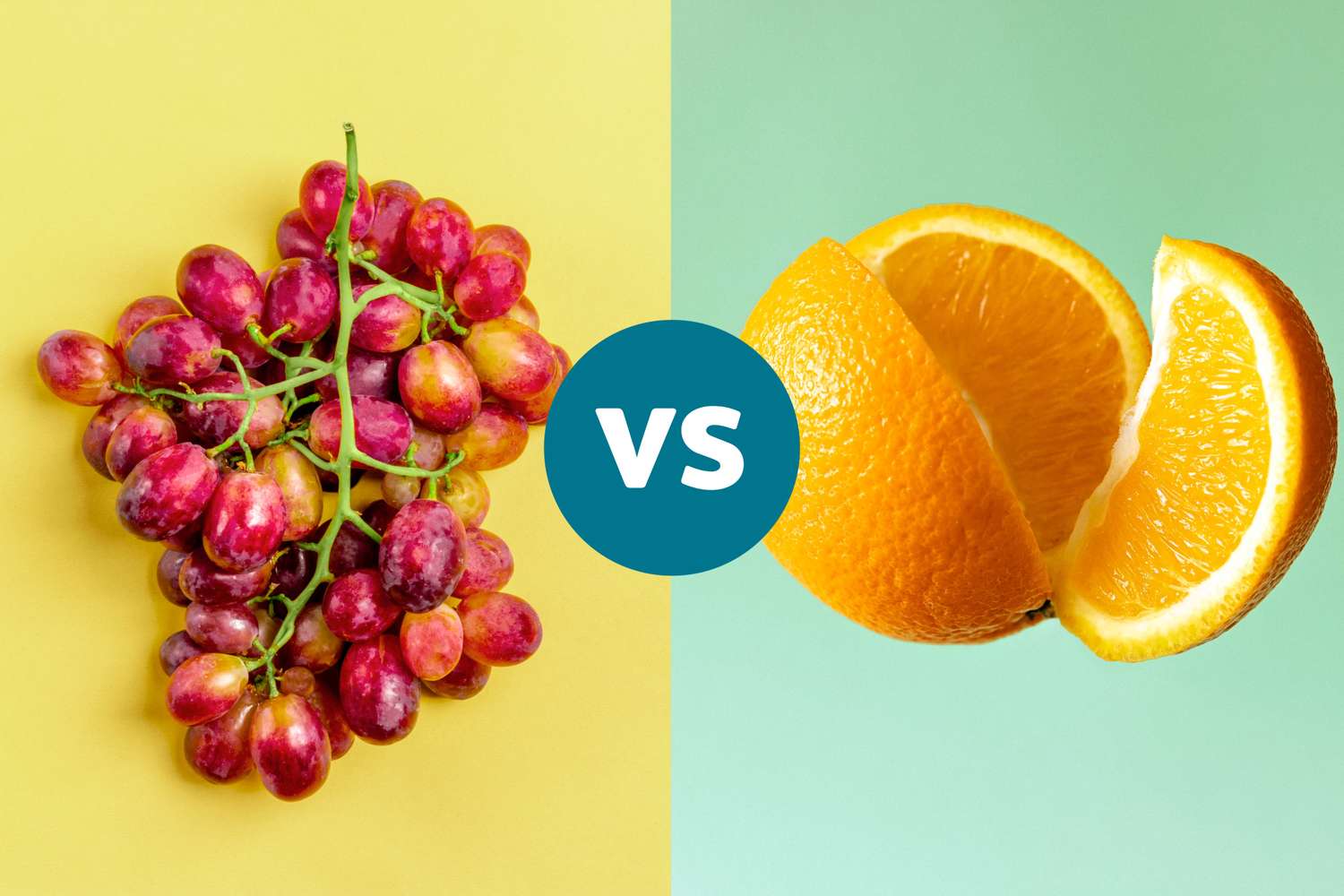
Key Takeaways
- Oranges and grapes are both healthy options that can be included in a well-rounded, whole-food diet.
- While both contain antioxidants, grapes contain specific types not found in oranges, which could play a more significant role in oxidative stress and disease prevention.
- Oranges are lower in calories and sugar and contain higher levels of specific nutrients, such as vitamin C and fiber.
Both oranges and grapes can be staples in a balanced diet, but each offers its own benefits because of the unique compounds and nutrients found in the fruits.
Quick Comparison
Grapes and oranges both offer health benefits because of their nutrients, but those benefits may differ.
-
Are rich in specific anti-inflammatory and anticancer antioxidants, including resveratrol and anthocyanin
-
Are higher in some B vitamins
-
Are higher in vitamin K
-
Contain more sugar and calories per serving
-
Contain a higher concentration of vitamin C
-
Have more fiber per serving
-
Are higher in other essential nutrients, including folate (B9) and calcium
-
Are lower in sugar and calories per serving
Antioxidant Benefits of Oranges
Oranges are a citrus fruit that contains high levels of various nutrients the body needs to function optimally. Oranges are high in vitamin C, which the body needs for tissue repair and growth, wound healing, and maintaining healthy bones and skin.
Vitamin C can also act as an antioxidant in the body, helping prevent the accumulation of free radicals, which are unstable molecules that damage cells. When there are too many free radicals in the body, it can lead to cell damage and oxidative stress, which can lead to various symptoms, including:
- Brain fog
- Chronic fatigue
- Memory loss
- Poor sleep
- Joint and muscle pain
- Frequent infections
- Cardiovascular issues
The antioxidant powers of vitamin C can aid health by reducing inflammation and exerting an anti-cancer effect in the body.
Antioxidant Benefits of Grapes
While oranges contain some antioxidants, grapes are rich in specific types, including resveratrol and anthocyanins, both of which can provide immense health benefits.
In the case of resveratrol, the health benefits include:
- Reducing free radicals in the body
- Protecting the body against cancer
- Improving cardiovascular function
- Protecting the brain against conditions such as dementia, Parkinson’s disease, and Huntington’s disease
- Inhibiting the growth of germs in the body
- Lowering androgens, male hormones that may cause health issues in women in excess, like with polycystic ovary syndrome
Anthocyanins also help protect against various diseases, including diabetes, cancer, and cardiovascular disease. They can also:
- Improve vision health
- Improve weight management and prevent obesity
- Reduce inflammation
- Inhibit the growth of negative bacteria in the body
Nutrition Comparison
The nutritional makeup of a 100-gram (g) serving of either fruit is:
| Oranges | Grapes | |
|---|---|---|
| Calories | 52 | 87 |
| Carbohydrates | 11.8 g | 20.2 g |
| Sugar | 8.6 g | 17.3 g |
| Calcium | 43 mg | 10 mg |
| Magnesium | 10.7 mg | 8.6 mg |
| Phosphorus | 23 mg | 25 mg |
| Potassium | 166 mg | 229 mg |
| Vitamin C | 59.1 mg | 3.3 mg |
Oranges are high in some nutrients that grapes lack, including fiber, folate, and calcium, which play a role in various aspects of health. Dietary fiber, specifically that found in oranges rather than grapes, is associated with better energy metabolism and body weight.
Eating grapes will provide different benefits from oranges, but they are higher in calories, sugar, and carbohydrates when compared to the same size serving of an orange, and have lower amounts of vitamin C, fiber, folate, and calcium.
Higher levels of B vitamins, namely thiamine (B1), riboflavin B2, and vitamin B6, also give grapes a leg up when pitted against oranges. These nutrients are essential for various bodily functions because they help enzymes perform tasks required for overall health, including breaking down carbohydrates for energy and transporting oxygen throughout the body.
Which Should You Eat More Of?
Both oranges and grapes can be healthy parts of a balanced diet. Choosing which to prioritize may depend on the benefit you’re trying to achieve.
Oranges may be better for weight management because they contain fewer calories and sugars. Oranges are also suitable for mitigating oxidative stress and preventing disease due to the antioxidant properties of vitamin C.
However, the antioxidants in grapes may have a greater impact on disease prevention and oxidative stress when consumed regularly.
The better fruit is the one you will eat regularly, as per your preferences, as both are healthy options for a well-rounded diet.
:max_bytes(150000):strip_icc()/VerywellBioPicAngelicaBottaro-203f7e803ab444b2b5c13b4252d11159.JPG)