

Key Takeaways
- Both avocado and guacamole are rich in nutrients and healthy fats.
- Guacamole is more nutrient-dense because the ingredients added to it provide additional vitamins, minerals, and antioxidants.
- If your main goal is to increase fat intake, avocado on its own can work, but if you want more fat and nutrients, guacamole may be the better choice.
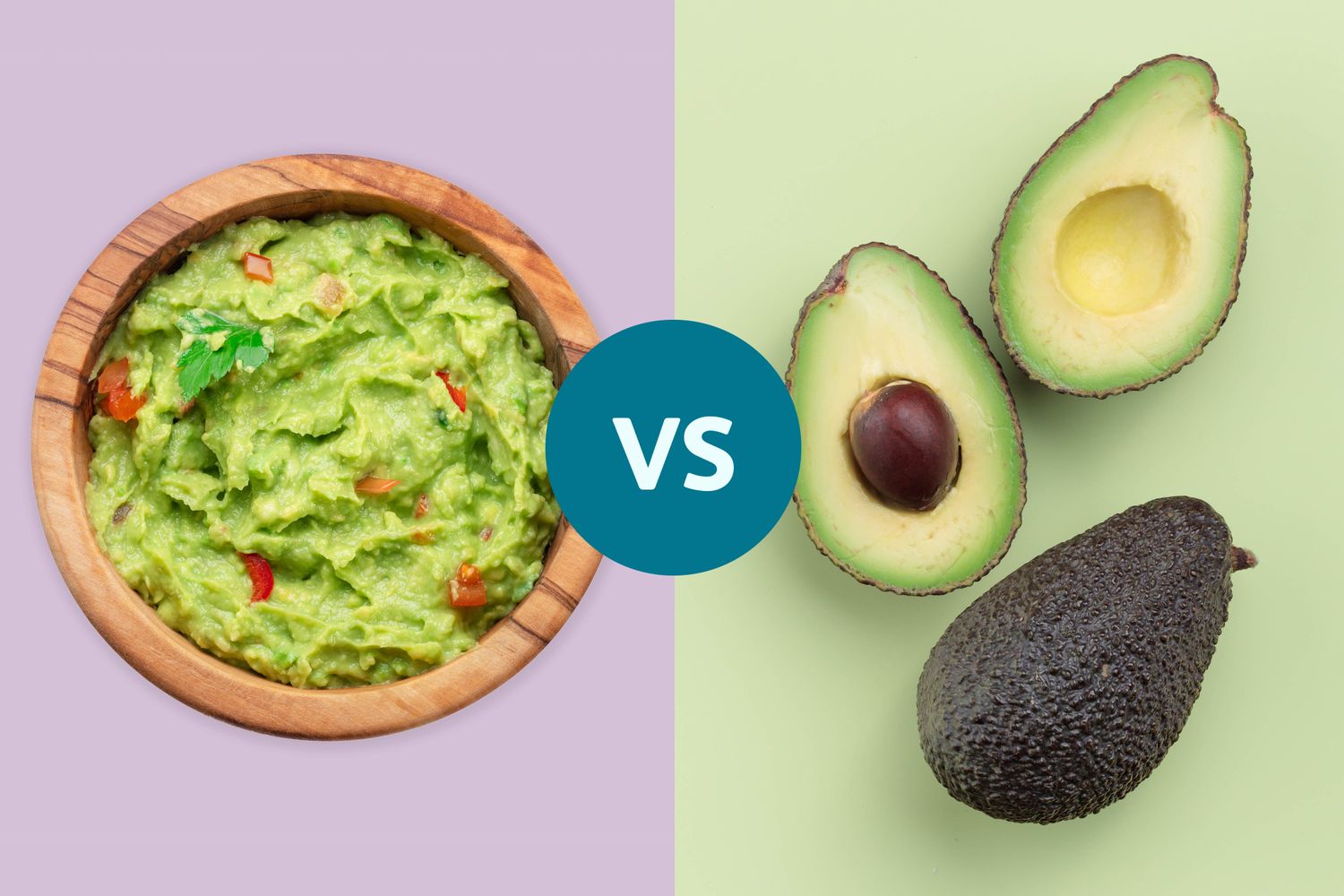
Avocado is an excellent source of nutrients and healthy fats. Guacamole, which uses avocado as its base, is made with other nutritious ingredients as well. Because of this, guacamole may have more nutrients than avocado alone, even if they contain the same amount of healthy fats.
Healthy Fats and Nutrients in Avocado
Avocado is high in fat, at 29.5 grams per avocado. It gives the body a high level of healthy fats. The types of fats they contain are mostly monounsaturated fatty acids (MUFAs), which are considered beneficial for overall health.
Avocado also contains high levels of many nutrients that are essential to overall health. One avocado (roughly 201 grams) will provide you with 322 calories, 4 grams of protein, and 17 grams of carbs.
It also provides some vitamins and minerals, including:
- Vitamin C
- Vitamin E
- Vitamin K
- B vitamins
- Folate
- Magnesium
- Potassium
- Copper
- Manganese
Health Benefits of MUFAs
MUFAs are beneficial because they can help lower levels of LDL (“bad”) cholesterol in the body, which can build up and block arteries leading to heart attack and stroke. That’s why eating healthy fats is crucial in a well-rounded diet.
Healthy Fats and Nutrients in Guacamole
Avocado is the base used in guacamole, so you will get the same nutrients and healthy fats that you get from an avocado when you eat guacamole. That said, the core ingredients to make guacamole typically also include:
- Onions
- Cilantro
- Tomatoes
- Fresh lime juice
When you eat guacamole, you’ll also get the nutrients from these added ingredients.
| Ingredient | Nutrients |
|---|---|
| Onion | Fiber, calcium, magnesium, phosphorus, potassium, vitamin C |
| Cilantro | Vitamins A, K, and C, antioxidants, folate, potassium, manganese, calcium |
| Tomatoes | Fiber, vitamins A and C, potassium, magnesium, calcium, folate, beta-carotene |
| Lime | Vitamins C and B6, potassium, folate, calcium, flavonoids, magnesium |
The added ingredients in guacamole are very low in fat, so they won’t add much to the healthy fats category, but they will increase nutrient intake. Since you’ll still get the healthy fats from the avocado anyway, eating guacamole gives you more nutritional benefits than eating avocado on its own.
Fats in Guacamole Ingredients
Onions, cilantro, tomatoes, and lime juice all contain very low levels of fat, especially compared to avocado. All ingredients combined contain less than 1 g of fat.
Things to Consider
While there are many types of avocados, they typically share a similar nutritional profile, with only minor variations.
On the other hand, not all kinds of guacamole are made equal. For example, homemade versions made with fresh ingredients will generally offer more nutrients compared to store-bought. Store-bought guacamole may contain other ingredients that could offset its healthiness, such as:
- Sugar
- Sour cream
- Preservatives
- Sodium
- Artificial flavors
People also tend to eat guacamole as a dip for tortilla chips or fried bread, as a spread on bread, and with other foods such as eggs, which can increase calorie and unhealthy fat intake.
Choosing What’s Best for You
The best way to reap the benefits of either avocado or guacamole is to choose the one you prefer and incorporate it into a healthy, well-rounded diet.
:max_bytes(150000):strip_icc()/VerywellBioPicAngelicaBottaro-203f7e803ab444b2b5c13b4252d11159.JPG)