

Key Takeaways
- Pine nuts have more healthy fats and protein compared to chestnuts.
- Chestnuts are higher in fiber and provide more sustained energy than pine nuts.
- Chestnuts are the only nut that contains vitamin C.
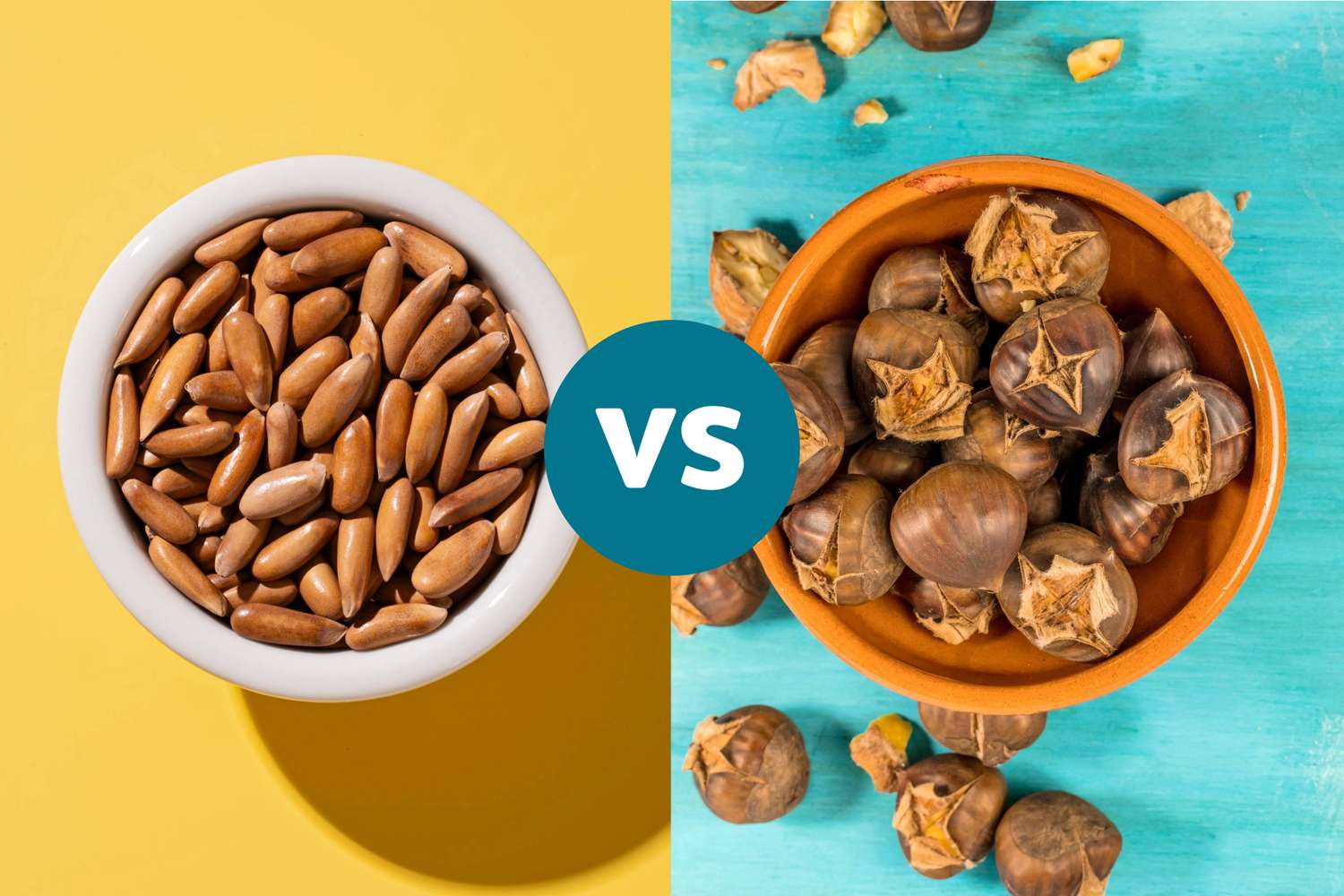
Pine nuts and chestnuts can both be part of a healthy diet. While pine nuts are actually edible seeds that come from pine cones, chestnuts are true tree nuts. Both offer important nutrients, though they differ in their fat, protein, and fiber content.
Pine Nuts Contain More Healthy Fats
Pine nuts are quite high in healthy fats, providing about 70 grams of total fat per 100 grams, according to Heewon L. Gray, PhD, RDN, an associate professor of nutrition and dietetics at the University of South Florida.
Both pine nuts and chestnuts have healthy fats, but pine nuts consist of significantly more polyunsaturated fats, monounsaturated fats, and plant-based omega-3 fatty acids.
Gray said pine nuts contain a fatty acid called pinolenic acid that research has linked to possible benefits such as weight loss, lower cholesterol, better blood sugar control, and reduced inflammation.
Chestnuts also contain omega-3s, but a very small amount, about 10 mg per 100 g. Most fats in chestnuts are monounsaturated fats and omega-6 polyunsaturated fats.
“Interestingly, chestnuts are rather low in fat compared to other nuts,” said Daniela Novotny, PhD, RD, a senior instructor of nutrition and dietetics at Missouri State University. “Their nutritional composition is actually closer to that of whole grains than traditional nuts.”
Pine Nuts Are Also Higher in Protein
Pine nuts are also higher in protein than chestnuts. When compared gram to gram, there are about 14 g of protein per 100 g of pine nuts, as compared to 1.6 g of protein per 100 g of chestnuts.
However, pine nuts tend to be eaten in small amounts, especially when blended in a sauce or consumed as a topping on a salad or bowl. In pesto, for example, you’ll likely only use about 5-12 g of pine nuts.
“Because a pine nuts per serving is usually small, it may not provide a meaningful amount of protein,” Gray said.
Chestnuts Have More Fiber
Chesnuts may be lower in protein and fat than pine nuts, but they tend to have more fiber due to their higher carbohydrate content.
Pine nuts have about 3%-4% fiber, while chestnuts have 5% fiber.
“Again, the serving size of pine nuts is usually small, not providing much of the total fiber intake,” Gray said. “People typically eat a larger serving of chestnuts in one sitting or meal, providing a moderate amount of fiber—about 3-4.5 g or 15% of daily recommendations.”
They Both Contain Micronutrients With Other Benefits
In addition to fiber, protein, and fats, both contain beneficial micronutrients.
Pine nuts are high in magnesium, copper, manganese, phosphorus, zinc, vitamin E, and vitamin K, further supporting heart health, immune function, bone health, and antioxidant effects, Gray said.
Chestnuts are rich in copper, manganese, vitamin C, and vitamin B6, similarly supporting immune function, energy metabolism, and bone and connective tissue health. Moderate amounts of potassium in chestnuts also support healthy blood pressure, Gray said.
“Chestnuts provide complex carbohydrates and fiber that provide more sustained energy throughout the day, along with B vitamins important for carbohydrate metabolism,” Gray said. “Pine nuts are calorie-dense as they are high in fat, which support slower digestion and help with satiety, but they do not provide steady energy throughout the day compared to carbohydrate-rich foods.”
How Much Should You Eat?
About 1/8 of a cup of pine nuts is a solid serving to provide the benefits of the healthy fats and micronutrients, Novotny said.
As for chestnuts, she said about 1/2 cup roasted, equal to roughly four chestnuts, is a nice serving to provide fiber and micronutrients.
They can be roasted and eaten with butter and salt, or they can be added to foods like stuffings and soups, she said.
:max_bytes(150000):strip_icc()/FE3F9AD2-9085-40B8-8E8E-AF95656B0B37-048bcc651b0f4063b40038d3df45e712.jpeg)