

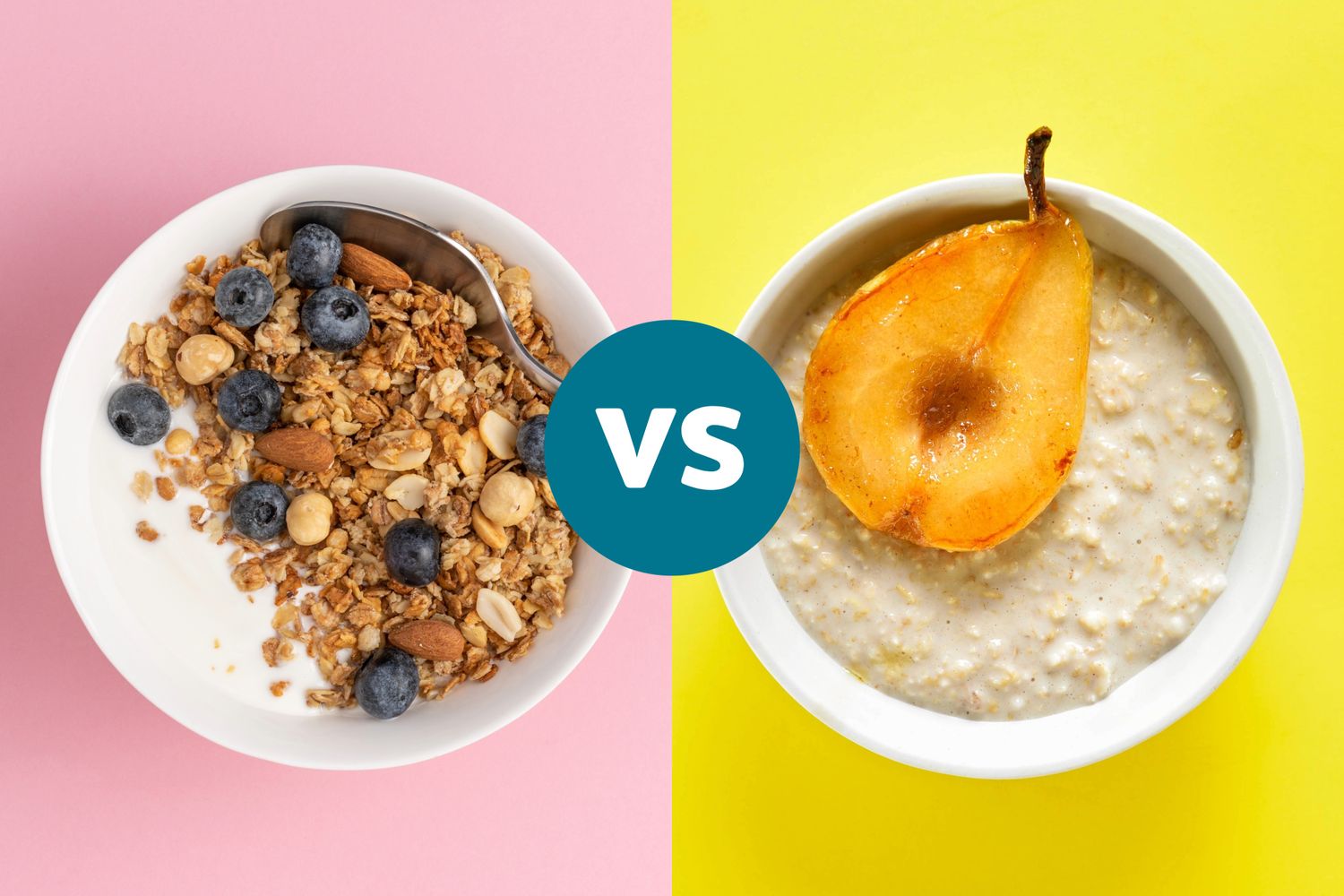
Key Takeaways
- Granola contains more calories, sugar, and fiber than oatmeal, making it a great crunchy topping for yogurts or parfaits.
- Plain oatmeal has fewer calories and provides a healthy base for a nutritious breakfast, which you can top with fruit or nuts.
- Both can be part of a healthy diet, keeping in mind that granola contains twice the calories, sugar, and fiber as oatmeal.
Oatmeal and granola are popular breakfast foods that many turn to for added fiber. Both are made using oats, but because granola contains other ingredients like nuts, seeds, dried fruits, and sweeteners, it is higher in fiber, calories, and sugar than plain oatmeal.
Oatmeal Has Fewer Calories Than Granola
Granola, which is typically made with oats, various nuts and seeds, dried fruits, and sweeteners, contains more calories than oatmeal per serving:
- Oatmeal: 91 calories per 1/2 cup serving of plain oatmeal
- Granola: 280 calories per 1/2 cup serving
However, pre-packaged instant oatmeals can contain added ingredients that increase the overall calorie content, so always check the label rather than automatically reaching for oatmeal as the “healthier” choice.
Oatmeal Usually Contains Less Sugar
Since granola is made with added sweeteners, such as honey or maple syrup, it contains more sugar per serving than plain oatmeal:
- Oatmeal: Less than 1 g of sugar per 1/2 cup serving
- Granola: 8 g sugar per 1/2 cup serving
That said, instant oatmeal is usually made with added sweeteners. For example, a half-cup serving of strawberry instant oatmeal contains 10 grams of sugar, making the two foods comparable in terms of their sugar content.
Many people who make plain oatmeal at home often drizzle maple syrup or brown sugar over the top to enhance the flavor, which can also impact sugar levels.
Granola Is Higher in Fiber
Dietary fiber helps manage blood sugar levels, improves digestion, and can help reduce cholesterol levels. Adults need between 25 and 34 grams per day; however, most fall short of this goal.
Both oatmeal and granola are made with whole grains, which are known to be good sources of fiber, offering:
- Granola: 6 g of fiber per 1/2 cup serving
- Oatmeal: 2 g of fiber per 1/2 cup serving
Nutrition Comparison
Granola and oatmeal have different nutritional profiles. Below is a comparison of one-half cup serving of classic granola versus the same serving of plain oatmeal.
| Nutrient | Granola | Oatmeal |
|---|---|---|
| Calories | 280 | 91 |
| Carbohydrates | 28 g | 13 g |
| Protein | 6 g | 2.5 g |
| Fat | 18 g | 3 g |
| Fiber | 6 g | 2 g |
| Sugar | 8 g | Less than 1 g |
As you can see, granola contains at least twice as many calories, sugar, and fiber per serving. Other essential nutrients to consider are carbohydrates, protein, and fat.
- Carbohydrates: Oatmeal and granola are both complex carbohydrates that contain fiber and take longer to digest, resulting in a less severe impact on your blood sugar levels.
- Protein: Granola contains double the amount of protein per serving than oatmeal. Protein is essential for building muscle, bone, blood, skin, and cartilage (padding in your joints). It also aids in recovery after injury.
- Fat: Granola contains more fat than plain oatmeal, primarily due to the nuts in the whole-grain mix. Dietary fats help provide your body with energy (although they are not its primary source) and support your cells, as well as aid in the body’s digestion and nutrient absorption.
Which Should You Choose?
Oatmeal is generally more nutritious than granola, but both can be part of a healthy diet. It’s essential to check the serving size and read the nutrition label on your food to determine the specific nutrients in the products you are buying.
- Oatmeal, when served plain, contains fewer calories, sugar, and fiber than granola. It is a great base you can top with fresh fruit and nuts for a nutritious breakfast that will provide you with steady energy throughout the morning.
- Granola, on the other hand, is more energy-dense, packing twice as many calories, sugar, and fiber per serving. It is best used as a topping for yogurt or on its own to provide a quick energy boost before a workout.
Choose based on your personal preferences and dietary needs.
:max_bytes(150000):strip_icc()/headshot-30161addc7ad4e44a82a42642b1bacb0.jpg)