

Key Takeaways
- Oats and quinoa are both heart-healthy whole grains, helping support steady energy, blood sugar control, and fullness due to their fiber and nutrient content.
- Oats’ beta-glucan content makes it especially beneficial for lowering cholesterol.
- Quinoa offers slightly more protein and micronutrients that help sustain energy and satiety, though both quinoa and oats are good sources of fiber and protein.
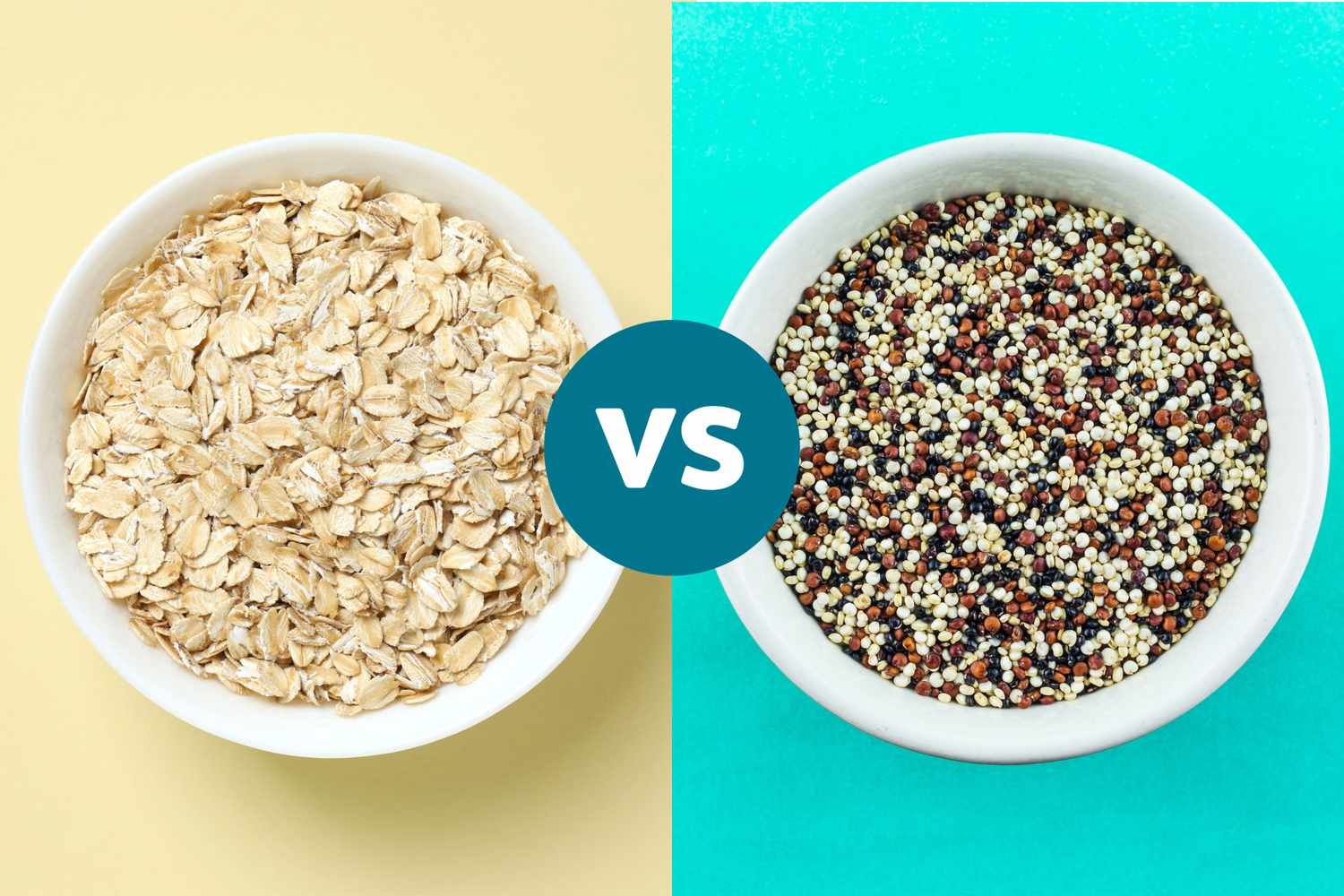
Oats and quinoa are both nutrient-dense, heart-healthy whole grains. Oats provide more cholesterol-lowering benefits, due to their beta-glucan fiber, while quinoa offers more protein and micronutrients for steady blood sugar and sustained energy.
Oats vs. Quinoa: Nutrition Comparison
Oats and quinoa have similar nutrition profiles with some notable differences.
Quinoa is higher in:
- Calories
- Protein
- Calcium
- Magnesium
- Potassium
- Vitamin B6
- Folate
- Vitamin E
Oats are lower than quinoa in most nutrients, but are a good source of a fiber called beta-glucan which is known for its heart-health benefits. While quinoa is a good source of fiber, it is not a good source of beta-glucan.
Quinoa is a complete protein, meaning it contains all nine essential amino acids. Oats are not a complete protein.
Nutrition information for 1 cup of cooked oats versus 1 cup of cooked quinoa is as follows.
| Oats (1 cup) | Quinoa (1 cup) | |
|---|---|---|
| Calories | 166 | 222 |
| Total fat | 3.56 grams (g) | 3.55 |
| Carbohydrates | 28.1 g | 39.4 g |
| Protein | 5.94 g | 8.14 g |
| Fiber | 3.98 g | 5.18 g |
| Calcium | 21.1 milligrams (mg) | 31.4 mg |
| Iron | 2.11 mg | 2.76 mg |
| Magnesium | 63.2 mg | 118 mg |
| Phosphorus | 180 mg | 281 mg |
| Potassium | 164 mg | 318 mg |
| Sodium | 9.36 mg | 13 mg |
| Zinc | 2.34 mg | 2.02 mg |
| Copper | 0.173 mg | 0.355 mg |
| Manganese | 1.36 mg | 1.17 mg |
| Thiamin (vitamin B1) | 0.178 mg | 0.198 mg |
| Riboflavin (vitamin B2) | 0.037 mg | 0.204 mg |
| Niacin (vitamin B3) | 0.526 mg | 0.762 mg |
| Vitamin B6 | 0.012 mg | 0.228 mg |
| Folate | 14 micrograms (mcg) | 77.7 mcg |
| Vitamin E | 0.187 mg | 1.16 mg |
| Vitamin K | 0.702 mcg | 0 mcg |
Which Is Better for Lowering Cholesterol?
Regularly eating whole grains, including oats and quinoa, has been associated with heart-health benefits such as:
Both oats and quinoa are heart-healthy foods, but the beta-glucan fiber in oats has been particularly linked to heart benefits, especially lowered cholesterol.
Beta-glucan forms a gel in the gut which traps cholesterol-rich bile acids, reducing the amount of cholesterol entering the blood stream, and prompting the liver to remove cholesterol from the blood to make more bile.
Beta-glucan is also rich in antioxidants and may have anti-inflammatory properties.
Which Is Better for Keeping Blood Sugar Steady?
Oats and quinoa are both sources of fiber. Fiber helps to:
- Slow digestion
- Increase satiety (feeling fuller for longer)
- Reduce blood sugar spikes after eating
Both also contain protein, particularly quinoa. Protein provides more sustained energy. By helping reduce hunger, and preventing blood sugar spikes, oats and quinoa help sustain energy and satiety, so you’re less likely to need a “pick-me-up” during the day.
Whole grains such as oats and quinoa contain B vitamins, which help your body release energy from the food you eat.
Other Benefits of Oats and Quinoa
Other health benefits of oats and quinoa include:
- Antioxidant properties
- Immune system support
- May improve insulin sensitivity (how well your body responds to insulin)
- May reduce the risk of type 2 diabetes
- May help reduce the damaging effects of chronic inflammation
- Helps support digestive health
Ways to Add More Oats and Quinoa to Your Diet
There are many ways to include oats and quinoa in your diet, such as:
- Pair oatmeal with fruits, nuts, and/or seeds
- Use oats in baked goods, such as muffins or oatmeal raisin cookies
- Use oats instead of breadcrumbs in meatloaf, beef and veggie patties, or as a crust for chicken or fish
- Make homemade granola
- Make a breakfast cereal by cooking quinoa in milk or water, and adding fresh fruit, cinnamon, and nuts
- Use quinoa instead of rice in dishes such as stir-fries and sushi
- Add cooked quinoa to soups or salads
- Use quinoa instead of pasta in pasta salads
- Pop quinoa similarly to popcorn
- Include cooked quinoa or oats in smoothies
- Make overnight oats for a grab and go breakfast
- Replace rice with oats for risotto
- Add oat bran to hot or cold cereals
:max_bytes(150000):strip_icc()/PicsArt_09-20-02.40.06-13db387d22de4949b3d6c887bcc884cd.jpg)