

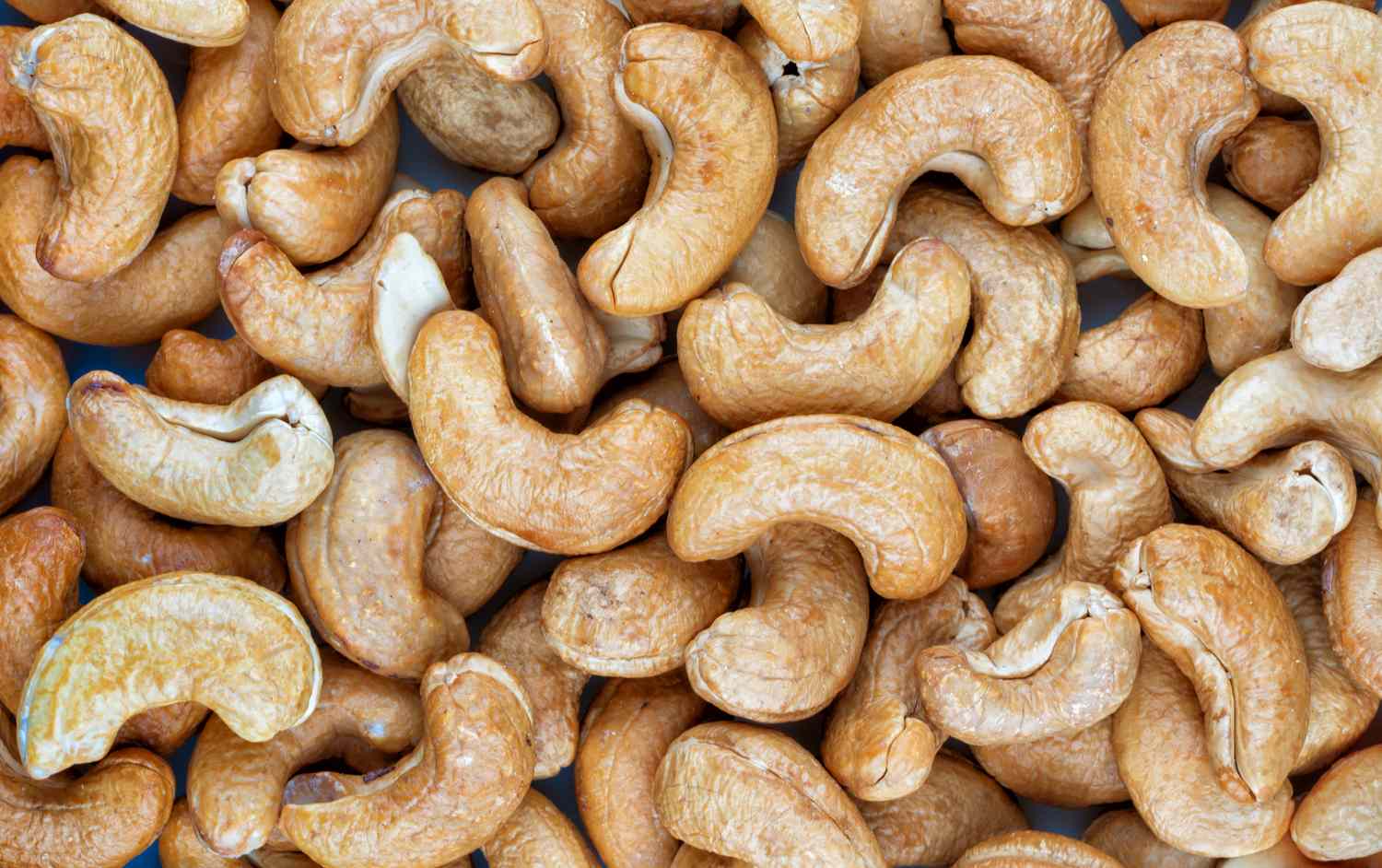
Key Takeaways
- Both raw and roasted cashews contain high levels of the essential minerals iron and selenium.
- Raw varieties contain slightly higher levels of iron and selenium, but roasted varieties are often easier to digest, allowing the body to absorb the minerals better.
- Choosing between raw and roasted cashews comes down to which you’re more likely to eat regularly.
Cashews are a good source of both iron and selenium, and eating them either raw or roasted may help increase your intake of both essential nutrients.
That being said, raw varieties tend to have slightly higher levels of both because they don’t undergo the high-heat process that roasted varieties do, which reduces nutrient levels.
Iron Content in Raw vs. Roasted Cashews
Iron is an essential mineral that is often found in the highest amounts in meat and animal-based foods, such as seafood, poultry, and lean beef. There are two types of iron: heme and nonheme.
The main difference between the two types of iron is how well the body absorbs them. Heme is more bioavailable than nonheme, making it more effective at establishing adequate iron levels.
Nuts, such as cashews, as well as beans and some vegetables, contain nonheme iron. The iron content in roasted and raw cashews varies, with dry-roasted cashews containing 1.7 milligrams (mg) of iron per ounce and raw cashews containing roughly 1.9 mg of iron per ounce.
The recommended daily intake for most adults is 8-18 mg of iron per day, depending on factors like age, sex, and diet status. Diet plays a role because people who get their iron only from plant-based sources do not absorb it as well, leading to higher requirements. In a 1-ounce serving, either variety of cashew provides:
- Raw cashews: 1.9 mg, or up to 24% of daily iron needs
- Roasted cashews: 1.7 mg, or up to 21% of daily iron needs
Selenium Content in Raw vs. Roasted Cashews
Comparing cashews in their raw versus roasted state, the selenium content varies:
- Raw cashews: 5.6 micrograms, or about 10% of daily selenium needs
- Roasted cashews: 3.3 micrograms, or about 6% of daily selenium needs
Selenium is another essential mineral, like iron, that the body uses for a variety of functions, including thyroid hormone metabolism, DNA synthesis, and protection against cell damage. Most adults need just 55 micrograms per day.
Selenium is often well-absorbed by the body regardless of its form, so foods you eat with the mineral will likely ensure that you are getting enough.
Other Things to Consider
While eating raw cashews gives you more iron and selenium, doing so comes with a caveat: The body can’t absorb those nutrients as well as it could when cashews are roasted, because they contain anti-nutrients, such as phytic acid.
These anti-nutrients make it harder to digest cashews, and thus, harder for the body to absorb their iron and selenium.
So while both types of cashews provide iron and selenium, with raw cashews offering a higher amount, roasted cashews’ nutrients are better absorbed.
Due to this difference, choosing raw versus roasted cashews generally comes down to your personal taste preference. The best way to take advantage of the health benefits of cashews is likely to consume them regularly, in mindful portions.
:max_bytes(150000):strip_icc()/VerywellBioPicAngelicaBottaro-203f7e803ab444b2b5c13b4252d11159.JPG)