

Key Takeaways
- Hazelnuts provide more heart-healthy fats than pistachios.
- Pistachios have slightly more protein and fiber.
- Nuts are typically safe for most people to eat; however, they can be high in sodium and may trigger allergic reactions in some.
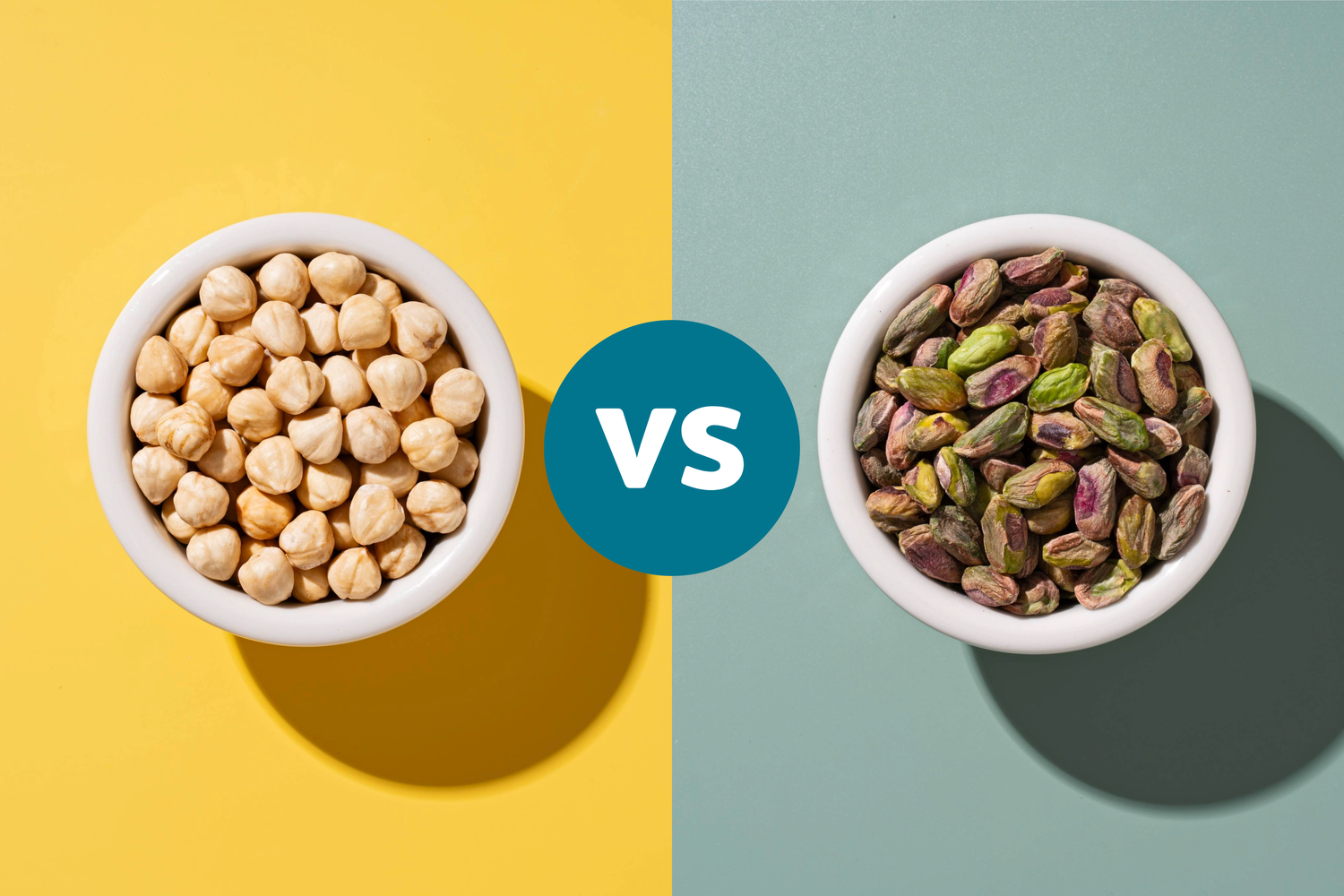
Hazelnuts provide more healthy fats per serving than pistachios. However, pistachios offer slightly more fiber and protein per serving. Both nuts are excellent sources of energy and nutrients.
Hazelnuts Have More Healthy Fats
A 1-ounce (oz) serving of hazelnuts contains approximately 15 grams (g) of unsaturated “healthy” fats, compared to around 10 g in the same size serving of pistachios.
Two types of fat comprise unsaturated fats: monounsaturated and polyunsaturated fatty acids, categorized by their chemical structure.
- Monounsaturated fatty acids (which contain one carbon double bond) support cell growth and maintenance and help lower levels of unhealthy low-density lipoprotein (LDL) cholesterol in the blood.
- Polyunsaturated fatty acids (which have two carbon double bonds) also help lower LDL cholesterol levels. Studies show that these fatty acids also help manage blood sugar, lower blood pressure, and reduce the risk of type 2 diabetes.
Pistachios Contain Slightly More Protein
The difference in protein content between hazelnuts and pistachios is slight. Pistachios offer 5.73 g of protein per 1-oz serving, while hazelnuts provide 4.25 g in the same amount.
Protein is found in every cell of the human body and plays a critical role in cell development and repair. It’s especially important for children, adolescents, and during pregnancy.
Healthy adults should aim for at least 0.8 g of protein per kilogram (kg) of body weight. So, for example, a person weighing 70 kg (154 pounds) should aim for at least 56 g of protein per day. Both hazelnuts and pistachios can contribute to your daily protein needs.
Both Provide Some Fiber
The difference in fiber per serving between hazelnuts and pistachios is negligible. Hazelnuts provide 2.75 g of fiber per 1-oz serving, while pistachios offer slightly more at 3 g per serving.
Daily fiber needs vary by age and sex, but generally, women should aim for 25-28 g of fiber daily, and men for 28-34 g. Both nuts can contribute to your daily fiber needs.
Fiber is a key component of a balanced diet. In addition to promoting digestion, this vital nutrient helps you feel full longer and supports weight management. Increasing your fiber intake helps reduce the risk of several diseases, including:
- Cardiovascular diseases (e.g., heart disease, stroke)
- Colon cancer
- Diabetes
- Irritable bowel syndrome
- Obesity
Hazelnut vs. Pistachio Nutrition
See how a 1-oz serving of hazelnuts and pistachios compare:
| Nutrient | Hazelnuts | Pistachios |
|---|---|---|
| Calories | 178 | 159 |
| Carbohydrates | 4.73 g | 7.71 g |
| Protein | 4.25 g | 5.73 |
| Fiber | 2.75 g | 3 g |
| Total fat | 17.2 g | 12.8 g |
| Saturated fat | 1.26 g | 1.68 g |
| Monounsaturated fat | 13 g | 6.61 g |
| Polyunsaturated fat | 2.24 g | 4.08 g |
Are There Drawbacks to Consuming Hazelnuts and Pistachios?
Despite their many health benefits, there are risks associated with nut consumption, especially if you eat large amounts. The nutritional content can vary based on how the nuts are prepared and served. For instance, some varieties have added salt, sugars, or other flavorings.
Potential drawbacks of hazelnuts and pistachios include:
- Digestive problems: Eating too many nuts may trigger digestive issues such as bloating, stomachache, gas, and diarrhea.
- Allergic reaction: Pistachios, hazelnuts, and other nuts can trigger severe reactions that can become life-threatening.
- Salt content: Some processed and packaged nuts can be high in sodium (salt). When consumed in excess, salt can raise your blood pressure and increase your risk of cardiovascular diseases. Low-salt or unsalted nuts are healthier for the heart.
- Hyperkalemia: Nuts contain potassium, which is typically processed and eliminated in the kidneys. However, people with kidney damage or disease may not be able to process potassium effectively, increasing the risk of hyperkalemia, a condition marked by muscle weakness, tingling, and an irregular heartbeat.
:max_bytes(150000):strip_icc()/Mark-Gurarie-1000-1bdb72526be24161a7d0d5eed3a7cc14.jpg)