

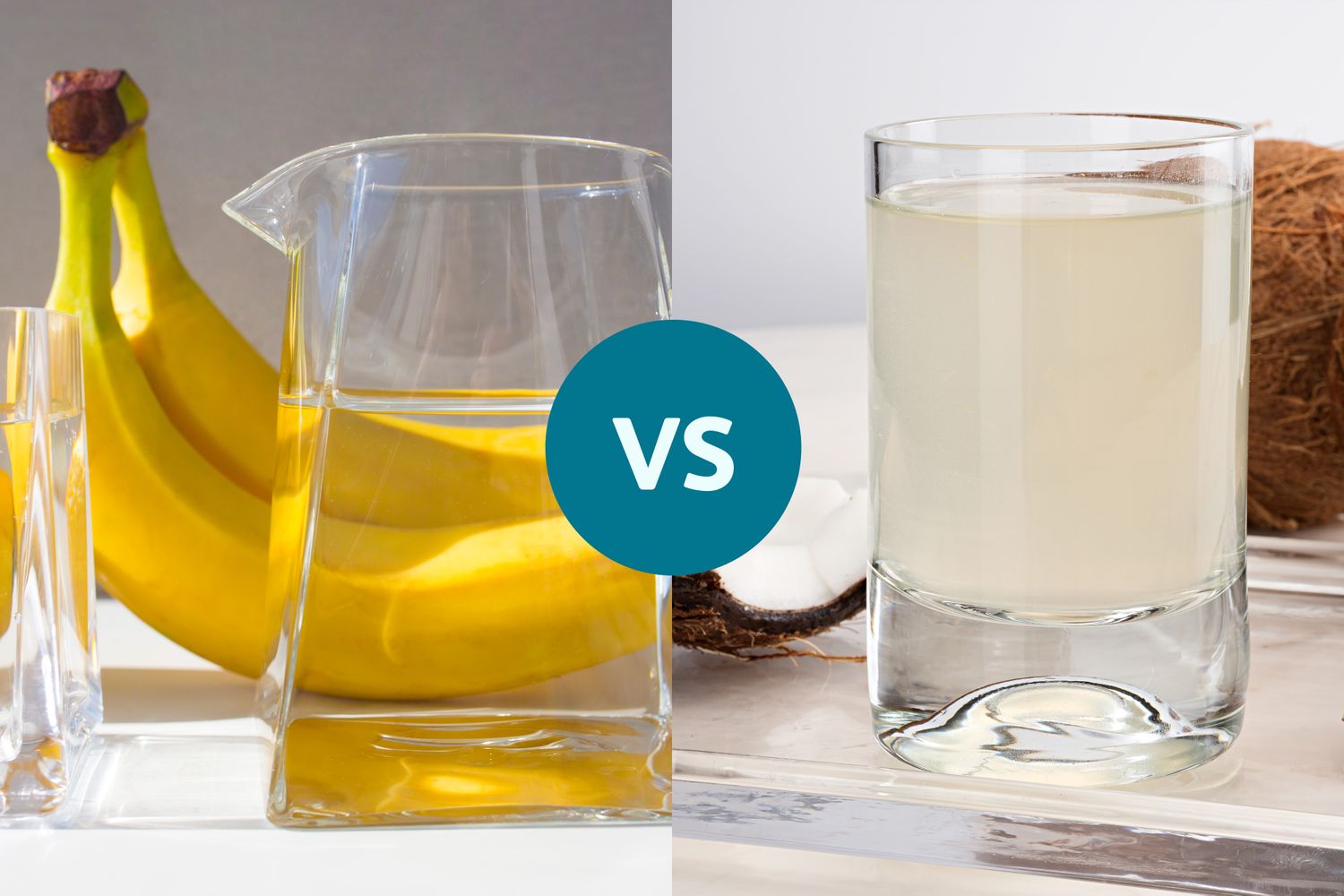
Key Takeaways
- Coconut water generally supports hydration better because it contains a broader mix of electrolytes, including some sodium.
- Banana water is sodium-free.
- Both drinks help with fluid intake, but coconut water is the better choice after a workout or a hot day.
Coconut water is a popular beverage for people who want a natural source of electrolytes, but recently, banana water is entering the market as another hydrating drink.
While both coconut water and banana water both contain electrolytes, their nutrient profiles are slightly different and may affect how well they support hydration needs.
What’s the Difference Between Coconut Water and Banana Water?
Coconut water has a lightly sweet, nutty flavor and comes straight from young, green coconuts. Banana water tastes more like a diluted banana smoothie and is typically made using nutrient-dense banana varieties, not the common Cavendish bananas found in grocery stores.
The way each drink is produced also sets them apart. Coconut water is naturally occurring inside the fruit, while banana water is made by steeping banana peels in water or using enzymes to extract nutrients. Both can be made at home or purchased ready-made, though coconut water is far more widely available.
Nutritionally, the two are similar at first glance. A 16-ounce serving of either usually contains about 80–90 calories, no fat, and roughly 20 grams of carbohydrates.
The main difference is the type of electrolytes they offer: banana water contains no sodium.
Banana Water Lacks Sodium—Why This Matters
Banana water typically doesn’t have sodium. Coconut water isn’t especially high in sodium either, but it does contain some—about 30 to 65 milligrams per serving.
The lack of sodium in banana water can matter if you’re trying to rehydrate after sweating, such as during hot weather or after a workout. While banana water may quench your thirst, it won’t help replace the sodium you’ve lost through sweating.
Which One Has More Potassium and Magnesium?
Bananas are known for their rich potassium content, and banana water brands often highlight that benefit. Some brands claim to have close to 800 milligrams in a 12-ounce bottle, often because they include added ingredients like potassium citrate, not just bananas.
Coconut water is also high in potassium, with some brands having more than 800 mg per 12-oz serving.
Banana water’s magnesium content can vary widely, depending on how it’s made and whether the manufacturer adds it. Some brands list magnesium on the label at around 315 mg per 16.9-oz serving, while others don’t list it at all.
Actual magnesium from the fruit itself would be much lower if you were just steeping banana peels or using whole bananas, since a medium banana only contains about 30 mg of magnesium naturally.
In comparison, coconut water contains a modest amount of magnesium, ranging from 25-40 mg per 16.9-oz serving.
Check the nutrition facts for the specific product you’re buying, because the mineral amounts can differ between brands.
So, Which One Is Better for Hydration?
Both coconut water and banana water contribute to daily fluid intake, and drinking a full serving of either can support basic hydration. If staying hydrated is your main goal, either option can help you meet it.
However, coconut water generally offers more hydration benefits because it contains a broader mix of electrolytes, which helps replace fluids and minerals lost through exercise, illness, or sweating. Research suggests coconut water can be an effective alternative to traditional sports drinks, while banana water hasn’t been studied as extensively and lacks the same electrolyte balance.
:max_bytes(150000):strip_icc()/norman-dd595cddde654266bd40199db77e316f.jpg)