

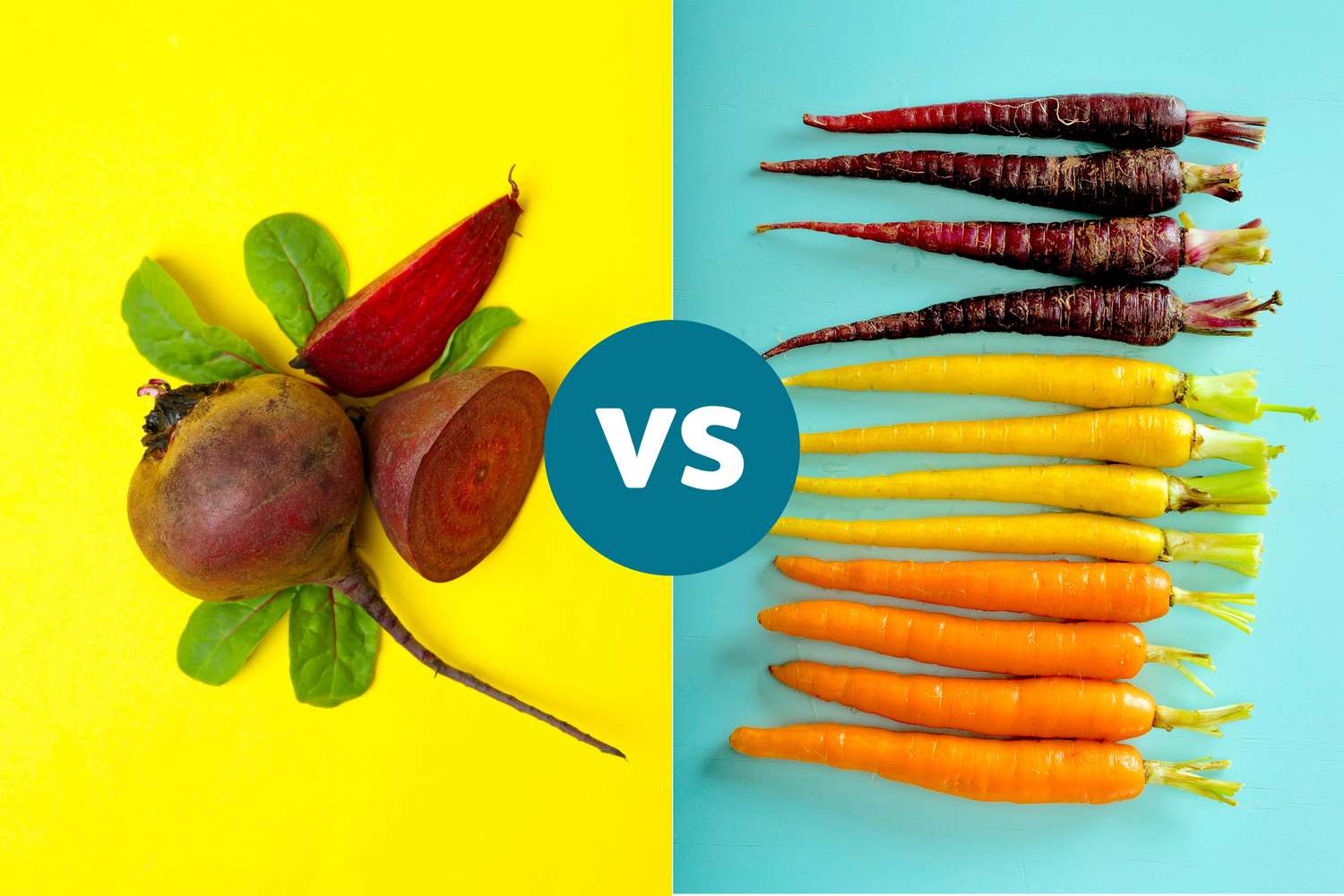
Key Takeaways
- Carrots are a rich source of antioxidants, vitamins, and beta-carotene, which has skin and eye health benefits.
- Beets contain antioxidants and are high in nitrates, which are bioactive compounds that improve circulation.
- Dietary fiber in both carrots and beets may enhance digestion and help with blood sugar regulation.
Carrots and beets are two types of root vegetables that contain a variety of beneficial nutrients and bioactive compounds. While carrots and beets share similar characteristics, you may find that one fits your health needs better.
Which Has More Vitamins, Antioxidants, and Fiber?
Carrots contain more vitamins—especially vitamin A and beta-carotene—making them excellent for eye and skin health. Beets, however, have slightly more fiber and a wider range of antioxidants, including betanin and nitrates that support circulation.
| Vitamins, Antioxidants, and Fiber in Carrots and Beets | ||
|---|---|---|
| Carrots | Beets | |
| Vitamins | Carrots are rich in vitamin A and are also a good source of vitamin K and B vitamins. | Beets are a good source of vitamin C, vitamin E, and B vitamins. |
| Antioxidants | Carotenoids (orange carrots) and anthocyanins (purple carrots) are antioxidants with anti-inflammatory, anti-aging, and anti-cancer properties. | Beets are a rich source of antioxidants, including vitamin C, vitamin E, polyphenols, and betanin, an antioxidant with strong free radical scavenging properties. |
| Fiber | One cup (128 g) of chopped carrots contains almost 3.6 grams of dietary fiber. | One cup (136 g) of raw beets contains 3.8 g of dietary fiber. |
A Closer Look at Beet and Carrot Nutrition
As root vegetables, carrots and beets share similar nutritional qualities, but differ in specific vitamins and bioactive compounds. Below is a closer look at their nutritional profile.
| Carrots vs. Beets: Nutrition Comparison for One Cup Each (3.5 oz / 100 g) | ||
|---|---|---|
| Nutrient | Beets | Carrots |
| Calories | 59 | 53 |
| Protein | 2.2 g | 1.2 g |
| Carbohydrates | 13 g / 5% DV | 12 g / 4% DV |
| Dietary Fiber | 3.8 g / 14% DV | 3.6 g / 13% DV |
| Vitamin C | 6.7 mg / 7% DV | 7.6 mg / 8% DV |
| Vitamin A | 2.7 mcg / 0.3% DV | 1,070 mcg / 119% DV |
| Vitamin E | 0.05 mg / 0.3% DV | 0.85 mg / 6% DV |
| Vitamin K | 0.27 mcg / 0.2% DV | 16.9 mcg / 14% DV |
| Thiamin (B1) | 0.04 mg / 3% DV | 0.08 mg / 7% DV |
| Vitamin B6 | 0.09 mg / 5% DV | 0.18 mg / 11% DV |
| Folate | 148 mcg / 37% DV | 24 mcg / 6% DV |
| Betaine | 175 mg | 0.5 mg |
| Beta-Carotene | 27.2 mcg | 10,600 mcg |
Why Beets and Carrots Are Good for You
Antioxidants, fiber, vitamins, and various bioactive compounds in carrots and beets contribute to the potential health benefits of these root vegetables.
| Health Benefits of Carrots and Beets | ||
|---|---|---|
| Beets | Carrots | |
| Blood Sugar | Beets may help balance the gut microbiome, thereby improving insulin resistance and promoting stable blood sugar levels. | Animal research suggests that carrots may help regulate blood sugar levels, possibly due to their high fiber and antioxidant content. |
| Heart Health | Nitrates found in beets can enhance blood circulation, potentially leading to improvements in blood pressure and a reduced risk of heart disease. | Consuming carrots may help reduce oxidative stress, blood lipid levels, and blood pressure. |
| Eye Health | Research suggests that nitrates in beets may help maintain eye health by enhancing blood flow and lowering pressure levels in the eyes. | Carrots are a rich source of vitamin A, and consuming them may help reduce the risk of vitamin A deficiency, a condition that can lead to eye disease or vision loss. |
| Weight Management | Beets may enhance blood flow and exercise tolerance, which may be beneficial for weight loss efforts. | As a good source of fiber, carrots may support weight management by increasing satiety. |
What Else to Keep in Mind
Carrots and beets are both recommended vegetables for a balanced diet. In addition to their nutritional differences, several key considerations should be taken into account regarding these root vegetables.
- Beets and carrots are both described as having earthy yet sweet tastes. Both vegetables are also crunchy when consumed raw, but they soften when cooked.
- Beets are typically consumed cooked, while carrots are enjoyable either raw or cooked. Both veggies may be roasted, boiled, or grilled and added to various dishes.
- Increasing your vegetable intake may occasionally cause temporary digestive issues. Bloating, gas, and changes to bowel habits may occur as you start eating more carrots and beets.
- Beets may interact with certain heart medications due to their high natural nitrate content. Carrots contain vitamin K, which may interact with blood thinners. Discuss your beet or carrot intake with your healthcare provider to ensure it doesn’t interfere with your treatment goals.
- While carrots may enhance vision, beets may improve circulation. If you’re deciding between the two, it may come down to personal preferences and health needs.
:max_bytes(150000):strip_icc()/Lubeck-headshot-0579405875e54490895f690b1b864e04.jpeg)