

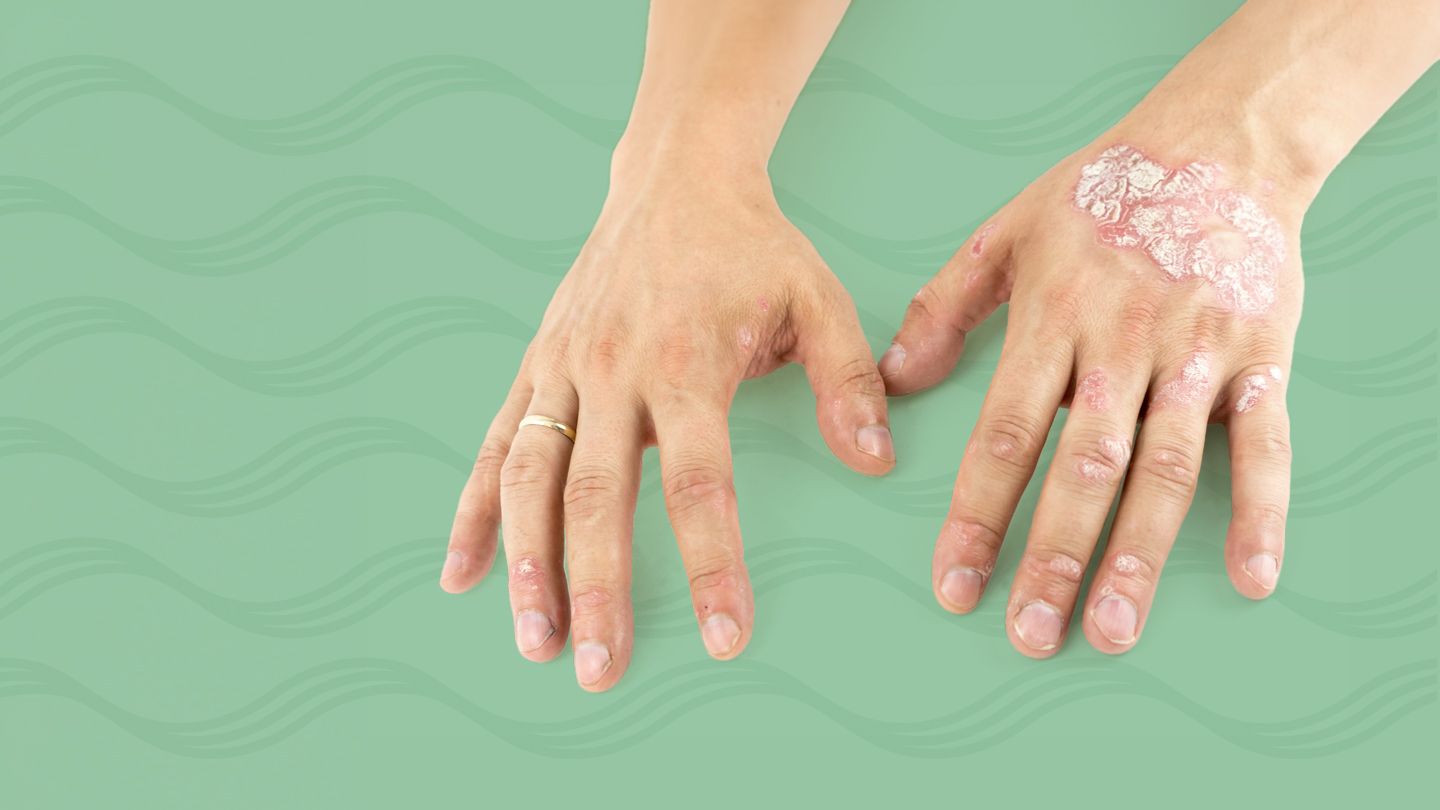
When obesity is treated alongside psoriasis or psoriatic arthritis, skin and joint symptoms may improve more than when inflammation is targeted alone, according to new clinical trial results from the pharmaceutical company Eli Lilly.
These findings support a growing body of evidence showing a strong connection between metabolic health and psoriatic disease, says Jeffrey Cohen, MD, MPH, a dermatologist and the director of the psoriasis treatment program at the Yale School of Medicine in New Haven, Connecticut.
“They also emphasize the importance of recognizing and treating metabolic disease in individuals with psoriatic disease,” says Dr. Cohen.
Psoriasis Trial: Higher Rates of Complete Skin Clearance
In the TOGETHER-PsO trial, 274 adults with moderate to severe plaque psoriasis who were overweight or had obesity were randomly assigned to receive either Taltz alone or a Taltz plus Zepbound combination.
To be in the trial, people had to have a BMI of at least 30, or a BMI of at least 27 and one other weight-related condition.
People in both groups received diet counseling and increased their physical activity with the goal of complete skin clearance and at least a 10 percent loss of total body weight.
After 36 weeks:
- 27.1 percent of people taking the combination medicine achieved complete skin clearance and at least 10 percent weight loss, compared with 5.8 percent of people taking only Taltz.
- When researchers looked at skin results alone, about 4 in 10 people on the combination achieved complete skin clearance, compared with about 3 in 10 on only Taltz.
“Skin clearance was much more common in the group of patients being treated with both Taltz and Zepbound as compared to Taltz alone. That’s very meaningful because research has shown that individuals with obesity often have inferior response to biologics,” says Cohen.
Psoriatic Arthritis Trial: Improved Joint Symptoms
In the companion TOGETHER-PsA study, 271 adults with active psoriatic arthritis who were overweight or had obesity received either Taltz alone or Taltz plus Zepbound.
The desired primary endpoint was twofold: a 50 percent improvement in joint symptoms and at least 10 percent weight loss after 36 weeks.
Results showed:
- 31.7 percent of people taking the combination achieved both targets, compared with less than 1 (.8) percent of patients on Taltz alone.
- The combo also yielded better joint improvements: More than 3 in 10 people taking both drugs achieved 50 percent improvements in joint symptoms, compared with about 2 in 10 people on Taltz alone.
“We know that patients with psoriasis and obesity have a high risk of developing psoriatic arthritis. The study results confirm that treatment of obesity significantly improves PsA control,” says Zhanna Mikulik, MD, a rheumatologist and an associate clinical professor in the rheumatology and immunology department at the Ohio State University Wexner Medical Center and College of Medicine in Columbus.
The difference in the number of people with improved joint symptoms when Zepbound was added is significant, she adds.
The findings “definitely” support treating obesity as part of PsA care, says Dr. Mikulik. People with obesity and active psoriatic arthritis who failed to lose weight with lifestyle modifications may be good candidates for this dual therapy approach, she says.
Safety and Side Effects
In both trials, the combination of Taltz and Zepbound was generally well tolerated. The reported side effects were mostly mild to moderate and consistent with the known safety profiles of each drug.
The most common adverse events in the combination groups were gastrointestinal symptoms such as nausea, diarrhea, constipation, and vomiting, along with injection-site reactions and occasional dizziness.
Psoriasis, Psoriatic Arthritis, and Obesity: How Are They Linked?
Psoriasis is a chronic autoimmune condition that causes discolored, scaly plaques on the skin. It affects about eight million people in the United States. Up to 30 percent of people with psoriasis go on to develop psoriatic arthritis, an inflammatory joint disease that can cause pain, swelling, and long-term joint damage.
Why GLP-1s May Help Improve Psoriasis and PsA
Taltz is a monoclonal antibody that blocks interleukin-17A (IL-17A), a type of protein involved in inflammatory pathways central to psoriasis and PsA.
Zepbound is a dual GIP and GLP-1 receptor agonist approved for obesity treatment. It promotes weight loss primarily by reducing appetite and calorie intake.
These findings also suggest that treating obesity and psoriasis at the same time appears to enhance the response to psoriasis treatment, says Cohen.
Could GLP-1s help with inflammation independent of weight loss? Maybe, says Mikulik. Because the details of the study are not published yet, it’s too early to draw any conclusions, she adds.
Some other studies suggest that GLP-1s have this potential, but more research is needed to clarify the effects of Zepbound and other similar weight loss medications, says Mikulik.
People With Psoriasis or PsA May Benefit From Combined Therapy
The experts agree that obese or overweight people with active disease will be the most likely to benefit from combined therapy.
This dual approach not only improves response to psoriatic disease treatment, it also improves metabolic health, says Cohen.
Still, experts caution that combination therapy may not be appropriate for everyone and should be discussed with a doctor or other medical professional.
Will Zepbound Get Approved as an Add-On Treatment for Psoriasis or Psoriatic Arthritis?
Lilly plans on discussing the data with regulators, but no plans to seek approval have been announced, according to a spokesperson.
If the drug is approved for psoriasis or PsA, it’s unclear what impact it would have on insurance coverage.