

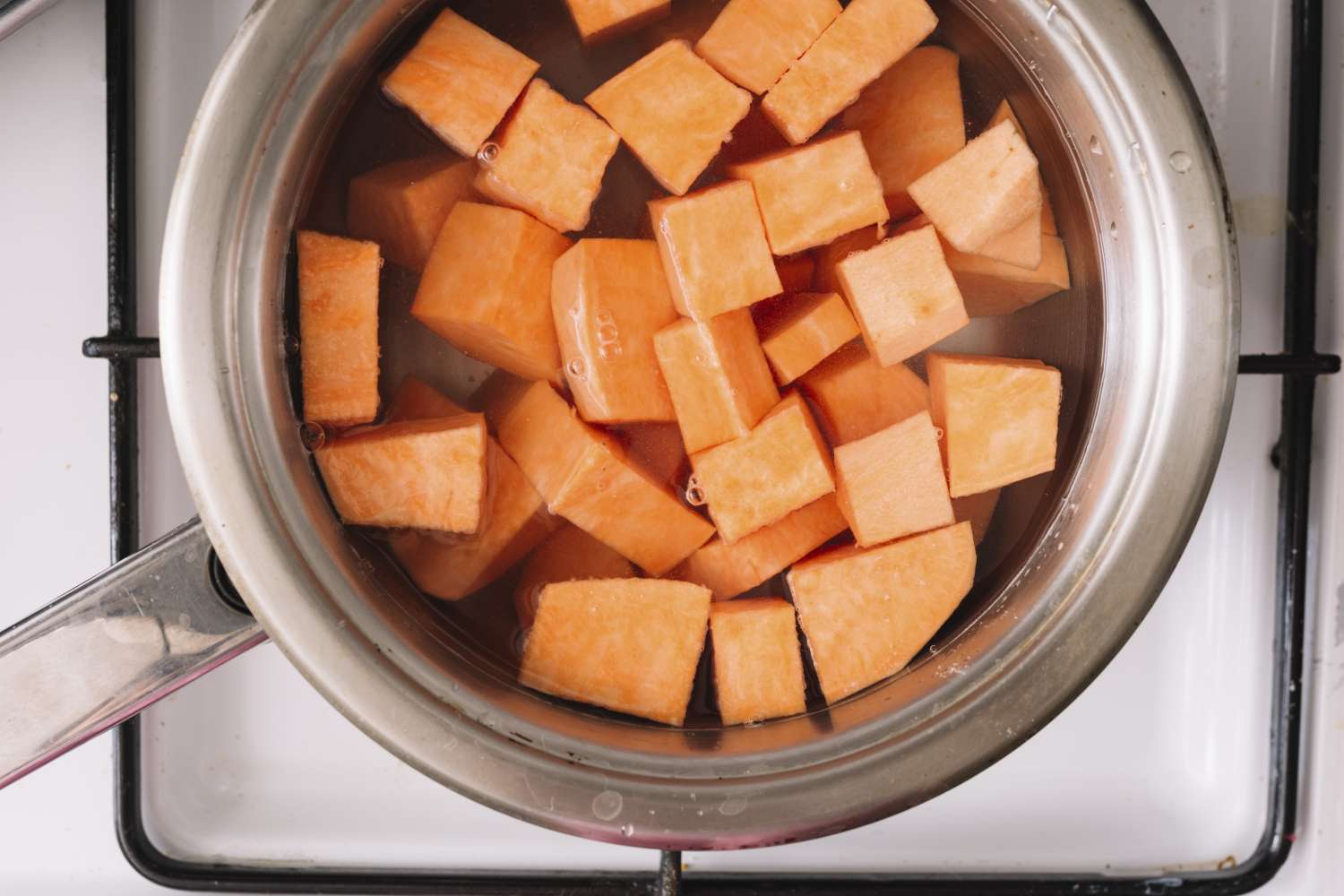
Sweet potatoes are rich in nutrients like beta-carotene, fiber, and antioxidants that the body needs for various functions. While there are many ways to cook sweet potatoes, boiling may be among the best for several reasons.
1. Retains Nutrients Better Than Other Methods
Cooking sweet potatoes will naturally reduce some nutrients, but boiling them retains those nutrients better.
A cup of raw sweet potatoes contains roughly 11,317 micrograms (mcg) of beta-carotene, more than 100% of the recommended dietary allowance. Beta-carotene, which converts into vitamin A in the body, may help prevent several chronic diseases, including:
- Metabolic disease
- Cardiovascular disease
- Cancer
- Liver disease
- Infertility
When you boil sweet potatoes instead of baking or frying them, you can retain up to 92% of beta-carotene by limiting the cooking time to 20 minutes. This cooking method also helps retain vitamin C in sweet potatoes, especially when you leave the skin on.
This method of cooking sweet potatoes can also increase the body’s ability to absorb the nutrients. In other words, boiling sweet potatoes can give you more nutrients that are better used by the body.
Nutrients in Sweet Potatoes
Sweet potatoes also contain many other nutrients essential for overall health, including:
- Calcium
- Dietary fiber
- Magnesium
- Potassium
- Phosphorus
- Selenium
- Zinc
- Vitamin C
2. Lowers the Glycemic Index Score
Sweet potatoes tend to fall in the mid-to-high range on the glycemic index (GI), a scale that measures how quickly blood glucose rises after consuming a particular food.
Boiling them can help reduce their score on the index. That’s because boiling may change the chemical structure of the starches in sweet potato differently than baking or frying. When that happens, it slows the body’s digestion, lowering GI scores.
For example, a typical GI score for sweet potatoes can reach 94, with frying, baking, and roasting associated with higher GI scores. On the other hand, boiling can reduce the GI of sweet potatoes, with scores ranging from 46 to 50, depending on the variety.
GI Scores for Other Cooking Methods
Frying, baking, and roasting sweet potatoes all result in higher GI scores, depending on the variety:
- Fried: 63-77
- Baked: 82-94
- Roasted: 79-93
3. Improves Digestibility and Gut Health
Sweet potatoes contain resistant starch, a form of carbohydrate that acts like fiber, feeding good bacteria in the large intestine. The amount of resistant starch in sweet potatoes varies by variety but typically ranges from 0.3 to 2.1 grams per 100-gram serving.
Boiling sweet potatoes helps to maintain levels of resistant starches.
Eating enough resistant starch can also benefit gut health in a variety of ways, leading to better overall health in areas such as:
- Immunity
- Mood
- Heart health
- Weight management
Cooling Boiled Sweet Potatoes for More Resistant Starch
If you’re looking to reap the benefits of resistant starch in sweet potatoes, you can also increase its content by cooling the potatoes before eating, as cooling increases the amount of resistant starch after cooking.
4. Introduces Fewer Added Ingredients
Boiling requires only water, whereas roasting, baking, or frying often requires additional ingredients, such as butter or oil.
While cooking sweet potatoes by other methods still retains some essential nutrients, adding ingredients high in saturated fat can reduce their healthfulness.
For example, using just one tablespoon of butter to cook sweet potatoes will add 11.5 grams of fat to your meal, roughly 7 of which are saturated.
Health Risks Associated With High Saturated Fat Intake
Eating too much saturated fat can lead to various health risks, including:
- High cholesterol
- Increased risk of heart disease
- Increased risk of stroke
- Increased risk of overweight and obesity
How to Maximize the Benefits of Boiled Sweet Potatoes
Boiling sweet potatoes can help maximize their health benefits, but if you want to go even further, you can try these tips:
- Keep the sweet potato skins on, as they contain a lot of nutrients as well.
- Use sweet potatoes within a week of purchasing.
- Limit your added ingredients.
:max_bytes(150000):strip_icc()/VerywellBioPicAngelicaBottaro-203f7e803ab444b2b5c13b4252d11159.JPG)