

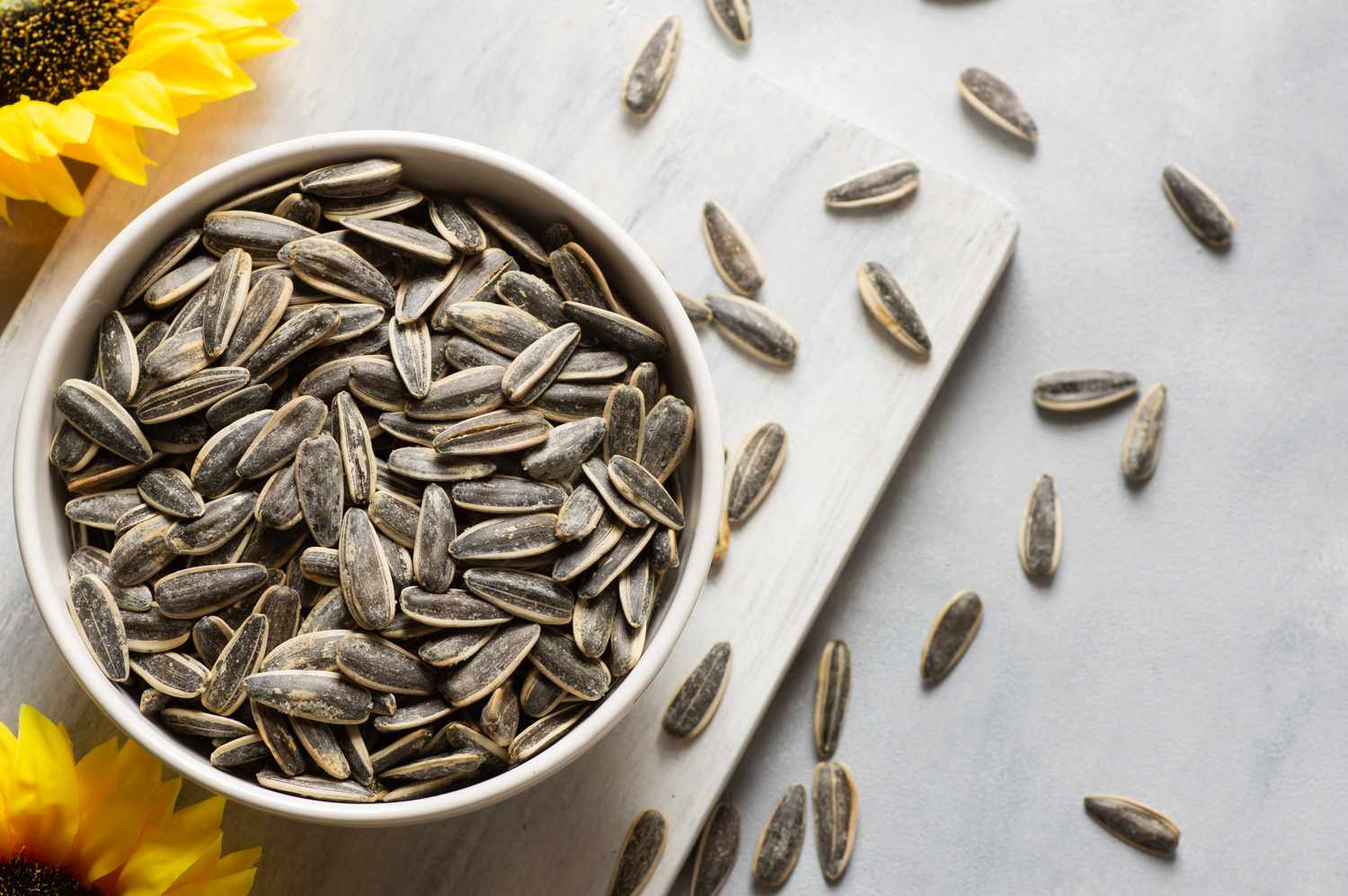
Vitamin E is essential for overall health, especially in maintaining the balance between free radicals and antioxidants to prevent harm to your body’s cells. While sunflower seeds are a good source of vitamin E, many other foods contain enough to meet your daily needs.
1. Sunflower Oil
Stefana Voicu / 500px / Getty Images
Serving size: 1 tablespoon
Vitamin E: 5.6 milligrams (mg)
If you don’t love sunflower seeds, try using sunflower oil to get adequate vitamin E intake. It’s made by extracting oil from the seeds and provides just over one-third of an adult’s daily vitamin E needs.
Sunflower oil has several other health benefits, including:
- Lowering cholesterol
- Lowering blood pressure
- Healing properties for various ailments, including rashes, cough, and digestive upset
How to Use Sunflower Oil
Sunflower oil can be used for frying food, as a dressing for salads, or as a dip for bread.
2. Wheat Germ Oil
Esin Deniz / Getty Images
Serving size: 1 tablespoon
Vitamin E: 20.3 mg
Wheat germ oil has more vitamin E per serving than any other food. It is made from milled wheat and contains more than the daily requirement of vitamin E in a one-tablespoon serving.
Research indicates that wheat germ oil also contains other compounds that support cardiovascular and cellular health and help reduce inflammation.
How to Use Wheat Germ Oil
You can use wheat germ oil raw on vegetables, salads, or pasta. Add it to smoothies for an extra boost of nutrients, or as a binder in certain foods to replace breadcrumbs. Since wheat germ oil has a mild, nutty flavor, it’s easy to incorporate it into many foods and dishes.
3. Almonds and Almond Oil
dulezidar / Getty Images
Serving size: 1 ounce (almonds) or 1 tablespoon (almond oil)
Vitamin E: 6.8 mg (almonds) and 5.3 mg (almond oil)
Both almonds and almond oil are good sources of vitamin E. Consuming almonds or almond oil can benefit your health in other ways, as they contain different nutrients. Both can help with glycemic control, blood pressure, and cardiovascular health.
Research suggests almond oil can also benefit skin health in both adults and children.
4. Hazelnuts and Hazelnut Oil
mescioglu / Getty Images
Serving size: 1 ounce (hazelnuts) or 1 tablespoon (hazelnut oil)
Vitamin E: 4.3 mg (hazelnuts) or 6.4 mg (hazelnut oil)
Hazelnuts and hazelnut oils are both good sources of vitamin E. Because of other nutrients, such as healthy fats and amino acids, found in hazelnuts and hazelnut oils, they are shown to improve and maintain several areas of health, including:
- Inflammation
- Weight management
- Cholesterol levels
- Cardiovascular health
- Hormone regulation
- Brain health
5. Mamey Sapote
Simon McGill / Getty Images
Serving size: 1 fruit
Vitamin E: 11.8 mg
Mamey sapote is a tropical fruit often compared to sweet potatoes or pumpkin with a sweet flavor profile. It has non-edible seeds that you scoop out from the center, and the flesh is eaten raw, blended into smoothies, or used in desserts.
A whole, one-fruit serving of mamey sapote provides 11.8 mg of vitamin E, which almost meets the full daily value requirements for adults.
It also contains many other nutrients, including calcium, fiber, magnesium, phosphorus, and vitamin C.
Mamey Sapote as Medicine
Because it is nutrient-dense and also contains beneficial plant compounds, the mamey sapote fruit is also used in traditional medicine in Mexico to treat various ailments, including:
- Hair loss
- Dandruff
- Digestive disorders
- Wounds
- Asthma
- Cough
- Heart conditions
- Scabies
How Much Vitamin E Do I Need?
Because vitamin E is an essential nutrient that helps ward off oxidative stress, it’s important to get enough of it each day. Daily values can vary by age and sex, but typically requirements include:
- Adults: 15 milligrams per day
- People who are lactating or breastfeeding: 19 milligrams per day
:max_bytes(150000):strip_icc()/VerywellBioPicAngelicaBottaro-203f7e803ab444b2b5c13b4252d11159.JPG)