

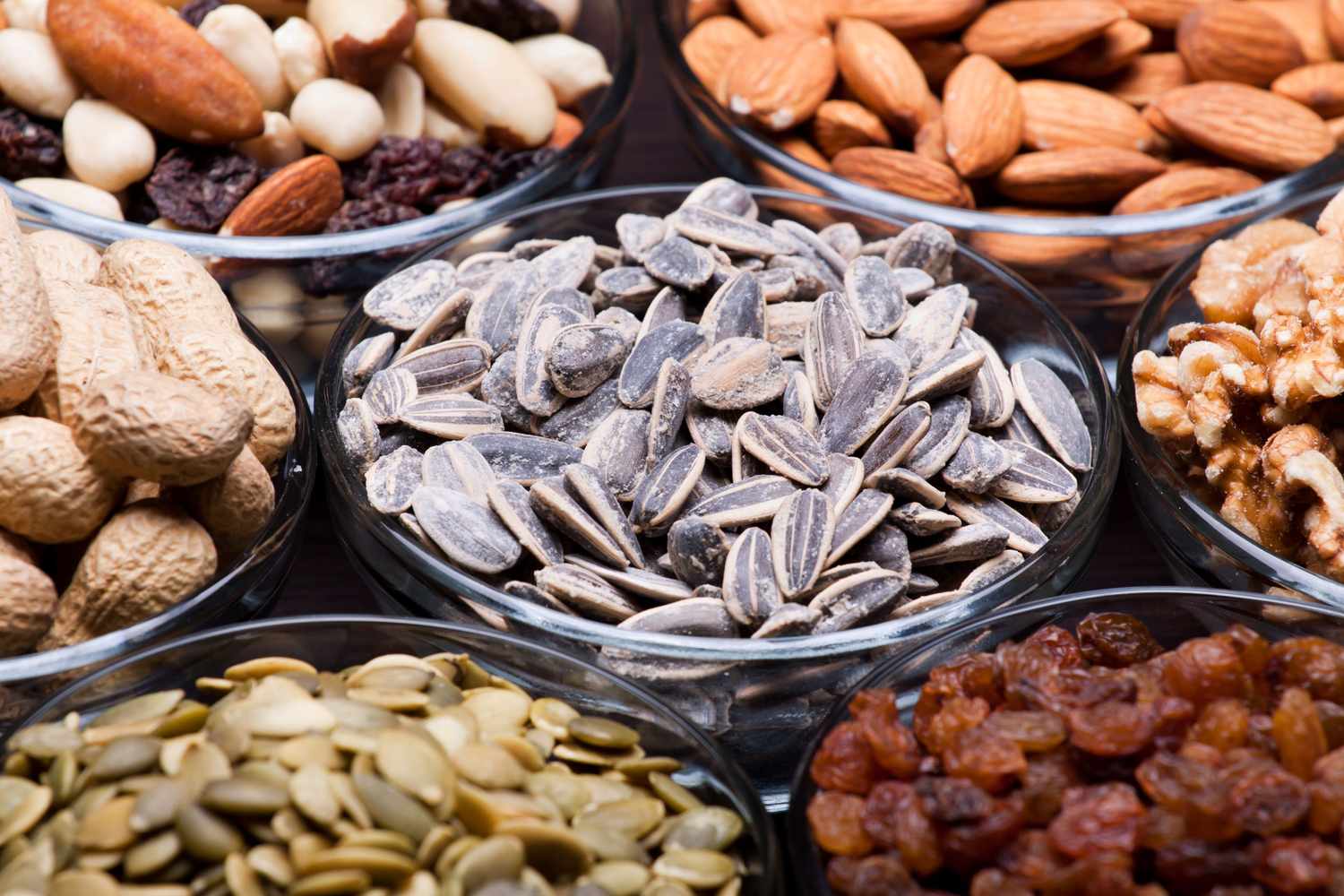
Vitamin E supports skin health, immune system function, vision, and more—thanks to its role as an antioxidant. Fortunately, it’s not too difficult to increase your intake by eating foods rich in this vitamin.
1. Almonds
jirkaejc / Getty Images
Vitamin E: 1 ounce (oz) provides 45% of the Daily Value (DV)
Almonds are a tree nut particularly rich in vitamin E. Because of this antioxidant, almonds support the immune system and protect your body (and skin) against damage-causing free radicals (highly reactive molecules in cells), which can lead to premature skin aging and the development of disease.
2. Sunflower Seeds
Drbouz / Getty Images
Vitamin E: 1 oz. provides 50% of the DV
Besides vitamin E, sunflower seeds offer around 33% of the DV of the key mineral selenium per ounce of kernels, which acts as a potent antioxidant and also boosts the immune system. You’ll also get a dose of healthy fats and protein along with this vitamin E-rich option, which further supports skin health.
3. Kiwi
Jeng_Niamwhan / Getty Images
Vitamin E: 1 medium kiwifruit provides 7% of the DV
The vitamin E found in kiwi—along with its other potent nutrients—is especially beneficial for eye, skin, and immune system health because it is also rich in antioxidant vitamin C. It also provides the antioxidant carotenoids lutein and zeaxanthin for maintaining optimal vision.
4. Avocados
Алексей Кравчук / Getty Images
Vitamin E: 1 avocado provides 28% of the DV
Avocados not only provide solid amounts of vitamin E, but their other antioxidants can also further support the immune system and reduce inflammation. They also provide healthy fats. You may consider cooking with avocado oil to reap some of the same skin and immune benefits.
5. Sweet Potatoes
NRedmond / Getty Images
Vitamin E: 1 cup of baked sweet potato flesh provides 9.5% of the DV
Sweet potatoes offer plenty of vitamin E and vitamin C—two key antioxidants that can support skin health and the immune system by helping protect your body against aging, damage, and disease. What’s more, the beta-carotene found in sweet potatoes is a potent antioxidant for eye health.
6. Spinach
SherSor / Getty Images
Vitamin E: 1 cup cooked provides 26% of the DV
Chock full of key nutrients, spinach also provides antioxidants beta-carotene and lutein that are known to support eye health, along with plenty of vitamins C and A, which are key for your skin.
7. Peanuts
fcafotodigital / Getty Images
Vitamin E: 1 oz. dry-roasted provides 15% of the DV
Peanuts are packed with protein, healthy fats, and other nutrients. Peanut butter also provides 19% of the DV of vitamin E in 2 tablespoons.
8. Salmon
joephotographer / Getty Images
Vitamin E: 3 oz canned sockeye salmon provides 12% of the DV
Known for being high in heart-healthy omega-3 fatty acids, salmon is also rich in vitamin E and other antioxidants, like vitamin C and selenium, that can boost skin and immune system health.
Tips for Incorporating More Vitamin E into Your Diet
It’s recommended that most adults take in 15 milligrams (mg) of vitamin E per day—but many aren’t getting that amount through their diet. Here are some ways you can consider adding more of this vitamin into your daily routine for skin, immune, and eye health purposes:
- Opt for nut butters if that’s easier for you to consume than actual nuts and seeds.
- Increase your intake of veggies like red bell peppers, broccoli, and butternut squash for vitamin E plus other key nutrients.
- Consider cooking with smaller amounts of vegetable oils in moderation to get a good amount of your recommended daily intake.
- Try a breakfast of fruit and eggs, as egg yolks and fruits like blackberries and mangoes are rich in this vitamin.
- Incorporate more seafood, such as shrimp and trout, into your meal plan for a dose of vitamin E and heart-healthy fats.
While getting vitamin E through food does not lead to toxicity, taking too many vitamin E supplements can lead to potential health issues, like high blood pressure, bleeding, or heart disease. Check with a healthcare provider before taking vitamin E supplements.
:max_bytes(150000):strip_icc()/IMG_5047-9727550a95404c49a7515e66930004ef.JPG)