

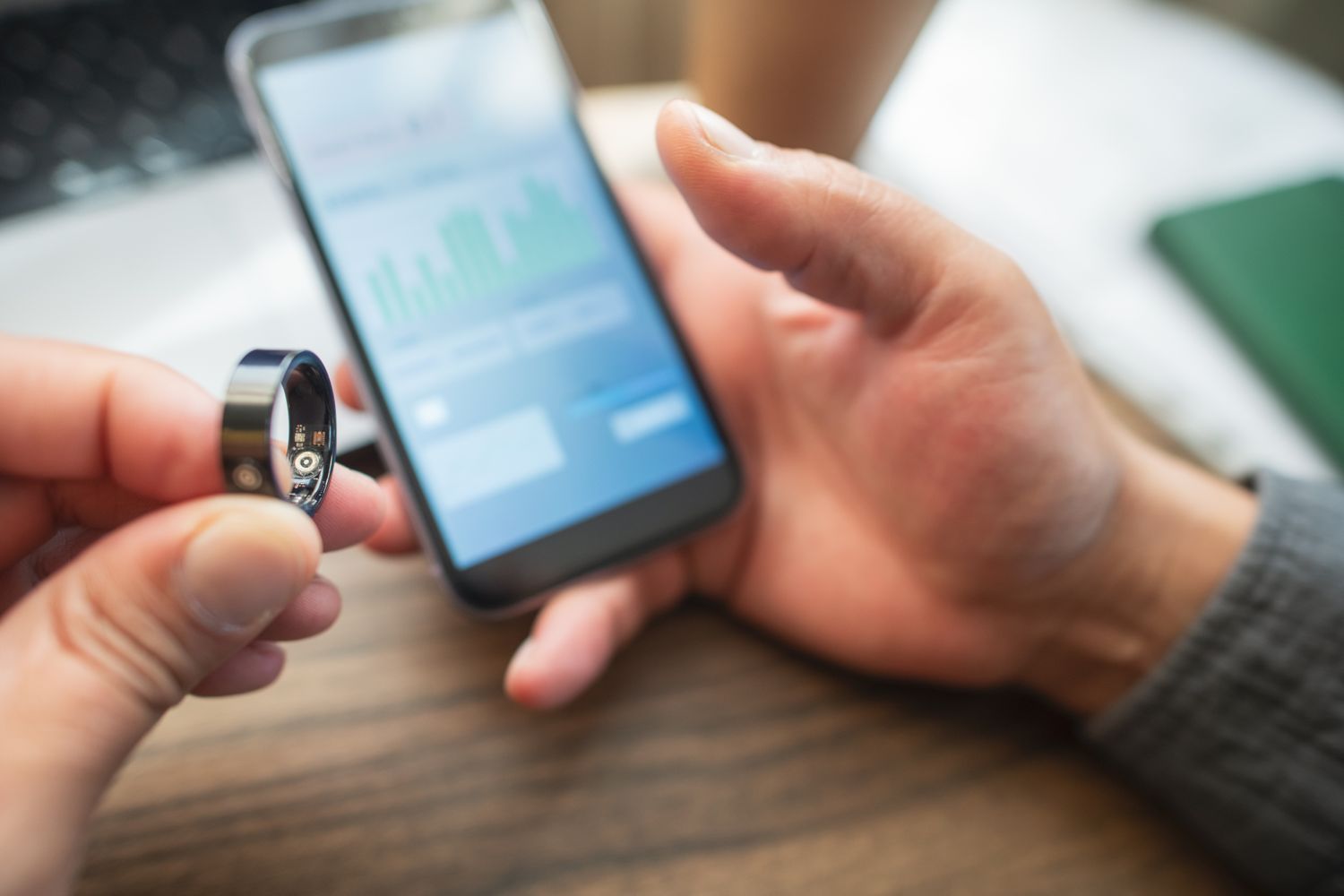
There are so many sleep metrics you can access with wearables, it can be overwhelming to decide which ones to track and how much they actually matter for your sleep health.
So we asked our chief medical officer, Sohaib Imtiaz, MD, how he decides which sleep data to prioritize.
Q: How do you use data from wearables to improve your sleep?
Imtiaz: I use both the Whoop and Oura ring, but I rely on the Oura ring’s sleep score to track my sleep. Using that sleep data, I establish my baseline and work out what I do close to bedtime that may affect my sleep over time.
For example, journaling before bed helps me unload the stress and anxiety of the day and improve my sleep.
I use the Bright app, which integrates with Oura, to track my behaviors. I then look at my sleep data in relation to those variables and try various interventions over a few weeks to see if my data improves.
I also assess my subjective feelings, and ask myself, “Am I feeling better?”
Sleep data from wearables is nowhere near as accurate as that from a sleep lab test, which is why it’s important to consider how you feel and not rely solely on the data.
Q: If you were to choose one data point to track, which do you think is the most important to your sleep health?
When you look at sleep metrics, one of the most important is sleep consistency—what time you go to sleep and wake up.
Sleep consistency is very much linked to chronic disease. Research shows that people with consistent wake-up and sleep times—within the same 30-minute window each day—have better health outcomes.
A lot of people who track their sleep data from wearables focus only on their sleep score, which factors in data points, such as total sleep, restfulness, REM sleep, deep sleep, and sleeping heart rate.
A lot of these scores are designed for gamification, but many people become obsessed with their sleep score, aiming for “optimal” sleep every night. The problem is that it can be hard to reach that goal every day.
Some people actually develop orthosomnia or sleep anxiety related to wearables and the associated data.
You sleep poorly because you’re worried about how well you’ll sleep, then chase these percentages, which stress you out further and harm your health. And then, when you look at your score in the morning, and think, “Oh, my sleep score was low, now I’m going to have a bad day,” and it ends up being a bad day where you can’t perform as well.
I much prefer people looking at changes in their sleep trends rather than reading too much into a single bad night of sleep.
When you start looking at trends, you may notice how specific habits affect your sleep.
For example, alcohol worsens heart rate variability, your resting heart rate, and makes your sleep more fragmented. So reducing alcohol might improve your metrics.
Tracking how your habits affect your sleep over time is the best way to use your data to improve your sleep.
:max_bytes(150000):strip_icc()/DrSohaibImtiazPortrait-0e6c2d829c2b4ccba6718549159f2dd2.jpg)