

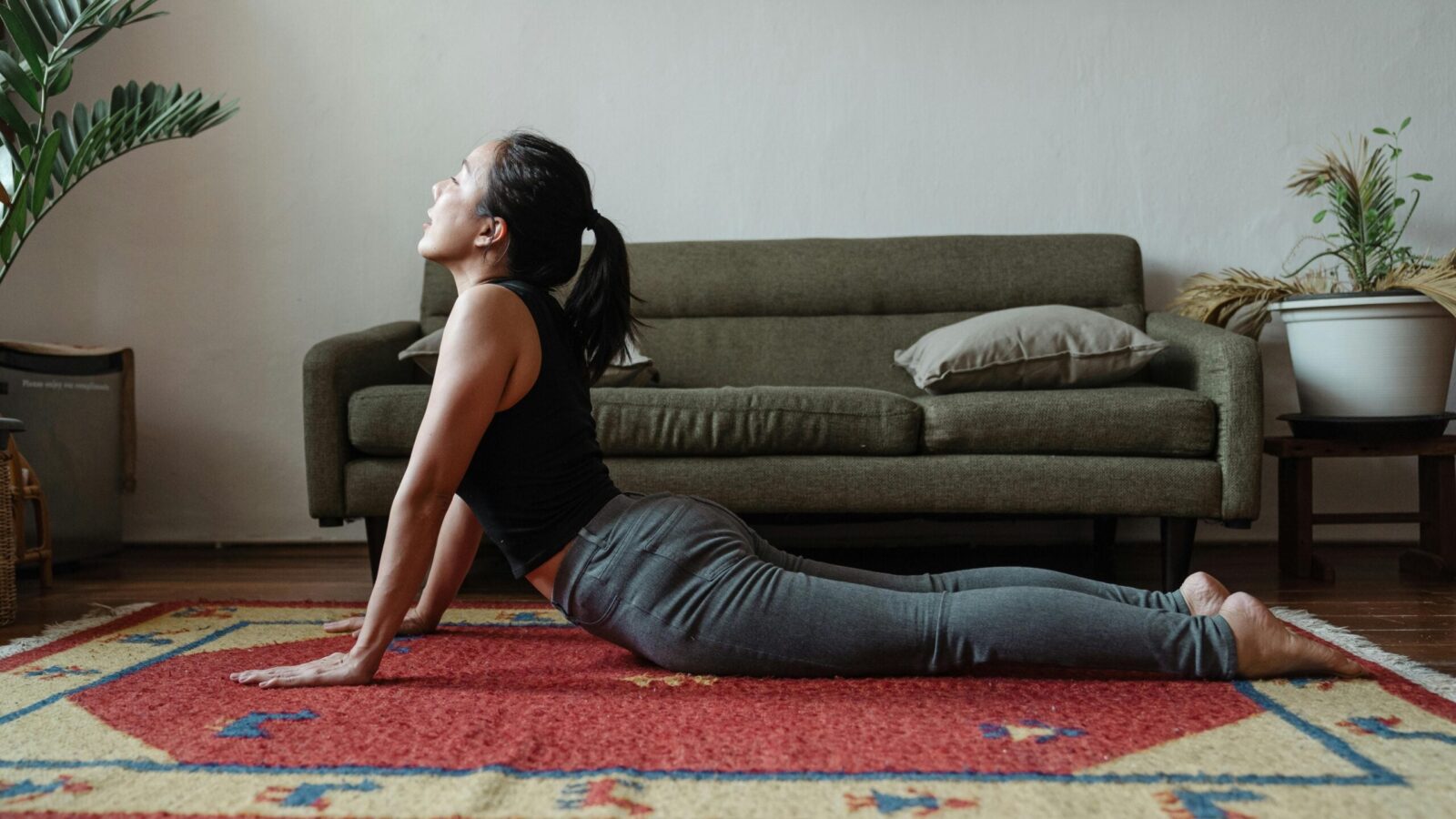
Yoga slowly revealed my true nature, which has nothing to do with how much I accomplish.
(Photo: Ketut Subiyanto | Pexels)
Published March 27, 2026 11:02AM
I took my first yoga class completely on a whim. For years, I had prided myself on being a strong athlete who strength-trained and played college basketball. I’d heard of yoga, and always thought of it as only stretching. But after noticing the Sunday afternoon vinyasa classes at my gym, I wandered into one, still dripping with sweat from my treadmill workout.
I sat stiffly on a borrowed mat worn thin from use. As an overachiever who didn’t know how to relax, I thought I’d get very little from the experience. “This will be too easy and too slow for me,” I thought. Still, I was curious.
The teacher welcomed the class in a half-whisper and pressed play on what I’d describe as twinkly music. She instructed us using words I’d never heard—Sanskrit, I later learned—and guided us into movements I’d never tried. Always a good student, I liked having her nearby my mat, cueing the poses and my inhalations and exhalations. Breath wasn’t something I’d thought much about. But by the end of class, I felt lighter and relaxed in a way that I couldn’t remember feeling before. Ever.
The following Sunday, my husband trailed behind as I speed-walked toward the studio in the gym. “Are we racing to get relaxed?” he asked. The irony wasn’t lost on me. But that second class felt nothing like the first. There was a different instructor, no twinkly music, and worst of all, no tapping into that inner relaxation as I had the first time. Just the constant up and down of Sun Salutations, which felt mechanical. My husband shot me a look as if to say, “I can’t believe you like this.”
The next week, I tried yet another class at a yoga studio, searching for that initial high. Halfway through class, the teacher cued Headstand and encouraged all of us to “try it.” Immediately, my inner achiever felt triggered. I couldn’t handle feeling unprepared or unwilling to do something exactly as instructed. And I was afraid to try it for fear of failing. So I rolled up my mat and left yoga for six years, convinced that my earlier experience had been a fluke and that there was nothing left that I wanted to learn from yoga.
In that time, I did what I always did: achieved. I climbed the corporate ladder, found an infertility specialist who helped my husband and me become parents to twins, and co-founded an organic kids’ snack company. But none of that prevented life from happening. When my dad suffered a stroke four states away, I felt helpless, out of control, and spent so many visits trying to fix the situation instead of just being present with him. I could see what I was doing yet I couldn’t help myself. Suddenly everything felt out of control, and I struggled with behaviors I thought I had left behind, including my eating disorder creeping back into my life.
Therapy helped. After a year of attending sessions and finally trying meditation at a friend’s rather consistent urging, I started to feel there was more space between me and my reactions to life. It reminded me of the sense of peace I experienced after my first yoga class. I Googled “yoga class near me” and clicked on the first result.
The teacher’s name was Alex. He led me into a tiny, carpeted room with an eight-foot ceiling and no windows. Two other women stretched on either side of me before class started. It was a small group, and I started to feel too exposed. There was no guarantee that I’d be able to keep up, and nowhere to hide if I wasn’t good enough. I wanted out.
Instead, this class established, for the first time in my life, a regular yoga practice.
We practiced a sequence that never changes, Ashtanga. The same poses. Every class. Breath synchronized with movement. At first, I constantly fell out of them due to my lack of flexibility. Every time I fell, I felt an urge to explain to the person next to me all the other things I was really good at. But at some point, I stopped looking around the room so much and began feeling the mat beneath my feet. I started to feel strong in the slow movements and a sense of fulfillment in simply being.
Over time, going to yoga became my new shoreline. No matter what I was dealing with in life, I could rely on yoga to be a constant, grounding force. As someone who initially dreaded slowing down, I even started really loving Savasana. Some days, they were the only few minutes during which I permitted myself to rest.
That doesn’t mean I was completely reformed. After months of trying to master Headstand, I pushed past discomfort and pain and injured my neck. I was forced to reckon with why I’d still felt the need to prove I could do it. The real pain (aside from the physical) came from constantly comparing myself to those around me. It’s something I’ve always done, although yoga helped me see it.
Basically, I was trying to win yoga. I laughed out loud when I realized this.
I still have the tendency to never give up. In other words, I am still me. Yet I learned when to ease up, slow down, or lower into Child’s Pose. Yoga has helped me find what I needed: a way to greet with curiosity the parts of me that crave achievement. To learn modifications for poses and actually use them when I need to. To feel stronger and more centered every time I practice a version of a pose that’s right for me, because that’s a sign of true strength.