

Key Takeaways
- You can build muscle while in a calorie deficit by eating enough protein and doing resistance training.
- Eating protein helps preserve lean muscle mass, which is important when trying to lose weight.
- A drastic calorie deficit can lead to unhealthy muscle loss and other health issues.
Building muscle while in a calorie deficit depends on getting enough protein and using resistance training. Diet and exercise result in a calorie deficit when you eat fewer calories than your body uses.
How Can You Gain Muscle When Eating Less?
If you want to lose weight and still build muscle, it’s possible as long as you find a balance in your routine, which includes:
- Eating enough protein: The body uses protein to build muscle, so you need to eat enough for your body to convert to muscle tissue.
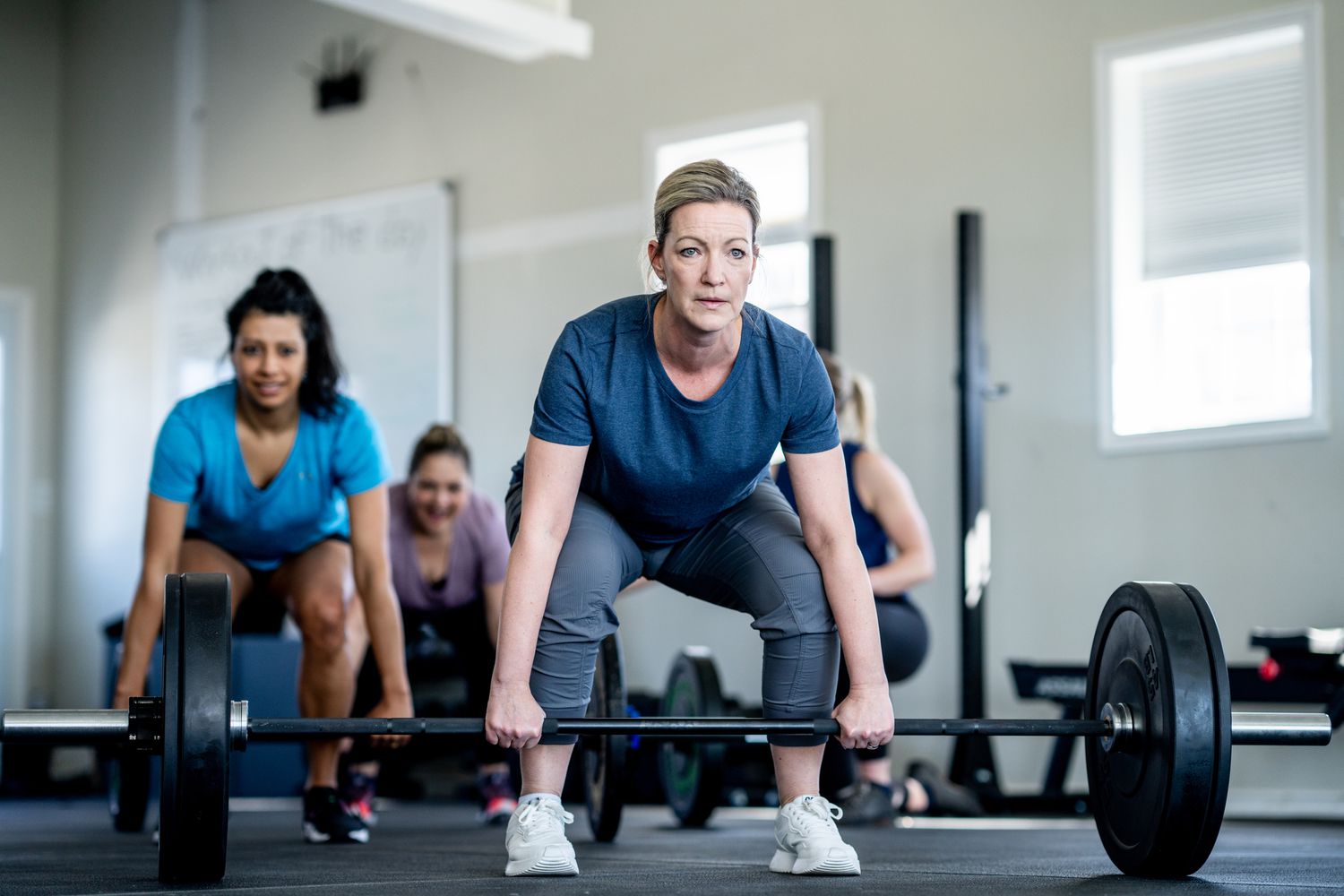
- Exercise using resistance training: Resistance exercises use opposing force to muscle contraction to stimulate building muscle. Examples of resistance exercise include lifting weights, using exercise bands, body weight exercises, and exercise equipment focused on specific muscle groups.
- Not overdoing the calorie deficit: Slower weight loss reduces the lean mass you lose, including muscles and soft tissue.
How a Calorie Deficit Works
A calorie is a measure of energy. Your body uses energy even when you’re sitting or sleeping. If you are moving or exercising, you use more calories. When you expend more calories than you take in, you are at a calorie deficit, and that can result in losing weight.
You can safely lose weight as long as you’re still getting the nutrients you need. However, weight loss can include losing muscle mass as well as fat.
How Much Protein and Resistance Training Do You Need?
Protein guidelines include:
- To build muscle mass, a protein intake between 1.2 to 2.0 grams (g) per kilogram (kg) of body weight per day (g/kg/day) is recommended by the Academy of Nutrition and Dietetics, Dietitians of Canada, and the American College of Sports Medicine. This is equal to 0.54 to 0.9 g per pound per day.
- For most people, 1.2 g to 1.6 g/kg/day of protein is recommended in the 2025-2030 Dietary Guidelines for Americans (some experts recommend less protein). That amount varies based on age, weight, overall health, and activity level. If you’re calculating calories, there are 4 calories per gram of protein.
Effective resistance training stimulates the creation of muscle fibers:
- First, the exercise breaks down muscle protein, which is called “catabolism.”
- That causes the tissue to rebuild, which results in an increase in muscle mass called “anabolism.” The gain is greater than the loss.
- If you don’t consume enough dietary protein, your body doesn’t have the components it needs to build more muscle.
Any exercise that involves working against gravity is resistance training—you want to make your muscles contract. The type and amount of resistance training need to be challenging enough to break down muscle tissue, which stimulates it to rebuild.
When you do resistance training, as with any exercise, it’s important to use proper techniques to avoid injury.
How Do You Lose Fat While Maintaining Muscle?
Losing weight by dieting without exercising will result in losing muscle as well as fat. Eating protein helps preserve lean muscle mass, and as long as you have a calorie deficit, you’ll still be on track to lose weight primarily through fat loss.
If you aim to lose fat and maintain muscle rather than increase muscle mass, you can adjust the amount and type of exercise you do. Resistance exercise is still key to maintaining muscle mass while dieting, and endurance exercise can also help.
How Can You Set the Right Calorie Deficit?
Drastic dieting can lead to unhealthy muscle loss and other harmful health effects, including dehydration, loss of bone density, malnutrition, and hormonal and immune system imbalances.
To set an effective calorie deficit goal, you can either:
- Reduce your calorie intake by eating less food
- Increase your calorie expenditure through activity
One older rule of thumb is that people need to burn 3,500 calories more than they take in to lose 1 pound of fat:
- That equates to cutting 500 calories a day from your food to lose 1 pound a week.
- You could also cut your calorie intake by 250 calories and increase exercise to burn the rest of the calories.
This rule of thumb is disputed and depends on many other factors. How many calories a day should you aim for? General United States dietary guidelines refer to a 2,000-calorie level per day, as do most nutrition labels. This varies based on age, sex, activity level, and other factors.
A good quality online calculator can help you determine caloric intake for weight loss:
- Keep in mind that a diet of about 1,000 to 1,500 calories a day is considered a low-calorie diet.
- Anything under 1,000 calories is a very low-calorie diet and should also be done only under professional supervision. Talk with your healthcare provider about how much protein you need to preserve muscle mass while cutting calories.
Who Can Help in Setting Your Goals?
Losing weight and building muscle at the same time is possible, but to do it in a healthy way, you may need the advice of a professional. Consider consulting a registered dietitian or a certified personal trainer to help you set effective and reasonable goals.
If you have not been active, have chronic health concerns, or have obesity, talk to a healthcare provider before you begin a program of diet and exercise.
A Word From Verywell
With the amount of contradicting information online, figuring out where to start your fitness journey can be challenging. Working with registered dietitians and certified personal trainers can help clear up misinformation and gear your nutrition and training to your needs.
:max_bytes(150000):strip_icc()/JonathanPurtellheadshot-1d1456c1c7214854b7a4e7e252a89717.png)
:max_bytes(150000):strip_icc()/87B33A1C-F41C-41FC-9F53-4CFA86CF9EB5_1_201_a-0517adfca478423d8cc6c399550ceab8.jpeg)