

Key Takeaways
- Brown rice is more nutrient-dense because a significant portion of its original grain is left intact, providing more fiber, vitamins, and minerals compared to more processed white rice.
- White rice is more refined, so it digests more quickly and easily.
- The healthiest choice depends on your body and your plate, including how much you’re eating, how you cook it, what you pair it with, and other grains you rotate in your diet pattern.
Brown and white rice can both have a place in a healthy diet, but understanding differences in processing, nutrition, and how they impact blood sugar and gut health can help you make the best choice for your needs.
Brown Rice Retains More Nutrients
Brown rice is generally considered the healthier option between the two. The main difference between brown rice and white rice isn’t the plant itself. It’s what happens to the grain after it’s harvested.
All rice starts as a whole grain with three main parts:
- Bran: The outer layer that’s high in fiber, antioxidants, B vitamins, and minerals
- Germ: The nutrient-dense core that contains healthy fats, B vitamins, and phytonutrients (beneficial plant compounds)
- Endosperm: The starchy center that provides carbohydrates and some protein
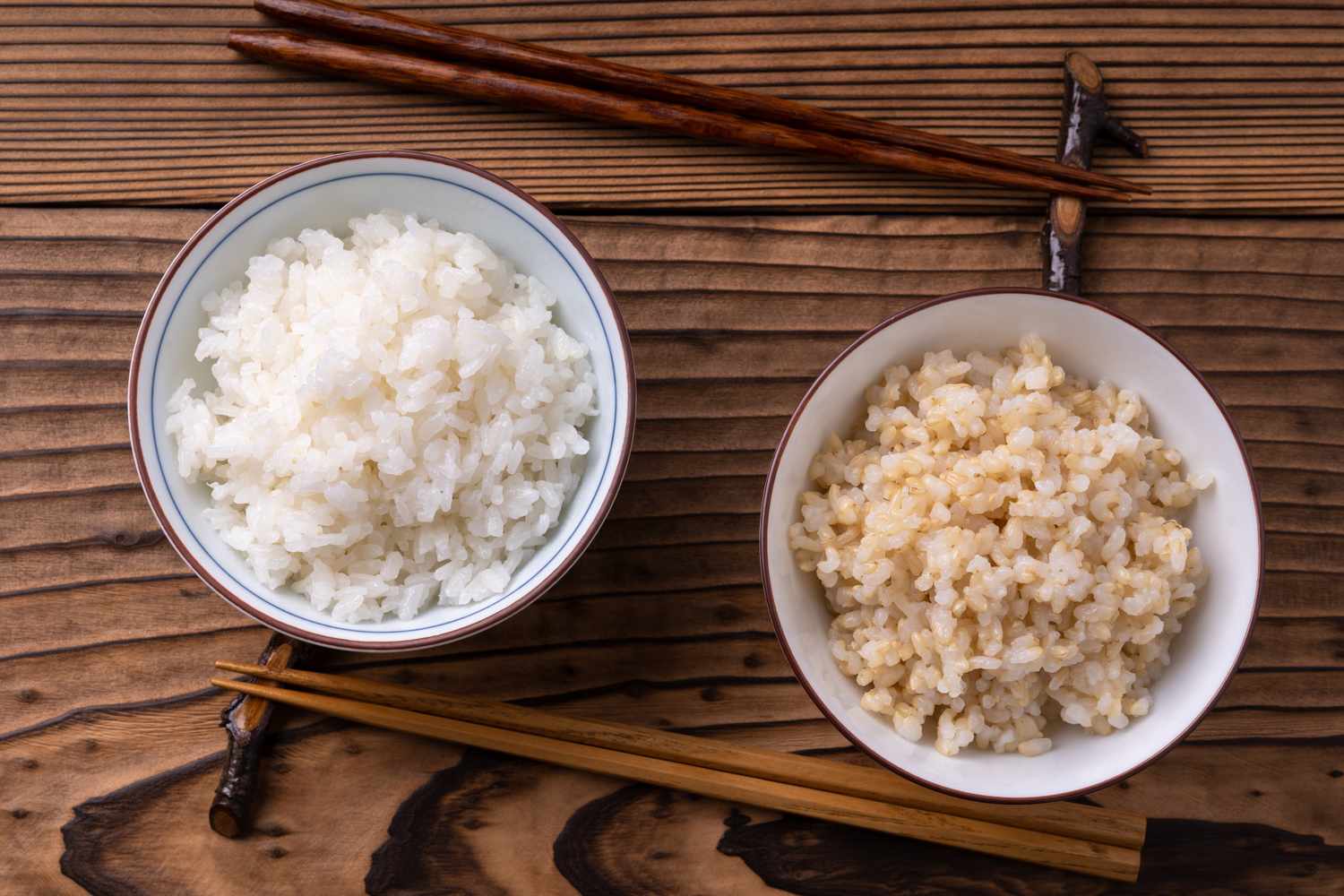
Brown rice is considered a whole grain because only the outer husk (the inedible shell) is removed. The bran and germ stay intact, which is why brown rice retains more fiber, nutrients, and a slightly chewy texture.
White rice, on the other hand, goes through additional milling and polishing. During this process, the bran and germ are stripped away, leaving only the starchy endosperm behind. This makes white rice softer, lighter in color, and cooks more quickly. However, it also removes much of the fiber, vitamins, minerals, and beneficial plant compounds.
To compensate for some of this nutrient loss, many white rice products are enriched with B vitamins and iron during processing. However, enrichment doesn’t replace natural fiber or all of the original phytonutrients found in brown rice.
Enrichment vs. Fortification
Enrichment adds nutrients that were lost during food processing back into a product (like B vitamins and iron added to white rice after milling). Fortification goes a step further by adding nutrients that were not originally present (or were present in only small amounts) to boost a food’s overall nutritional value beyond its natural state.
Brown vs. White Rice: Nutrition Comparison
The processing and enrichment differences between white and brown rice are also at the root of their nutritional differences. Here’s the nutrient makeup of one cup of brown rice compared to one cup of enriched white rice:
| Nutrient | Brown Rice | White Rice |
|---|---|---|
| Calories | 218 | 242 |
| Protein | 4.5 grams (g) | 4.4 g |
| Fat | 1.6 g | 0.4 g |
| Carbs | 46 g | 53 g |
| Fiber | 3.5 g | 0.55 g |
| Thiamin (vitamin B1) | 0.2 milligrams (mg) | 0.3 mg |
| Niacin (vitamin B3) | 2.6 mg | 3.4 mg |
| Folate | 7.8 micrograms (mcg) | 104 mcg |
| Magnesium | 86 mg | 24 mg |
| Phosphorous | 150 mg | 69 mg |
| Iron | 1 mg | 2.7 mg |
| Zinc | 1.2 mg | 0.8 mg |
| Potassium | 154 mg | 54 mg |
How Each Affects Your Blood Sugar
As with other refined versus whole grains, one of the most significant differences between brown and white rice lies in how they affect your blood sugar levels after a meal.
- White rice has a higher glycemic index (GI), meaning it is digested and absorbed more quickly. This can lead to a faster rise in blood glucose followed by a rapid insulin response. For people with insulin resistance, prediabetes, or diabetes, frequent large servings of white rice may contribute to greater blood sugar fluctuations over time.
- Brown rice digests more slowly because it still contains its fiber-rich bran and germ. The extra fiber helps delay the absorption of glucose into the bloodstream, resulting in a more gradual rise in blood sugar and a steadier insulin response. This more stable blood sugar pattern can also help support better energy levels and satiety.
However, the real impact also depends on factors such as how much rice you’re eating in a sitting and the other types of food you’re eating it with. Plus, preparation matters. If you cook rice, cool it down, and then reheat it later, this increases its resistant starch content, which can lower its glycemic impact.
How They Impact Digestion
Brown rice has a certain nutritional edge thanks to its higher fiber content, but that doesn’t make it the best choice for everyone when it comes to digestion.
Brown rice contains more insoluble fiber from the bran layer, which can be great for promoting regular bowel movements and supporting overall gut health. However, that insoluble fiber can be harder on sensitive stomachs.
People with conditions such as irritable bowel syndrome (IBS), Crohn’s disease, ulcerative colitis, or those recovering from gastrointestinal illnesses may experience more bloating, gas, or discomfort when consuming fiber-rich grains like brown rice.
Rice, in general, is low in FODMAPs, which are short-chain carbohydrates that are poorly absorbed and may be more likely to trigger gut irritation in certain digestive conditions.
In these cases, white rice is gentler because the bran and germ have been removed. It’s low in fiber, low in fat, and easy to digest, which is why it’s commonly recommended in bland diets (like the BRAT diet) for nausea, diarrhea, or stomach upset.
Arsenic in Rice: What to Know
Rice is one of the foods most likely to contain arsenic, a naturally occurring heavy metal found in soil and water. Because rice is typically grown in flooded paddies, it absorbs more arsenic (some sources say up to ten times as much) than many other grains.
Brown rice generally contains higher levels of arsenic than white rice. That’s because arsenic tends to accumulate in the outer bran layer (which is removed when processing white rice).
Still, the overall risk of consuming arsenic through brown rice depends on several factors, including the amount consumed, frequency of consumption, the region where the rice was grown (California, India, and Pakistan appear to be lower-arsenic regions), and the method of preparation.
For most healthy adults, consuming brown rice in moderation isn’t a cause for concern.
If you want to reduce arsenic content in rice during preparation, you can do this:
- Rinse it thoroughly before cooking
- Use a 6:1 water-to-rice ratio for cooking it
- Drain the excess water after cooking
Rice Alternatives to Consider
If you’re concerned about arsenic exposure or just want to diversify your grains, here are some excellent alternatives to brown and white rice:
- Amaranth
- Barley
- Buckwheat
- Cauliflower rice
- Farro
- Millet
- Quinoa
- Sorghum
- Wild rice
You can use these alternatives in most of the same ways you would normally use rice, but it can be fun to experiment with cooking different grains in new ways that really help them shine in your diet.
:max_bytes(150000):strip_icc()/Lpanoffverywellphoto-f71f0b5c487943a382bbbdabc0a2fc1d.jpg)