

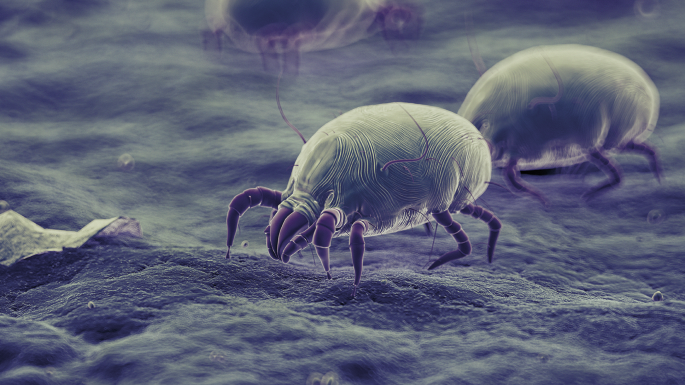
In early life, the immune system looks and functions differently compared with adulthood and is especially prone to allergic sensitization. Investigating this link, Shruti Naik and colleagues found that when 4-day old mouse pups are exposed to common allergens, they develop an acute cutaneous inflammation, not seen in adult mice. This skin response amplifies the T helper 2 (TH2) cell response in skin draining lymph nodes (dLNs) and establishes enhanced susceptibility to subsequent allergen challenge. The authors show that conventional dendritic cells (cDCs) in the skin in early life have a unique ability to directly induce cutaneous inflammation owing to the immature neuroendocrine system and low glucocorticoid levels.
The authors then used transcriptomics to define the drivers of the HDM inflammatory response in pup skin. This revealed a similar gene signature to human atopic dermatitis and a striking enrichment for type 17 immune pathways. Flow cytometry and immune profiling identified an accumulation of dermal Vγ6+ type 17 cells specifically in HDM-challenged pup skin. Consistent with a role for γδ T cells, Tcrd−/− pups had diminished cutaneous responses to HDM compared with wild-type and Tcrb−/− pups. Moreover, pups lacking Il17a and Il17f had fewer TH2 cells in skin dLNs than wild-type pups after HDM inoculation, suggesting that early life type 17 skin inflammation augments TH2 cell sensitization in the dLNs.