

:max_bytes(150000):strip_icc():format(jpeg)/health-benefits-of-calendula-4582641-primary-a769268b001248c3b8f4380791d115c7.jpg)
Key Takeaways
- Calendula can help with wound healing like C-section scars and skin ulcers.
- Calendula has anti-inflammatory properties beneficial for skin health.
- Calendula contains flavonoids that may provide antidiabetic, anticancer, and neuroprotective benefits, although more human studies are needed.
Calendula is a versatile herb known for its anti-inflammatory and antimicrobial properties, making it a popular choice for skin health, wound healing, and other health benefits. From topical creams to soothing teas, learn how it can naturally support your wellness journey.
How Does Calendula Work?
Calendula petals contain naturally occurring compounds called flavonoids and triterpenoids. In laboratory and animal studies, these compounds have been found to:
- Reduce inflammation (anti-inflammatory)
- Act as antioxidants (anti-oxidant)
- Influence blood-sugar pathways and improve blood sugar levels (antidiabetic)
- Affect cell signaling related to tumor growth (anticancer)
- Protect the brain (neuroprotective effects)
Research in humans is limited, so these effects aren’t confirmed as clinical benefits for people.
The active ingredients in calendula flowers are natural chemicals, including:
- Triterpene saponins (oleanolic acid glycosides)
- Triterpene alcohols (α-, β-amyrins, faradiol)
- Flavonoids (quercetin and isorhamnetin)
Calendula gels may support skin collagen, promote new tissue growth during wound healing, and reduce skin inflammation.
What Is Calendula Used For?
Calendula has been used to treat a variety of skin conditions. But while there has been some research suggesting its positive effects, the long-term use of calendula has not been studied, and more research is needed. Always ask your provider before starting any treatment or supplement, even a natural one.
Wounds and Pressure Ulcers
Studies in animals have shown that calendula might help with wound healing, but in terms of humans, here is what research has shown:
- A study published in The Journal of Family Medicine and Primary Care looked at the effectiveness of calendula ointment on Cesarean-section (C-section) scars in 72 women. Compared to getting the standard hospital treatment for the wound, the women who were treated with calendula ointment healed faster and reported that their incisions were less red and swollen.
- In a 2016 study published in The Journal of Wound Care, researchers used Calendula officinalis extract on people with venous ulcers on their legs. The researchers measured “healing velocity” in a week and found that the people who were treated with calendula had a 7.4% healing velocity, while the people who did not use the extract only had a healing velocity of about 1.7%. The researchers also noted that there were no bad side effects of using the extract.
- In a randomized trial of 100 postpartum women with episiotomy wounds, applying calendula ointment for 10 days led to significantly lower pain from day two onward and improved local healing (less redness and swelling) compared with standard care. No serious side effects were reported.
- In a 2016 pilot study published in Ostomy Wound Management, 84 people with diabetic foot ulcers used a calendula hydroglycolic extract spray twice daily alongside standard care. About 54% healed by 11 weeks and 78% by 30 weeks, with fewer odorous wounds and no serious side effects reported.
Eczema, Diaper Rash, and Other Skin Conditions
Calendula is often marketed as a treatment for eczema and dermatitis, but there is not much research supporting its effectiveness for these conditions.
Since the plant has anti-inflammatory properties, putting it on areas affected by skin conditions may reduce inflammation. However, evidence supporting its use is limited. Topical calendula is generally well-tolerated on intact skin, but avoid it if you’re allergic to ragweed, daisies, marigold, or other plants in the same family as calendula.
The use of calendula could be irritating for children with severe eczema, especially if they have an allergy to ragweed, daisies, marigold, or any other plant in the same family as calendula. Ask your pediatrician before using calendula on your child’s skin.
In one study of infants with diaper rash, 88% of lesions improved within six hours with bentonite versus 54% with calendula.
Bacterial Vaginosis and Vaginal Yeast Infections
In a small study, researchers compared calendula vaginal cream to metronidazole in 80 women with bacterial vaginosis. After one week, both groups had similar rates of being cured, and no major side effects were reported. Metronidazole remains the first-choice standard treatment that providers start with.
The researchers concluded that if people wanted to avoid taking medications to treat bacterial vaginosis, calendula ointment could be an option.
One study published in Women and Health found that calendula cream was effective for treating vaginal yeast infections, but that it did not work as fast as the standard medication (clotrimazole) that’s used to treat them.
There have been claims that calendula can be used to treat symptoms related to menstruation, but more research is needed.
Sun Protection
In lab testing, calendula essential oil was found to have sun protection factor (SPF) of 8.36. However, this is not a substitute for a sunscreen, and medical experts recommend that you use a broad-spectrum sunscreen of at least 30 SPF.
However, researchers point to the fact that calendula contains coumarins, compounds that help prevent oxidative damage to the skin. One particular coumarin, called umbelliferone, is used in sunscreen products for its skin-protective properties.
Some people say that calendula makes a good sunscreen or a skin moisturizer. More research is needed to prove it has these benefits.
Radiation Dermatitis
There is mixed research on using calendula to treat skin irritation from radiation treatment. There is not enough evidence that it’s more effective than using other topical products like petroleum jelly.
Recent oncology guidelines do not recommend the use of calendula over standard skincare.
Moisturizing and Anti-Aging Effects
Calendula is widely promoted for its moisturizing and wrinkle-reducing effects. Creams, oils, and ointments with calendula have been popularized on naturopathic social media channels and websites. But the evidence supporting its use as a wrinkle reducer or skin moisturizer is limited.
One study evaluated the use of topical creams that contain both geranium essential oil and calendula essential oil. Based on in vitro results, the study authors concluded that the combination had “age-defying potential” and should be considered to combat skin aging.
More studies in humans are needed to fully understand this potential benefit.
Other Bacterial or Fungal Infections
The triterpenoids in calendula have been studied for their antibacterial and anti-inflammatory effects. Researchers have identified that these compounds can help treat infections and reduce inflammation in the body. Polyphenols in calendula are also known to have anti-inflammatory effects that can help in the treatment of infections.
For example, studies have suggested that using a calendula extract spray in addition to standard care and hygiene might prevent infection and decrease wound odor in people with long-term foot ulcers from diabetes.
Because calendula has antimicrobial properties, it may be helpful as an add-on to prescription treatments for certain infections. Evidence in people is limited, so standard medicines remain the first choice. Check with your healthcare provider before using calendula.
Digestive Health
Some limited studies have suggested that calendula can be used to improve digestive health. In vitro studies have suggested that the anti-inflammatory effect of calendula can provide benefits to the digestive tract.
For this reason, some herbal medicine practitioners suggest the use of calendula tea to treat heartburn, peptic ulcers, gastroesophageal reflux disease (GERD), and inflammatory bowel disease (IBD).
Much of the research supporting this benefit is dated, however. More studies are needed to fully understand this potential benefit.
Menstrual Cramps
While calendula is not typically used in the United States to treat menstrual cramps, herbal treatments are widely used in other areas of the world, and calendula is one of the remedies commonly prescribed.
Unfortunately, studies investigating this specific benefit in humans are limited and dated. In addition, researchers investigating this potential benefit caution that existing studies are poor in quality.
Who Should Avoid Calendula?
You should not use calendula if you are allergic to ragweed, daisies, marigold, or plants in the Asteraceae/Compositae family, as it could cause you to have an allergic reaction.
People who are pregnant or breastfeeding should speak to their healthcare provider before using calendula as safety information is lacking.
As with other supplements and herbs, ask your healthcare provider before you try calendula, especially if you take medications or have upcoming surgery, due to potential interactions and complications. Your provider may advise you to stop taking herbs in advance of surgery.
What Are the Various Forms and Dosages for Calendula?
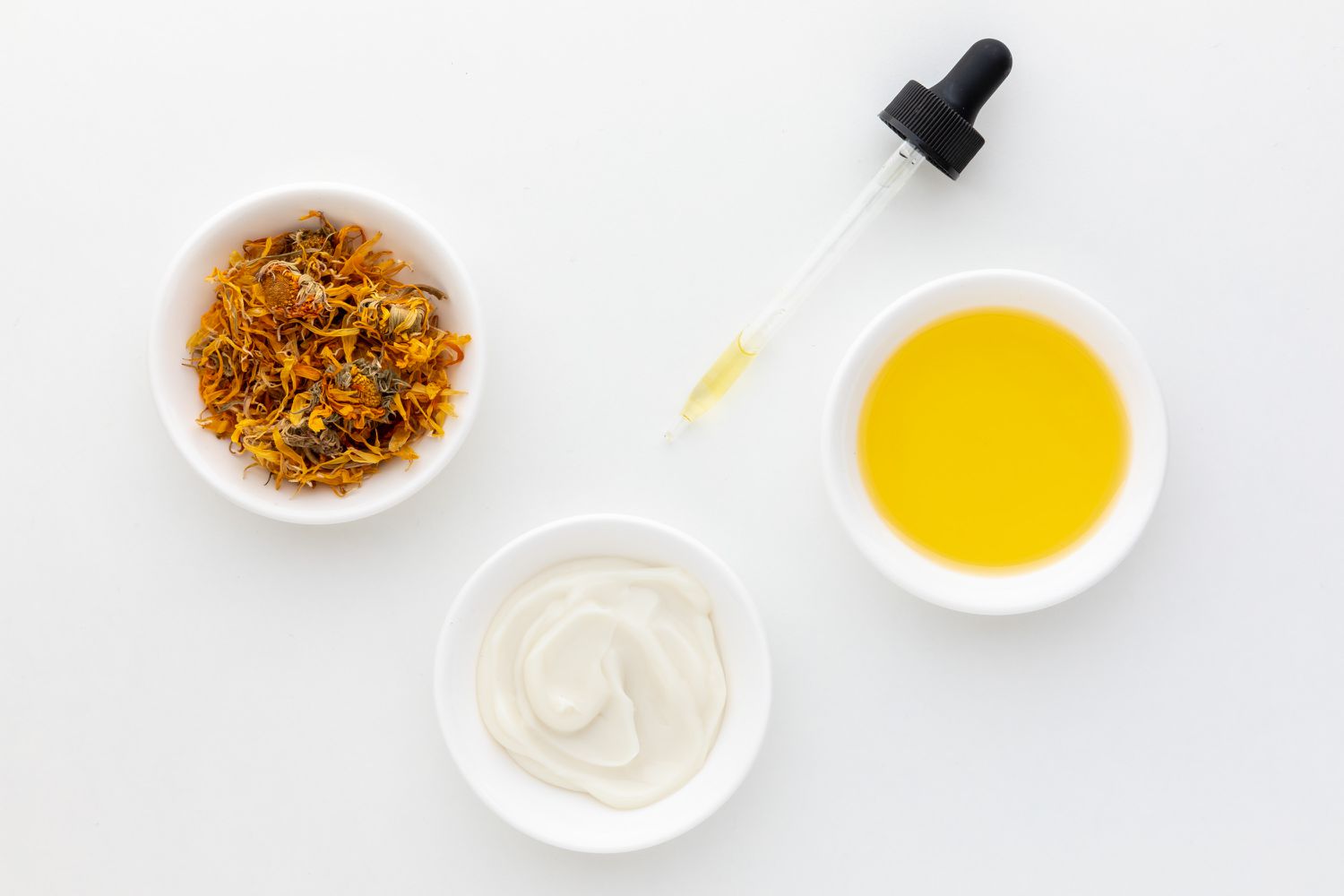
Calendula comes in various forms, including:
- Ointment/salve
- Cream
- Extracts/oils
- Capsules
- Dried flowers
The best form of calendula and how much calendula you use will depend on what you are using it for. There is no set dose for calendula because it has not been approved by the Food and Drug Administration (FDA).
If you decide to grow your own calendula plant, you can get the benefits of calendula by drying the petals. You can dry calendula petals by picking a flower and putting it on a paper towel away from the sun.
The dried petals can be used to steep tea and make oils. If you are making calendula tea, you can also use fresh flowers as garnish.
How to Make Calendula Tea
Here are the steps for making calendula tea:
- Bring water to a boil.
- Add about 2 teaspoons of dried flowers to a tea infuser or teapot.
- Pour hot water over the leaves and allow them to steep for 10 minutes.
- Strain and add any type of flavoring you’d like, such as cinnamon, vanilla, honey, etc.
How to Store Calendula
Store calendula products in a dry, dark place free of moisture. If you buy calendula at the store, look at the package for a “best by” date. Make sure you use it up before it expires.
If you are storing the dried petals, put them in an airtight container. If you’ve made an oil, tincture, or cream with calendula, store it in an airtight container and keep it in a cool, dry place.
Where Does Calendula Come From?
Calendula is a member of the Asteraceae/Compositae family of plants, from the Asterales order. The medicinal part of the Calendula Officinalis plant is a beautiful, deeply rich colored orange and yellow flower.
Calendula orginated in southern Europe and the Eastern Mediterranean area. It thrives in cool, temperate climates.
Common Names for Calendula
- Pot marigold
- English marigold (also known as common marigold)
- Scotch marigold
- Souci officinal (French)
- Fleur de calendule (French, less common)
Calendula is an annual plant that’s easy to grow in average, moderately fertile, well-drained soils that get full sunlight. It can be planted in flower beds, borders, cottage gardens, cutting gardens, pots, or containers.
In a garden, the fragrant leaves of the plant attract butterflies. The petals are a popular choice for floral displays and potpourri mixes. They can also be cooked and eaten.
Calendula oil is made by infusing the flowers in carrier oils such as olive oil or coconut oil. The oil can be used on its own or as an ingredient in ointments, balms, creams, or lotions. It can also be made in a tincture, tea, or put into a capsule.
Do not confuse calendula with ornamental marigolds of the Tagetes genus, which are commonly grown in vegetable gardens.
What to Look for When Buying Calendula
Companies that claim calendula is an effective treatment for certain health conditions have to follow up the claim with a disclaimer that states, “These statements have not been approved by the Food and Drug Administration” because the FDA has not approved therapeutic claims for calendula.
Getting calendula from a reputable source is important because it helps you avoid getting a product that has harsh substances or chemicals added to it. Look for organic products or products that have an independent certification.
Instead of buying products, you could also purchase seeds and grow your own calendula at home.
In the United States, the Food and Drug Administration (FDA) does not regulate dietary supplements the way it regulates prescription medications. As a result, some supplement products may not contain the ingredients listed on the label. When choosing a supplement, look for products independently tested or certified by organizations such as the National Sanitation Foundation (NSF), United States Pharmacopeia (USP), or ConsumerLab. For personalized guidance, consult your healthcare provider, registered dietitian nutritionist (RD or RDN), or pharmacist.