

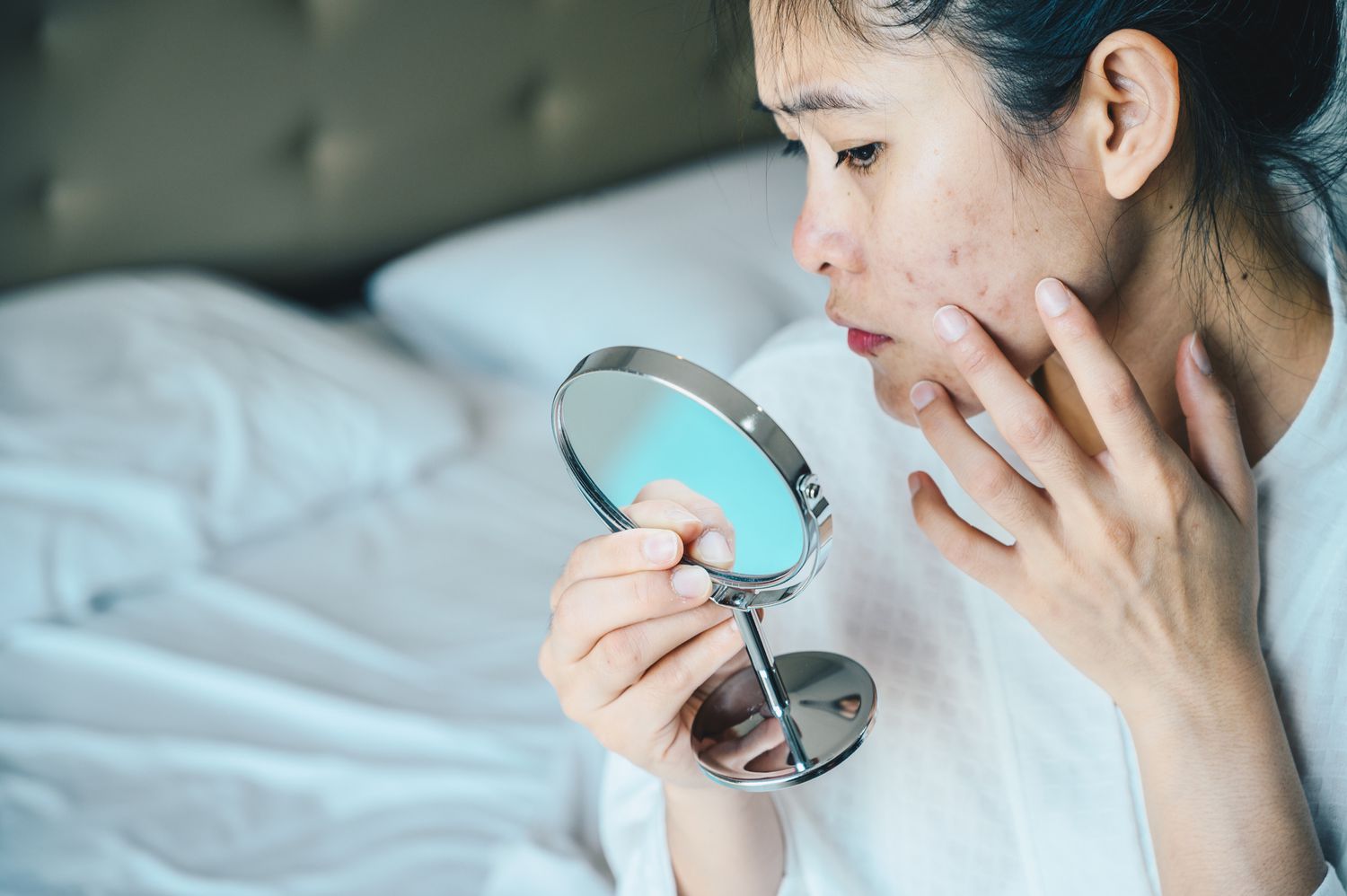
Key Takeaways
- Fungal acne is caused by yeast clogging the skin’s hair follicles.
- It can be confused with regular acne, but it tends to have small, itchy papules.
- Treatment may include anti-dandruff shampoo and oral antifungal medication.
Fungal acne appears as small, itchy bumps caused by yeast overgrowth. It’s most common on sweaty areas like the chest, back, shoulders, and hairline. Treatment includes antifungal washes or creams containing ketoconazole or zinc pyrithione, light skincare products, and keeping skin dry. Most cases begin to improve within a few weeks with proper care.
Verywell / Theresa Chiechi
How to Recognize Fungal Acne
Reproduced with permission from ©DermNet NZ www.dermnetnz.org 2022
Fungal acne can look similar to acne vulgaris at first. However, there are a few key signs that can help you tell the difference:
- Appearance: Small, uniform, red or skin-colored bumps (papules) appear that usually don’t have a whitehead or “pop” like regular acne.
- Itchiness: The bumps are often intensely itchy, which is less common with regular acne.
- Location: Fungal acne usually appears in warm, sweaty areas, including the forehead, hairline, chest, shoulders, and upper back.
- Clusters: The bumps often appear in groups rather than scattered individually.
Fungal acne doesn’t respond to common acne treatments, including antibiotics. So if your acne doesn’t improve with typical acne medications, your healthcare provider may test for fungal acne.
How to Clear Up Fungal Acne
Fungal acne happens when there is an overgrowth of yeast on the skin. Treating it focuses on stopping the yeast and fixing the habits that let it thrive. If you only treat the yeast, fungal acne often comes back.
To clear up fungal acne, you may need to:
- Use antifungal washes and shampoos: Apply over-the-counter shampoos or body washes with ketoconazole, zinc pyrithione, or selenium sulfide to the affected areas. For the best results, follow the product’s directions carefully.
- Apply topical antifungal creams: Put OTC creams with clotrimazole or ketoconazole directly on bumps. They help control smaller areas and can prevent flare-ups after oral treatment.
- Check your skincare: Avoid skincare ingredients that feed yeast, including oils, butters, and fatty acids (e.g., oleic acid, stearic acid, and linoleic acid). Stick to light, non-greasy products.
- Keep skin dry and let it breathe: Shower right after sweating, wear loose, breathable clothes, and avoid tight synthetic fabrics.
- Take oral antifungal medicine: For bigger or stubborn breakouts, a healthcare provider may prescribe oral antifungals like itraconazole (Sporanox). These work faster for controlling symptoms.
Can Oral Antifungals Cause Side Effects?
Oral antifungal medications can cause side effects, although many people tolerate them well. Common side effects include:
Rarely, the medications can cause liver damage (hepatotoxicity, which is serious).
If you notice any of these side effects while taking oral antifungals, contact your healthcare provider right away. They can help you adjust your treatment or suggest safer alternatives.
What to Avoid to Keep Fungal Acne Away
Avoiding certain habits and products can help prevent fungal acne from coming back or getting worse.
Avoid the following to care for your skin:
- Heavy, oily creams: Thick or greasy products create a moist environment that yeast loves. Stick to light, non-greasy moisturizers.
- Oral antibiotics for regular acne: These can kill good bacteria that keep yeast in check, making fungal acne worse.
- Tight clothing: Clothes that don’t breathe trap sweat and heat, which encourages yeast growth. Opt for loose, breathable fabrics.
- Overwashing or irritating the skin: Daily shaving or harsh scrubs can irritate hair follicles, making it easier for yeast to grow.
- Sugary, high-carb foods: Yeast feeds on sugar; reducing sugar intake can help prevent overgrowth.
Who Is Most Likely to Get Fungal Acne?
Anyone can get fungal acne, but it’s more common in adolescents and young adults, especially males with oily skin.
You may be more likely to develop fungal acne if you:
- Live in a hot, humid climate, where sweat and moisture build up easily
- Sweat a lot, including people with hyperhidrosis or those who exercise frequently
- Have oily skin or use heavy, oil-based moisturizers or sunscreens
- Use oral antibiotics, which can disrupt normal skin bacteria and allow yeast to grow
- Have a weakened immune system, making it harder for your body to control yeast
- Have other fungal skin conditions, such as seborrheic dermatitis or tinea versicolor
How Providers Identify Fungal Acne
Usually, a dermatologist will be able to diagnose fungal acne after a brief physical exam. They will look for uniform, pinhead-sized red pustules on the hair follicles on the upper chest and back.
Your dermatologist may ask you a few questions during the exam, such as:
- How long have you been experiencing these bumps?
- Are they itchy?
- Do they seem to get worse in the heat?
- Have you started any new medications lately?
Your dermatologist may also perform tests to determine whether you have fungal acne:
- Skin scraping: This can allow your healthcare provider to look at your skin cells under a microscope and detect the yeast responsible for fungal acne. This method is not always definitive because most people normally have this yeast on their skin.
- Biopsy: If needed, your dermatologist can perform a biopsy to remove a small skin sample to confirm the presence of yeast.
- Wood’s lamp exam: This involves using ultraviolet light to look at the skin closely. If you have fungal acne, a yellow-green fluorescence will be seen on the test.
When to See a Healthcare Provider
If you have breakouts that aren’t responding to conventional acne treatments, contact your dermatologist. They can do tests to confirm whether you have fungal acne so you can get the right treatments.
Once fungal folliculitis has been treated and is completely gone, talk with your healthcare provider about preventive measures you can take to keep your skin clear and healthy.
If you’re concerned that your fungal acne is returning, see your healthcare provider right away. The sooner you catch it, the easier it is to treat.
:max_bytes(150000):strip_icc()/carriemadormo3-0d20d62434bb4344bdea385664529e28.jpg)