

:max_bytes(150000):strip_icc():format(jpeg)/dermatitis-herpetiformis-Dermnet-CreativeCommons-c0b995f9de0e4cbcb0d4e429e5008e67.jpg)
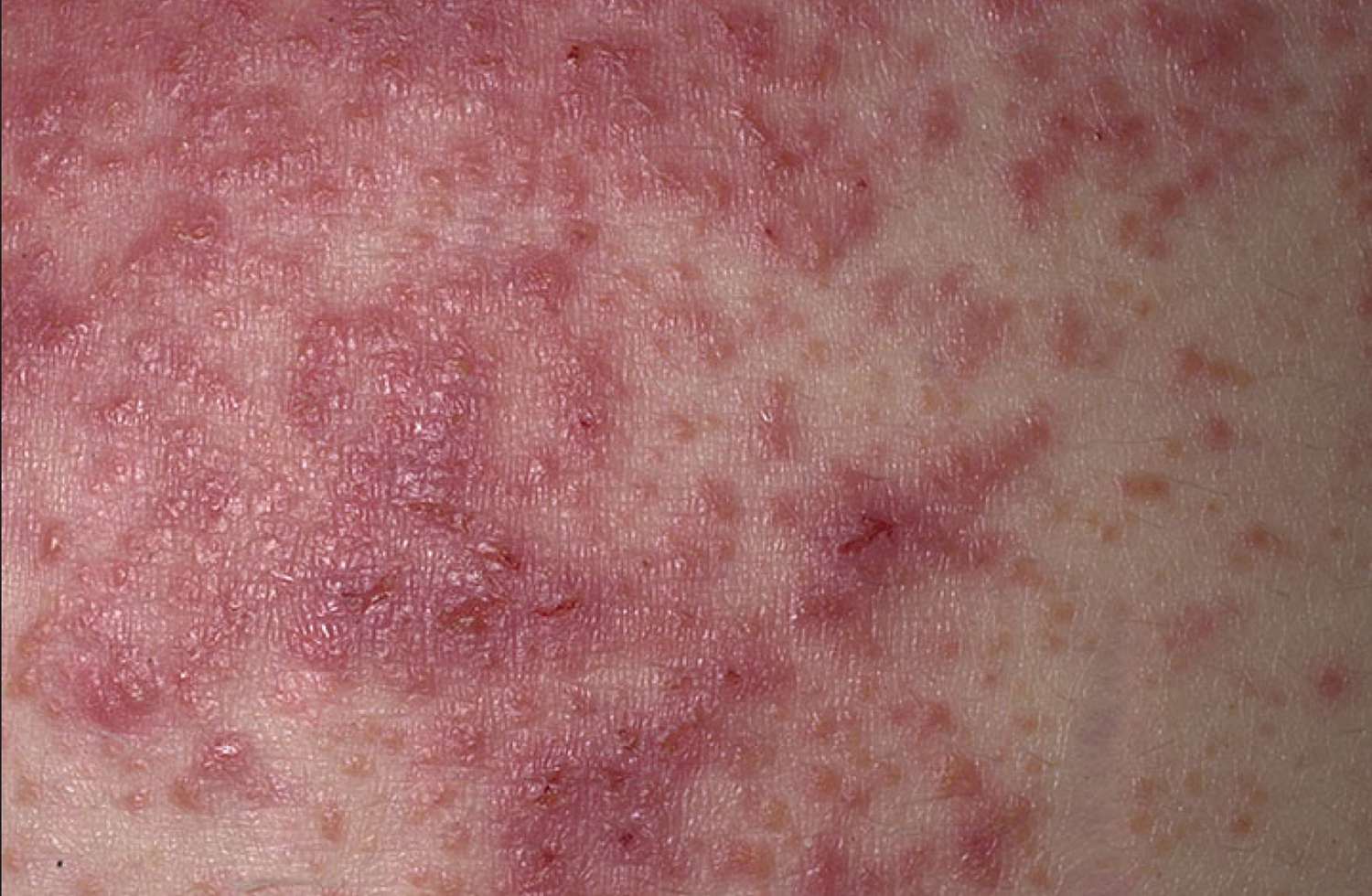
What Dermatitis Herpetiformis Looks Like
Dermnet/Creative Commons
Dermatitis herpetiformis can resemble other skin conditions, but some specific characteristics suggest a link to celiac disease:
Location
While dermatitis herpetiformis can develop anywhere on the body, it commonly appears on extensor surfaces, which are the areas of skin over joints such as the elbows, knees, buttocks, ankles, groin, and back of the neck.
Onset of Symptoms
Dermatitis herpetiformis can appear suddenly and persist for weeks or months. Outbreaks may occur within hours or days after gluten consumption.
By contrast, a rash caused by a wheat allergy (caused by an allergy rather than autoimmunity) often develops within two hours.
Appearance
The rash from dermatitis herpetiformis includes distinct reddish-purple, fluid-filled bumps. These bumps can vary in size from a pinhead to a dime.
The rash tends to come and go in episodic flares. After a blister bursts, it usually takes several days to heal, during which new bumps might form nearby.
Sensations
A dermatitis herpetiformis rash can be intensely itchy and often comes with a burning sensation.
During outbreaks, you may find it hard to resist scratching, which can cause scarring. This can lead to reddish skin and purplish marks that last for weeks, months, or even permanently.
Symmetry
Similar to autoimmune diseases like rheumatoid arthritis and vitiligo, dermatitis herpetiformis develops symmetrically. This means it affects the same areas on both sides of the body at the same time.