

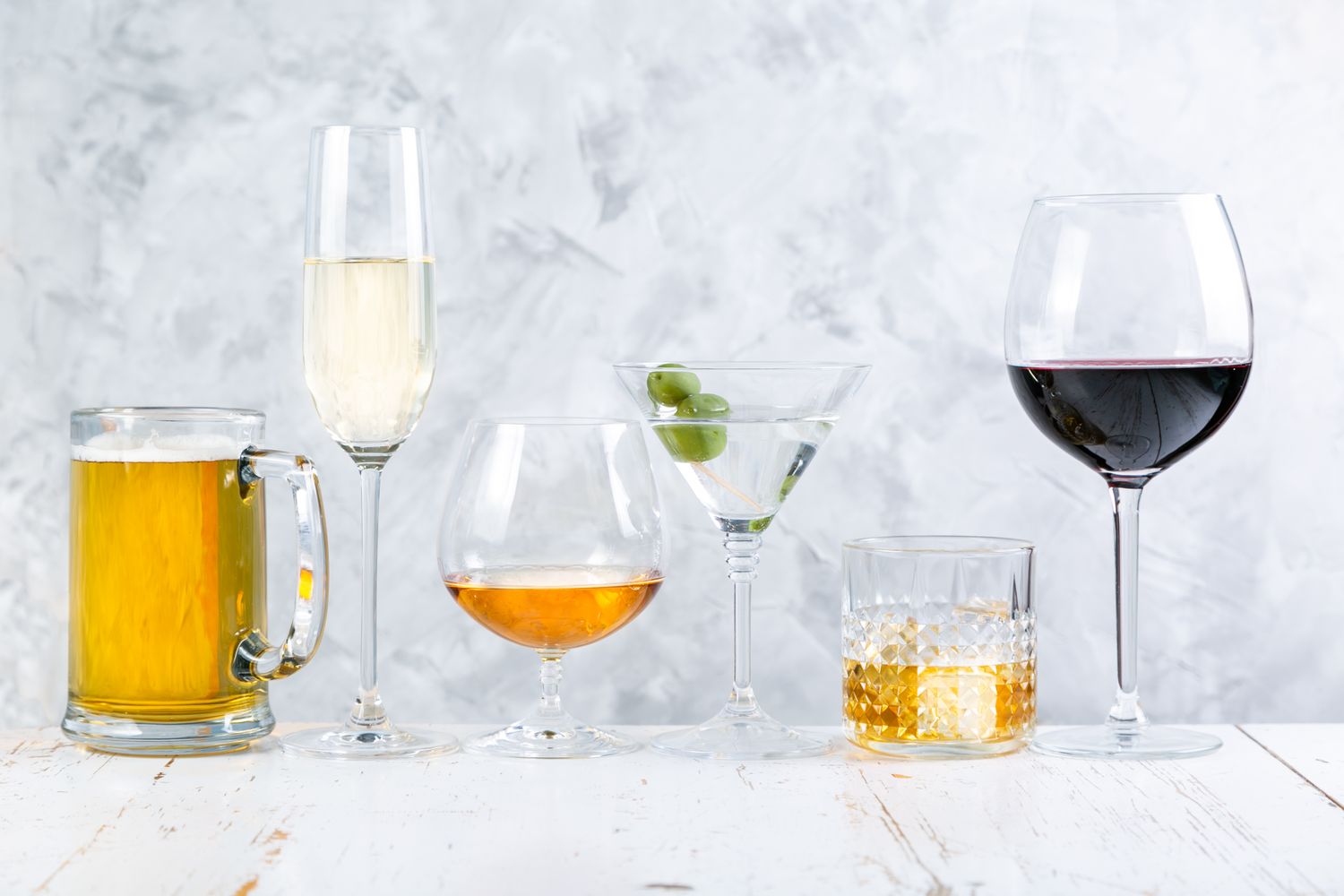
Key Takeaways
- No amount of alcohol is considered safe.
- How much and how often you drink matters more than whether you drink beer, wine, or liquor.
- Drinking less, or not at all, offers the most significant health benefits.
When asking which type of alcohol is the healthiest, what you’re really asking is, which one does the least harm?
From a health perspective, the type of alcohol matters much less than the dose, frequency, and drinking pattern, as it can be easy to overconsume any alcohol.
Which Is the Healthiest?
The healthiest type of alcohol to drink is none. Even so, it’s not always realistic to totally give up alcohol, nor does everyone necessarily want to.
Whether beer vs. wine vs. liquor is healthiest depends less on the type of alcohol and more on the following factors:
- How much you drink (dose)
- How often you’re drinking (frequency)
- How you drink (sipping with food vs. binge episodes)
- What else comes with it (sugary mixers, high-calorie cocktails, shots, etc)
All alcoholic drinks contain ethanol, the compound responsible for both the buzz and most of the health risks associated with drinking. In addition to certain cancers, alcohol intake is linked to liver disease, heart disease, depression, and anxiety.
Beer
Standard serving: 12 ounces (oz), 5% alcohol by volume (ABV)
Calories: 140-180
Carbohydrates: 10-20 grams (g)
Sugar: 0 g
Beer contains small amounts of antioxidants from barley and hops, and its low alcohol concentration compared to other types of alcohol may make it a slower sip.
Because beer is a fermented beverage, it’s often associated with gut health; however, the fact is that alcohol of any kind can actually disrupt the gut microbiome. If gut benefits are what you’re seeking, you’re better off eating some sauerkraut, kefir, or miso.
Overall, beer isn’t inherently worse than other types of alcohol. It’s just important to be aware that pints, tallboys, and strong craft beers can contain more alcohol than a “standard” beer.
Wine
Standard serving: 5 oz, 12% ABV
Calories: 120-130
Carbohydrates: 3-5 g
Sugar: Varies
Red wine contains a polyphenol called resveratrol, which has been historically linked to heart health benefits. However, newer research suggests that the therapeutic amount of resveratrol needed to see benefits isn’t possible through wine or food consumption alone.
If you want to incorporate some resveratrol into your diet anyway, dark grapes, blueberries, and walnuts also contain resveratrol and come packed with other beneficial nutrients.
Regularly drinking wine is linked to increased risk of breast and colorectal cancer, even when consumed moderately.
Liquor
Standard serving: 1.5 oz, 40% ABV
Calories: 100
Carbohydrates: 0 g
Sugar: 0 g
Liquor, like vodka, gin, whiskey, or rum, is easier to measure as a true standard drink compared to beer or wine; however, its high alcohol concentration makes rapid intoxication more likely, which can be risky, as shots and cocktails can be easy to consume in excess.
Overall, while liquor might appear “lighter” nutritionally, given that it contains a small amount of calories per serving and not much else, it delivers alcohol quickly, which comes with its own risks.
| Beer | Wine | Liquor | |
|---|---|---|---|
| Standard serving | 12 oz | 5 oz | 1.5 oz |
| ABV | 5% | 12% | 40% |
| Calories | 140-180 | 120-130 | 100 |
| Carbohydrates | 10-20 g | 3-5 g | 0 g |
| Sugar | 0 g | 1 g | 0 g |
Serving Sizes: What Counts as a Drink?
Just like it’s easy to consume more than a standard serving of chips or cookies, it can be easy to exceed a standard serving of alcohol in one sitting. This is especially true for craft beer, large wine pours, and strong cocktails.
One standard drink in the United States is equivalent to approximately 14 grams (0.6 oz) of pure alcohol, which translates to:
- Beer: 12 oz at 5% ABV
- Wine: 5 oz at 12% ABV
- Liquor/spirits: 1.5 oz “shot” at 40% ABV (80 proof)
To put this into real-life perspective, a 16-oz 7% IPA can be equivalent to around two standard drinks (or more). Cocktails often contain 2–3 servings of alcohol, and a generous 8-9 oz wine pour can be roughly equivalent to 1.5–2 drinks.
Tips to Minimize Harm
If you choose to drink, some strategies can help reduce the risks associated with it:
- Know what a standard drink is, which can help prevent consuming too much before you realize it.
- Drink less often overall, as health risks increase with alcohol frequency, not just quantity.
- Slow your pace, drink with food, and avoid taking shots, as this can help lower peak blood alcohol levels and reduce strain on your nervous system.
- Alternate alcohol with water, seltzer, or mocktails and nonalcoholic drinks, which can help support your hydration, help reduce total alcohol intake, improve sleep, and reduce the risk of a hangover.
- Avoid drinking for sleep or relaxation, as it’s known to disrupt sleep quality and can reinforce dependence over time.
- Be cautious with existing health conditions, as alcohol can interfere with certain medications and worsen high blood pressure, anxiety, reflux, and liver disease.
There’s no “safe” amount of alcohol, as any consumption comes with risk. If you choose to drink it, consider these tips to minimize potential harm.
:max_bytes(150000):strip_icc()/Lpanoffverywellphoto-f71f0b5c487943a382bbbdabc0a2fc1d.jpg)