

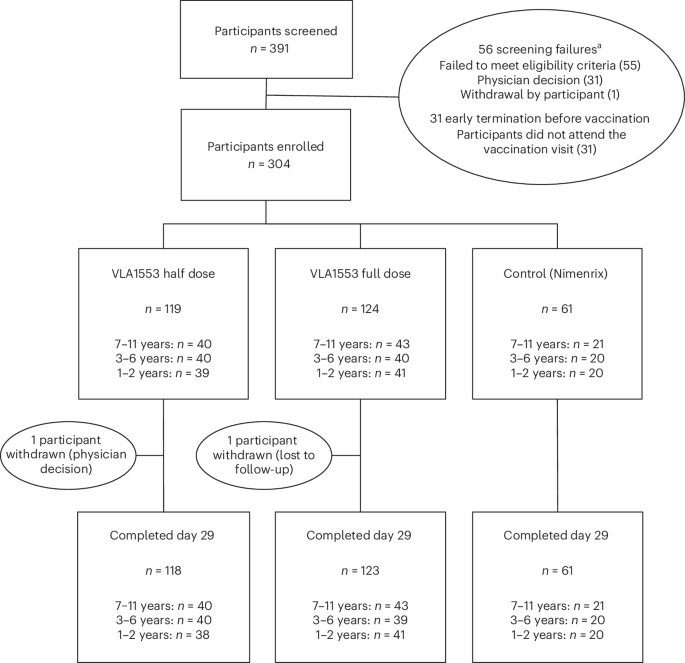
Bartholomeeusen, K. et al. Chikungunya fever. Nat. Rev. Dis. Primers 9, 17 (2023).
Puntasecca, C. J., King, C. H. & LaBeaud, A. D. Measuring the global burden of chikungunya and Zika viruses: a systematic review. PLoS Negl. Trop. Dis. 15, e0009055 (2021).
Simon, F., Javelle, E. & Gasque, P. Chikungunya virus infections. N. Engl. J. Med. 373, 93–94 (2015).
Laverdeur, J., Desmecht, D., Hayette, M. P. & Darcis, G. Dengue and chikungunya: future threats for Northern Europe? Front. Epidemiol. 4, 1342723 (2024).
Liu, Q., Shen, H., Gu, L., Yuan, H. & Zhu, W. Chikungunya virus in Europe: a retrospective epidemiology study from 2007 to 2023. PLoS Negl. Trop. Dis. 19, e0012904 (2025).
Powers, A. M. et al. Vaccine and therapeutic options to control chikungunya virus. Clin. Microbiol. Rev. 31, e00104-16 (2017).
Weber, W. C., Streblow, D. N. & Coffey, L. L. Chikungunya virus vaccines: a review of IXCHIQ and PXVX0317 from pre-clinical evaluation to licensure. BioDrugs 38, 727–742 (2024).
Manzoor, K. N. et al. The global emergence of Chikungunya infection: an integrated view. Rev. Med. Virol. 32, e2287 (2022).
Weber, W. C. et al. The approved live-attenuated chikungunya virus vaccine (IXCHIQ®) elicits cross-neutralizing antibody breadth extending to multiple arthritogenic alphaviruses similar to the antibody breadth following natural infection. Vaccines 12, 893 (2024).
Mourad, O., Makhani, L. & Chen, L. H. Chikungunya: an emerging public health concern. Curr. Infect. Dis. Rep. 24, 217–228 (2022).
Chikungunya – La Réunion and Mayotte. WHO www.who.int/emergencies/disease-outbreak-news/item/2025-DON567 (2025).
Couderc, T. et al. Prophylaxis and therapy for Chikungunya virus infection. J. Infect. Dis. 200, 516–523 (2009).
Suhrbier, A., Jaffar-Bandjee, M. C. & Gasque, P. Arthritogenic alphaviruses—an overview. Nat. Rev. Rheumatol. 8, 420–429 (2012).
Ferreira, F. C. P. A. D. M. et al. Perinatal and neonatal chikungunya virus transmission: a case series. J. Pediatric Infect. Dis. Soc. 13, 576–584 (2024).
Gomes, P. D. et al. High prevalence of arthralgia among infants with Chikungunya disease during the 2019 outbreak in northern region of the state of Rio de Janeiro. Front. Pediatr. 10, 944818 (2022).
Ward, C. E. & Chapman, J. I. Chikungunya in children: a clinical review. Pediatr. Emerg. Care 34, 510–515 (2018).
Burt, F. J. et al. Chikungunya virus: an update on the biology and pathogenesis of this emerging pathogen. Lancet Infect. Dis. 17, e107–e117 (2017).
Ritz, N., Hufnagel, M. & Gerardin, P. Chikungunya in children. Pediatr. Infect. Dis. J. 34, 789–791 (2015).
Simon, F. et al. French guidelines for the management of chikungunya (acute and persistent presentations). November 2014. Med. Mal. Infect. 45, 243–263 (2015).
da Cunha, R. V. & Trinta, K. S. Chikungunya virus: clinical aspects and treatment—a review. Mem. Inst. Oswaldo Cruz 112, 523–531 (2017).
González-Sánchez, J. A. & Ramírez-Arroyo, G. F. Chikungunya virus: history, geographic distribution, clinical picture, and treatment. P. R. Health Sci. J. 37, 187–194 (2018).
Gordon, A. et al. Differences in transmission and disease severity between 2 successive waves of chikungunya. Clin. Infect. Dis. 67, 1760–1767 (2018).
Martins, M. M., Prata-Barbosa, A. & Cunha, A. J. Arboviral diseases in pediatrics. J. Pediatr. 96, 2–11 (2020).
Beserra, F. L. C. N. et al. Clinical and laboratory profiles of children with severe chikungunya infection. Rev. Soc. Bras. Med. Trop. 52, e20180232 (2019).
Dhochak, N., Kabra, S. K. & Lodha, R. Dengue and chikungunya infections in children. Indian J. Pediatr. 86, 287–295 (2019).
Garg, T., Sanke, S., Ahmed, R., Chander, R. & Basu, S. Stevens-Johnson syndrome and toxic epidermal necrolysis-like cutaneous presentation of chikungunya fever: a case series. Pediatr. Dermatol. 35, 392–396 (2018).
Sharma, P. K. et al. Severe manifestations of chikungunya fever in children, India, 2016. Emerg. Infect. Dis. 24, 1737–1739 (2018).
Singh, A. & Jain, R. Neurological manifestations of chikungunya in children. Indian Pediatr. 54, 249 (2017).
Pinzón-Redondo, H. et al. Risk factors for severity of chikungunya in children: a prospective assessment. Pediatr. Infect. Dis. 35, 702–704 (2016).
Ahola, T. et al. Therapeutics and vaccines against chikungunya virus. Vector Borne Zoonotic Dis. 15, 250–257 (2015).
Weaver, S. C. & Lecuit, M. Chikungunya virus and the global spread of a mosquito-borne disease. N. Engl. J. Med. 372, 1231–1239 (2015).
NIAID Emerging Infectious Diseases/Pathogens. NIAID www.niaid.nih.gov/research/emerging-infectious-diseases-pathogens (2024).
Chothe, V. & Babar, R. Congenital chikungunya in newborn along with early onset sepsis: how to interpret?. Pediatr. Oncall. J. 22, 51–52 (2025).
Valneva Reports Positive Phase 2 results in Children for Its Chikungunya Vaccine and Announces Phase 3 Dose Decision. Valneva https://valneva.com/press-release/valneva-reports-positive-phase-2-results-in-children-for-its-chikungunya-vaccine-and-announces-phase-3-dose-decision/ (Valneva, 2025).
Chen, L. H., Fritzer, A., Hochreiter, R., Dubischar, K. & Meyer, S. From bench to clinic: the development of VLA1553/IXCHIQ, a live-attenuated chikungunya vaccine. J. Travel. Med. 31, taae123 (2024).
Ly, H. Ixchiq (VLA1553): the first FDA-approved vaccine to prevent disease caused by Chikungunya virus infection. Virulence 15, 2301573 (2024).
Kosulin, K. et al. Cross-neutralizing activity of the chikungunya vaccine VLA1553 against three prevalent chikungunya lineages. Emerg. Microbes Infect. 14, 2469653 (2025).
Valneva Announces U.S. FDA approval of World’s First Chikungunya Vaccine, IXCHIQ®. Valneva https://valneva.com/press-release/valneva-announces-u-s-fda-approval-of-worlds-first-chikungunya-vaccine-ixchiq/ (2023).
Valneva Announces Health Canada Approval of World’s First Chikungunya Vaccine, IXCHIQ®. Valneva https://valneva.com/press-release/valneva-announces-health-canada-approval-of-the-worlds-first-chikungunya-vaccine-ixchiq/ (2024).
Valneva Receives Marketing Authorization in Europe for the World’s First Chikungunya Vaccine, IXCHIQ®. Valneva https://valneva.com/press-release/valneva-receives-marketing-authorization-in-europe-for-the-worlds-first-chikungunya-vaccine-ixchiq/ (Valneva, 2024).
IXCHIQ Vaccine Approved to Protect Adults Against Chikungunya. Medicines and Healthcare Products Regulatory Agency (MHPRA). www.gov.uk/government/news/ixchiq-vaccine-approved-to-protect-adults-against-chikungunya (2025).
Valneva Receives First Marketing Authorization for Ixchiq® in a Chikungunya Endemic Country. Valneva https://valneva.com/press-release/valneva-receives-first-marketing-authorization-for-ixchiq-in-a-chikungunya-endemic-country/ (2025).
Buerger, V. et al. Safety and immunogenicity of a live-attenuated chikungunya virus vaccine in endemic areas of Brazil: interim results of a double-blind, randomised, placebo-controlled phase 3 trial in adolescents. Lancet Infect. Dis. 25, 114–125 (2025).
Valneva’s Chikungunya Vaccine IXCHIQ® Now Authorized in Canada for Individuals aged 12 and Older. Valneva https://valneva.com/wp-content/uploads/2025/08/2025_08_18_IXCHIQ_Ado_Label_Extension_Health_Canada_PR_EN_FINAL.pdf (2025).
IXCHIQ: Chikungunya Vaccine (Live). European Medicines Agency (EMA) www.ema.europa.eu/en/medicines/human/EPAR/ixchiq#:~:text=The%20recommended%20dose%20is%20one,against%20mosquito%20bites%20after%20vaccination (2025).
Ixchiq: Temporary Restriction on Vaccinating People 65 Years and Older To Be Lifted. European Medicines Agency (EMA) www.ema.europa.eu/en/news/ixchiq-temporary-restriction-vaccinating-people-65-years-older-be-lifted (2025).
Valneva Announces FDA’s Decision to Suspend License of Chikungunya Vaccine IXCHIQ® in the U.S. Valneva https://valneva.com/press-release/valneva-announces-fdas-decision-to-suspend-license-of-chikungunya-vaccine-ixchiq-in-the-u-s/ (2025).
Wressnigg, N. et al. Single-shot live-attenuated chikungunya vaccine in healthy adults: a phase 1, randomised controlled trial. Lancet Infect. Dis. 20, 1193–1203 (2020).
Schneider, M. et al. Safety and immunogenicity of a single-shot live-attenuated chikungunya vaccine: a double-blind, multicenter, randomized, placebo-controlled phase 3 trial. Lancet 401, 2138–2147 (2023).
McMahon, R. et al. A randomized, double-blinded phase 3 study to demonstrate lot-to-lot consistency and to confirm immunogenicity and safety of the live-attenuated chikungunya virus vaccine candidate VLA1553 in healthy adults. J. Trav. Med. 31, taad156 (2024).
McMahon, R. et al. Antibody persistence and safety of a live-attenuated chikungunya virus vaccine up to 2 years after single-dose administration in adults in the USA: a single-arm, multicentre, phase 3b study. Lancet Infect. Dis. 12, 1383–1392 (2024).
Valneva Reports High Sustained Immune Response in Adolescents One Year After Single Vaccination with Its Chikungunya Vaccine. Valneva https://valneva.com/press-release/valneva-reports-high-sustained-immune-response-in-adolescents-one-year-after-single-vaccination-with-its-chikungunya-vaccine/ (2025).
Irfan, H. & Ahmed, A. Advancements in chikungunya virus management: FDA approval of ixchiq vaccine and global perspectives. Health Sci. Rep. 7, e2183 (2024).
Barr, K. L. & Vaidhyanathan, V. Chikungunya in infants and children: is pathogenesis increasing?. Viruses 11, 294 (2019).
MenACWY Vaccine (Meningococcal Group A, C, W-135 and Y Conjugate Vaccine). Oxford Vaccine Group https://vaccineknowledge.ox.ac.uk/menacwy-vaccine#Key-vaccine-facts (2024).
Stamaril Powder and Solvent for Suspension for Injection in Pre-filled Syringe. Sanofi Pasteur www.medicines.org.uk/emc/product/1683/smpc/print (2025).
Dengue Tetravalent Vaccine (Live, Attenuated): Summary of Product Characteristics. European Medicines Agency (EMA) www.ema.europa.eu/en/documents/outside-eu-product-information/dengue-tetravalent-vaccine-live-attenuated-takeda-product-information_en.pdf (undated).
Dengue Tetravalent Vaccine (Live, Attenuated) Takeda: Opinion On Medicine For Use Outside EU. European Medicines Agency (EMA) www.ema.europa.eu/en/opinion-medicine-use-outside-EU/human/dengue-tetravalent-vaccine-live-attenuated-takeda (2025).
A phase 2 Clinical Trial of VLA1553 in Healthy Children Aged 1 to 11 Years https://clinicaltrials.gov/study/NCT06106581?term=NCT06106581&rank=1 (ClinicalTrials.gov, 2025).
IXCHIQ (Chikungunya Vaccine, Live) solution for iIntramuscular injection, package insert (FDA, 2023); www.fda.gov/media/173758/download?attachment
Gorchakov, R. et al. Attenuation of Chikungunya virus vaccine strain 181/clone 25 is determined by two amino acid substitutions in the E2 envelope glycoprotein. J. Virol. 86, 6084–6096 (2012).
Harrison, V. R., Eckels, K. H., Bartelloni, P. J. & Hampton, C. Production and evaluation of a formalin-killed Chikungunya vaccine. J. Immunol. 107, 643–647 (1971).
Levitt, N. H. et al. Development of an attenuated strain of chikungunya virus for use in vaccine production. Vaccine 4, 157–162 (1986).
Roques, P. et al. Effectiveness of CHIKV vaccine VLA1553 demonstrated by passive transfer of human sera. JCI Insight 7, e160173 (2022).
Yoon, I.-K. et al. High rate of subclinical chikungunya virus infection and association of neutralizing antibody with protection in a prospective cohort in the Philippines. PLoS Negl. Trop. Dis. 9, e0003764 (2015).
Yoon, I.-K. et al. Pre-existing chikungunya virus neutralizing antibodies correlate with risk of symptomatic infection and subclinical seroconversion in a Philippine cohort. Int. J. Infect. Dis. 95, 167–173 (2020).