

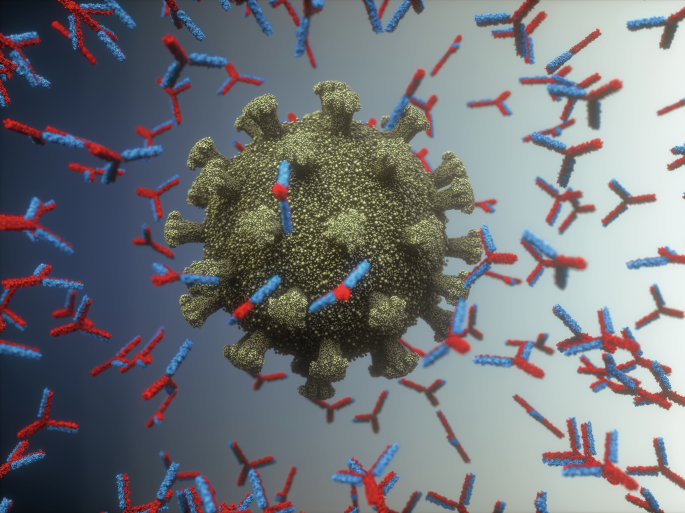
Why some people fail to develop broadly neutralizing antibody responses that protect against future virus variants may depend on their natural killer (NK) cell response. Researchers reporting in Nature Immunology studied people infected with the ancestral strain of SARS-CoV-2 and found that those with narrower neutralizing antibody responses had more activated NK cells. These activated NK cells showed greater cytotoxicity towards T follicular helper (TFH) cells, which are crucial for optimal antibody responses.
The authors measured serum neutralization against the ancestral strain (Wuhan-1) and four SARS-CoV-2 variants that the cohort had not been exposed to (alpha, beta, delta and omicron). Individuals were then grouped according to the number of variants neutralized: broad neutralizers neutralized 4 variants (Wuhan-1, alpha, beta and delta), whereas narrow neutralizers neutralized 3 or fewer variants. Breadth score did not correlate with disease severity or stage of disease. However, analysis of differentially expressed genes (DEGs) revealed that narrow breadth correlated with increased expression of interferon-stimulated genes (ISGs), predominantly by NK cells. Moreover, broad neutralizers had fewer NK cells compared with narrow neutralizers. Further analysis of the DEGs in NK cells revealed that in narrow neutralizers, NK cells more highly express ISGs, genes associated with cytotoxicity and activation and CX3CR1, a marker of migration to lymphoid tissues. In broad neutralizers, NK cells have a proliferative, inhibitory and immature phenotype, and no evidence of ISG activation.