

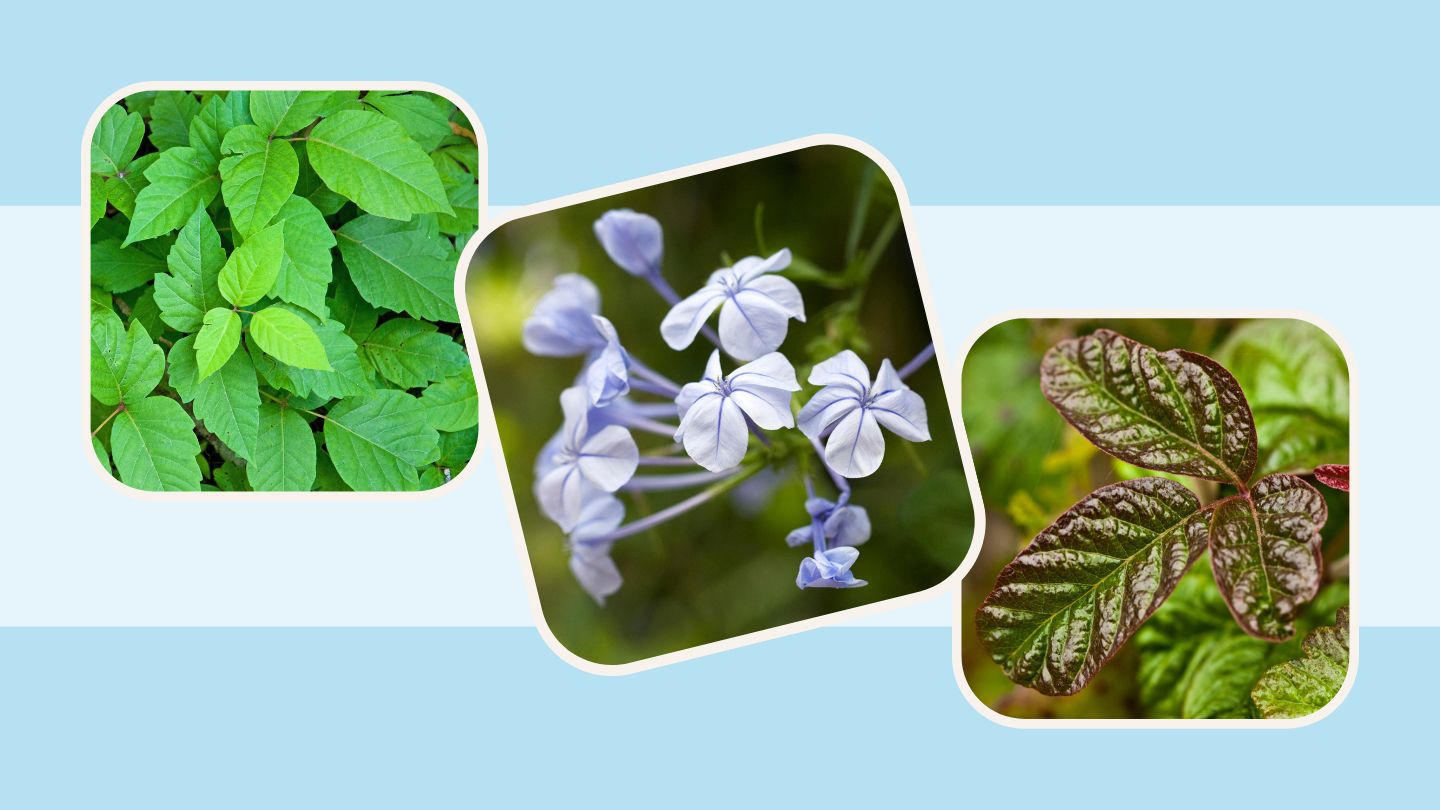
Poison ivy is found across the United States (except for Alaska and Hawaii). While you could come into contact with it while hiking in the woods, poison ivy grows virtually everywhere — along roadsides, on fences, in backyards.
Poison ivy leaves grow in clusters of three on vines that can grow up into trees or trail along the ground. The oily compound called urushiol is what causes poison ivy’s notorious rash, and this is found in every part of the plant: the vine, the roots, the leaves, the flowers, and the berries.
The compound is also found in other plants that cause rashes (more on those plants below).
Up to 90 percent of people who come into contact with the poison ivy oil end up with irritation.
A poison ivy rash typically appears a few days after exposure. If this is your first time in contact with the plant, it may take a week or two. When it does, you’ll know it: You may see red skin, swelling and blisters could develop, and you’ll feel a serious itch.
Depending on your skin tone and sensitivity, redness is common, alongside continued, severe itching and swelling in the first few days, followed by blisters breaking and leaking fluid. Blisters will crust over, and the rash will eventually dissipate with two to three weeks.
You might notice the rash in different parts of your body after exposure. Because the rash is caused by the oil of the plant, it is likely that you touched an exposed area and then another body part, spreading the oil. This can also occur if you touched another person who had been exposed or handled a tool that had touched the plant.
You cannot get the rash from touching another person’s rash or from an expressed poison ivy blister, unless there is still oil from the plant left behind.
To treat a poison ivy rash at home, Viktoryia Kazlouskaya, MD, PhD, a dermatologist at Dermatology Circle in New York City, says to immediately wash the area with soap and water. Keep the water cool to avoid further opening pores.
Use a soap designed to address poison ivy oils, dish soap, or even laundry detergent. Whichever you choose, be gentle, as rubbing the oil into your skin leads to the reaction.
A strong corticosteroid skin cream or ointment can help with the inflammation. Your doctor may prescribe other medication if the inflammation is severe, to either suppress your immune system or to help further reduce the reaction. Anti-itch topical creams, such as calamine lotion, may also help.