

Key Takeaways
- Polyarthritis affects five or more joints with pain and inflammation.
- It is most commonly caused by an autoimmune disorder but can also be triggered by infections.
- Treatment includes medications like NSAIDs and DMARDs to help manage pain and inflammation.
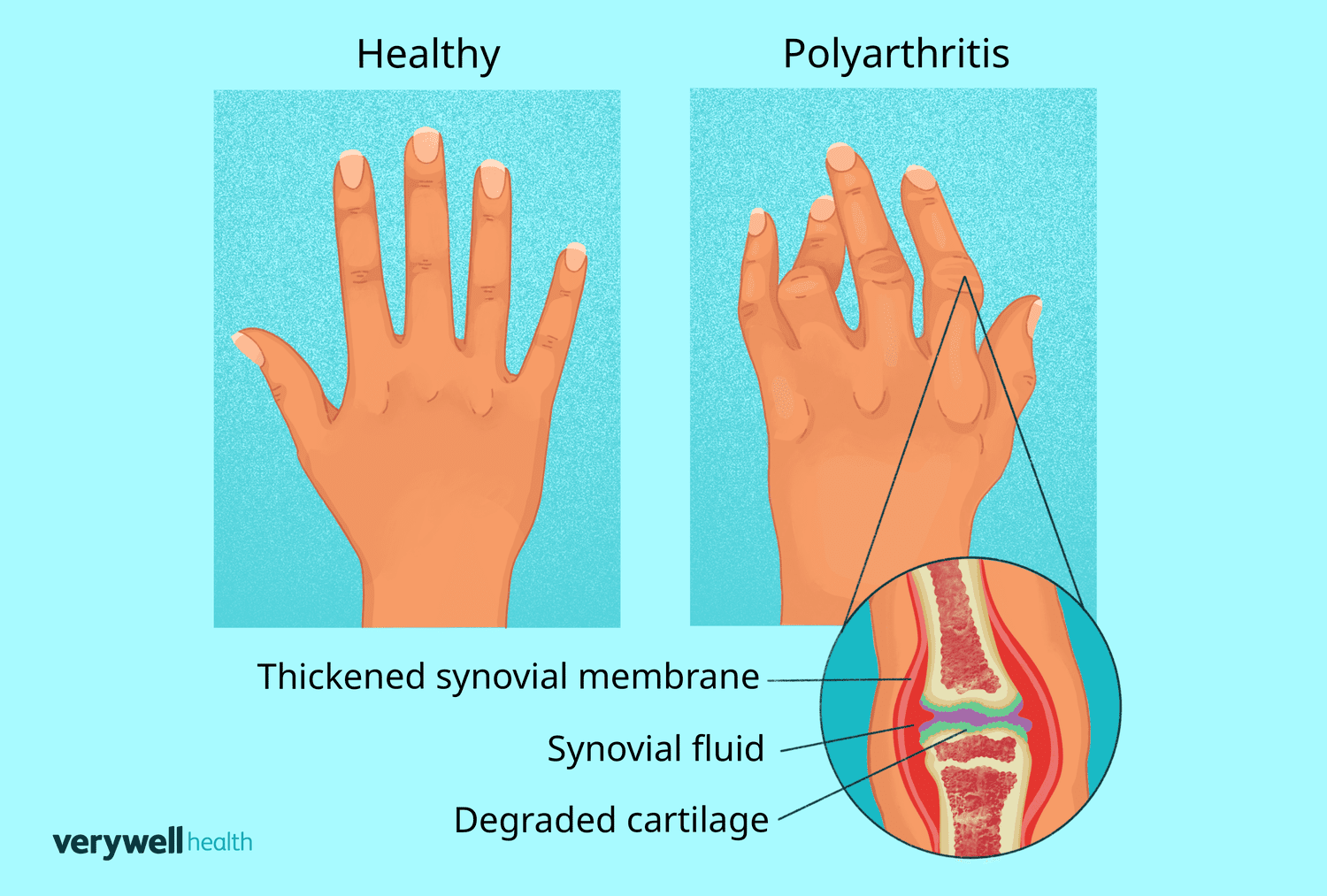
Polyarthritis means that five or more joints in your body are affected by arthritis and inflammation. It’s most often associated with autoimmune diseases such as rheumatoid arthritis (RA), but some viral infections can also trigger it.
If you’re not already diagnosed with a condition that can lead to polyarthritis, your healthcare provider may use blood tests, imaging, and a physical exam to diagnose the underlying cause.
This article explains polyarthritis symptoms, causes, diagnosis, and treatment.
Illustration by Zoe Hansen for Verywell Health
Other Names for Polyarthritis
- Polyarticular arthritis
- Inflammatory polyarthritis
Symptoms
Polyarthritis symptoms are similar to those of rheumatoid arthritis and other autoimmune diseases that affect the joints. These symptoms may appear suddenly or gradually over time.
A key sign of polyarthritis is inflammation. Signs of joint inflammation include:
- Swelling
- Warmth
- Pain
- Decreased range of motion
Morning stiffness and pain that worsen with rest but improve with activity are classic symptoms of inflammatory arthritis.
Types of Inflammatory Arthritis
There are different kinds of inflammatory arthritis depending on which joints are affected and how many joints are affected. In oligoarthritis, four or fewer joints are affected. If five or more joints are affected, it’s called polyarthritis.
Autoimmune diseases can trigger an all-body response because they’re systemic diseases that can cause various symptoms. Joint involvement generally does not appear on its own as it can with “wear and tear” arthritis that comes with aging (osteoarthritis).
Autoimmune causes of arthritis tend to have other symptoms including:
- Lack of appetite
- Rash
- Sweating
- Swollen lymph nodes
- A temperature of 100.4 degrees or above
- Tiredness or a lack of energy
- Unexpected weight loss
In rare cases, the inflammatory disease that causes polyarthritis can also cause scarring in the lungs, dry eyes, skin rash, and inflammation in the sac surrounding the heart (pericarditis).
Joint Pain Without Inflammation
Having joint pain in multiple joints without inflammation is called polyarthralgia. This is common in people who get osteoarthritis as they get older.
Mike Devlin / Science Photo Library / Getty Images
Causes
Polyarthritis can result from an autoimmune disorder or an acute illness, both of which cause joint inflammation. Symptoms may be constant or flare up when the underlying inflammatory condition does.
While certain lifestyle strategies may help maintain joint health as you age, preventing autoimmune-related inflammatory arthritis is not always possible due to genetic factors.
Autoimmune Disorders
Polyarthritis is often caused by autoimmune disorders, where the immune system mistakenly attacks the body’s own cells and tissues. The exact causes of these disorders are not well understood, but genetics and environmental factors likely play a significant role.
Common autoimmune disorders associated with polyarthritis include:
Polyarthritis can also occur with the inflammatory disorder gout.
Illness
Polyarthritis can also accompany an acute illness. In such cases, inflammation may affect multiple joints.
Illnesses linked to polyarthritis include:
Diagnosis
Polyarthritis is most commonly related to an underlying disease. Your healthcare provider will ask you if you have other signs and symptoms along with inflamed joints like tenderness, joint effusion (known as “water on the knee”), and swelling, which are common signs of autoimmune diseases.
Symmetry vs. Asymmetry
Your provider will ask whether your pain is symmetric or on both sides (for example, in both hands or knees) or asymmetric, meaning it’s just on one side (one hand).
People with RA tend to have symmetric symptoms. Those with psoriatic arthritis often have asymmetric symptoms.
Blood Tests
Bloodwork can help your provider narrow down a diagnosis. Tests to screen for RA commonly include:
In addition, your healthcare provider may check your blood for:
- Anemia
- Elevated white blood cell count
- Elevated platelets
- Increased inflammatory markers, known as erythrocyte sedimentation rate (ESR) and C-reactive protein (CRP)
Other tests can help your provider look for antibodies related to specific autoimmune diseases (serology). Your provider can also test you for viruses if they think your symptoms could be related to an infection.
Imaging Tests
Depending on the possible cause, X-rays, a musculoskeletal ultrasound, magnetic resonance imaging (MRI), and a joint fluid analysis (arthrocentesis) can help your provider make a diagnosis.
Treatment
The treatments for polyarthritis are typically the same as for the autoimmune diseases that can bring it about.
Your provider might recommend medications for pain and inflammation, drugs that can slow or stop the progression of the disease, and at-home therapies to help you manage your symptoms.
Medication
There are many medications that can help with symptoms of polyarthritis, depending on what the cause is.
Over-the-Counter
Non-steroidal anti-inflammatory drugs (NSAIDs) like Advil (ibuprofen), Aleve (naproxen), and Voltaren (diclofenac) can help relieve pain and stiffness. These are available over-the-counter (OTC) with a prescription. Your provider might also prescribe a higher dose if you need it.
OTC options can be used for polyarthritis from a viral illness because while they won’t help with the infection, they can help with your symptoms until you’re better.
Prescription
If you need more treatment than OTC medications, your provider might recommend some prescription medications.
One example of a prescription treatment your provider might want you to try for polyarthritis is disease-modifying anti-rheumatic drugs (DMARDs). These medications help slow the course of autoimmune diseases. For example, providers may prescribe methotrexate to reduce joint damage caused by polyarthritis.
Biologics, including Remicade (infliximab) and Enbrel (etanercept), are other treatments your provider might recommend. They change the immune system to reduce inflammation.
Corticosteroids control inflammation and can help with pain. You can take steroids orally or by injection. However, they should only be used in the short term because they can cause serious side effects.
At-Home Therapies
Warming therapies you can do at home can temporarily relieve symptoms of polyarthritis. Examples include:
- Warm baths
- Warming mitts
- OTC topical creams with a warming effect (e.g., Aspercreme)
Do not underestimate the value of exercise in managing polyarthritis symptoms. Low-impact activities like swimming, yoga, and stretching can help keep your joints healthy.
:max_bytes(150000):strip_icc()/CarolEustice_660-13556acdcfe048b1bf6f59a87cc86d99.jpg)