

Key Takeaways
- Red and yellow onions are packed with flavonoids, but red onions contain more with greater antioxidant activity.
- Onions offer a plethora of health benefits due to their high flavonoid content, which may help support heart health, blood sugar, and digestive health.
- Red and yellow onions are versatile, adding flavor to a wide range of dishes, including sandwiches, salads, stews, soups, and more.
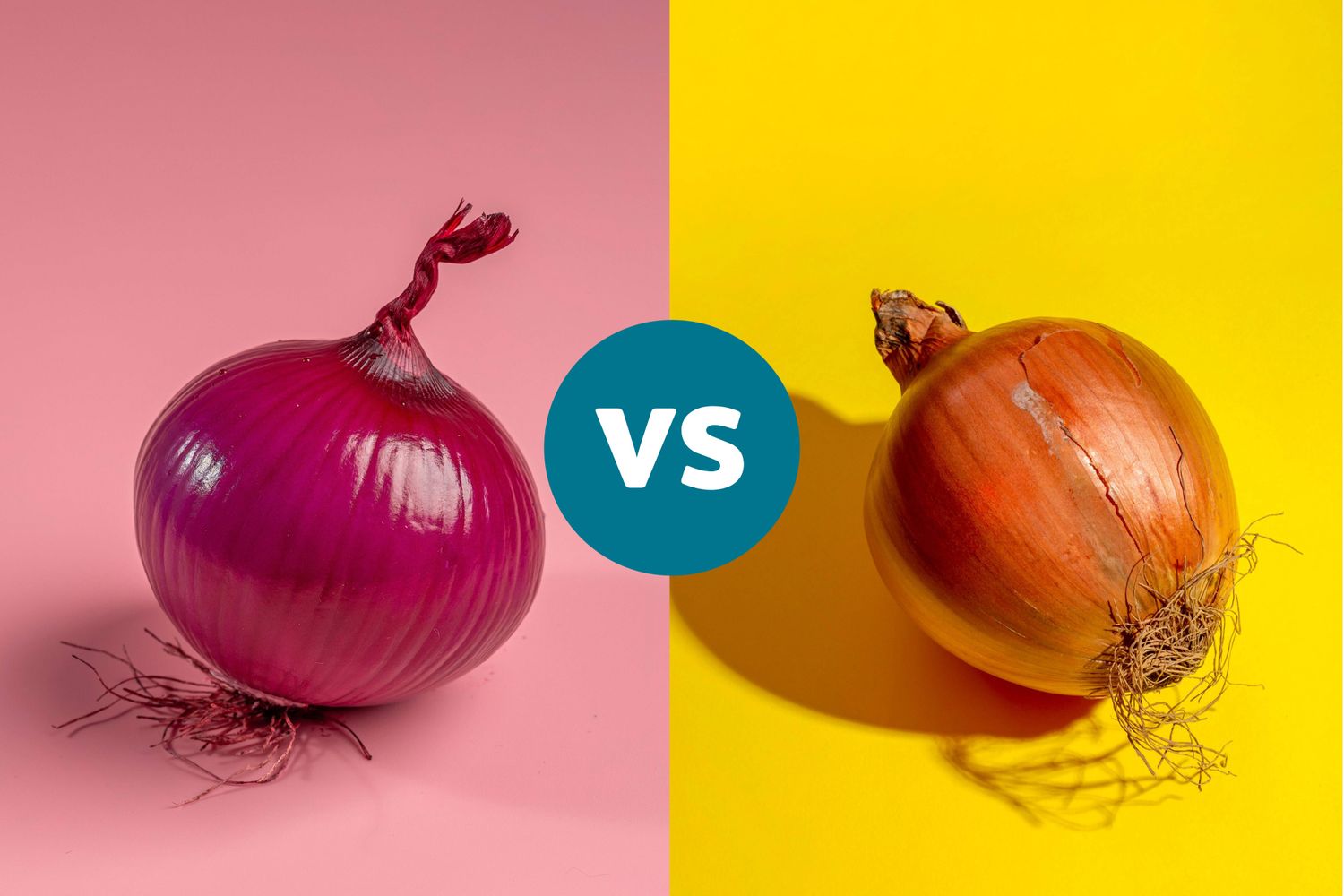
Red and yellow onions are two varieties of onions rich in flavonoids, a type of plant compound with antioxidant and anti-inflammatory properties. Although both are high in flavonoids, the specific types of compounds and their quantities vary between red and yellow onions.
Red Onion vs Yellow Onion: Which Has More Flavonoids?
Red onions have more flavonoids than yellow onions.
Both red and yellow onions contain the flavonoid quercetin, but only red onions contain anthocyanin.
Anthocyanin contributes to the red and purple coloring and increase the flavonoid content of red onions.
What Are Flavonoids?
Flavonoids are natural compounds in fruits, vegetables, grains, tea, wine, and other plant-based foods.
They have many subgroups, each with distinct chemical structures, biological activities, and health benefits.
They are associated with anti-inflammatory and antioxidant properties, as well as heart-healthy benefits.
Health Benefits of Red and Yellow Onion
Many of the health benefits of red and yellow onions result from their high flavonoid content.
- Antioxidant and anti-inflammatory effects: Flavonoids in red and yellow onions neutralize free radicals, reduce oxidative stress, and may lower the risk of chronic disease, such as heart disease and cancer.
- Supportive of heart and metabolic health: Onion flavonoids support heart health by potentially lowering blood pressure in people with high blood pressure (hypertension) and reducing oxidized low-density lipoprotein (LDL) particles, which can be dangerous. Quercetin may also provide anti-diabetic effects by lessening cell damage and inflammation.
- May exhibit anticancer and antimicrobial properties: Laboratory studies indicate that onion bioactive compounds may protect against various types of cancer, including prostate, breast, skin, and liver cancers. Furthermore, onion compounds may enhance the activity of specific anticancer medications. Nevertheless, further research is needed in this area.
- Supports digestive health: Prebiotic fibers in onions provide food for gut bacteria, potentially helping to maintain a balanced gut microbiota and reduce the presence of harmful bacteria. Fermentation of prebiotic fibers produces short-chain fatty acids, which serve as energy sources for colon cells and have anti-inflammatory properties.
- Rich in minerals and vitamins: Not only do onions add flavor to your dishes, but they also provide potassium, a nutrient beneficial for reducing blood pressure. Red and yellow onions are also excellent sources of vitamin C and other essential nutrients that are beneficial for health.
Red Onion vs Yellow Onion: When to Use Which
| Red Onion vs Yellow Onion: A Simple Guide to Pick the Right One | ||
|---|---|---|
| Red Onion | Yellow Onion | |
| Flavor Profile | Slightly pungent with some sweetness | Stronger, more complex flavor that mellows when cooked |
| When to Use | Salads, grain bowls, tacos, pickling, sandwiches—anywhere you’d want raw onion | Cooking, roasting, caramelizing |
| Cooking Notes | Quick sautees, best raw, not ideal for long cooking | Becomes sweet and jammy when caramelized |
What Changes Flavonoid Content in Onions?
- Chopping onions may result in a modest loss of total flavonoid content.
- Storage duration does not appear to impact the overall flavonoid content of red or yellow onions.
- Cooking, frying, or warm holding of blanched onions does not reduce the total flavonoid content.
:max_bytes(150000):strip_icc()/AmyBrownsteinMSRDN-db78b6b8ad074434b19ec5f9ca0a4313.jpg)