

Key Takeaways
- Sternal precautions help protect your breastbone after open heart surgery by limiting arm movement and lifting.
- You should avoid pushing, pulling, or lifting objects over 4.4 pounds as part of these precautions.
- It’s important to follow your healthcare provider’s specific advice for sternal precautions to aid recovery.
Sternal precautions are used after open heart surgery to prevent the sternum, or breastbone, from pulling apart as it is healing. These precautions are meant to protect you and to reduce the risk of infection in your healing sternal incision.
Your sternal precautions may be a part of your overall cardiac rehabilitation plan, meant to assist your recovery and improve your strength, endurance, and functional mobility. It’s important to practice them at home as you progress through physical therapy or related services.
This article explains why sternal precautions are used and the limited motions, lifting restrictions, and other features they typically require. It explains their benefits and answers some questions about practicing sternal precautions.
Image Source / Getty Images
Why Use Sternal Precautions?
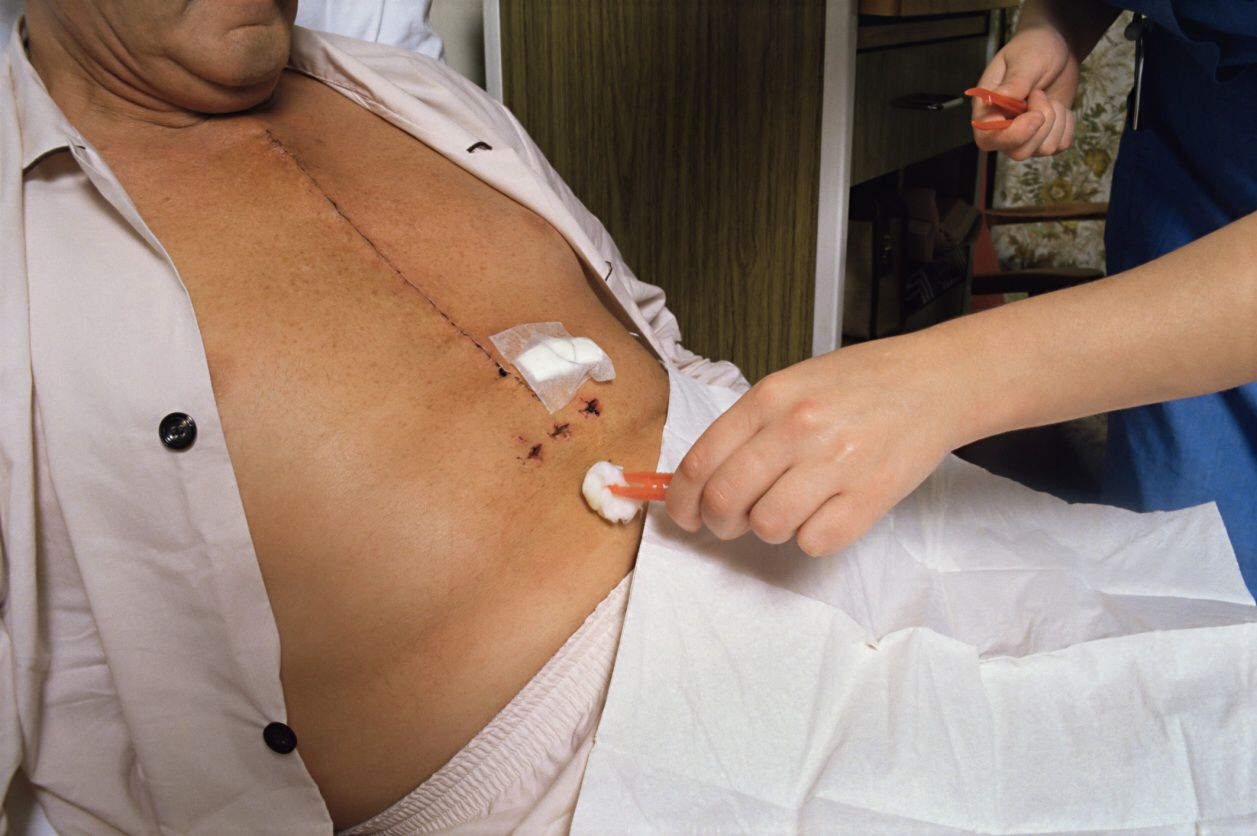
Sternal precautions are changes you need to make in your daily routine to prevent your breastbone from separating as it heals. This may be necessary following open heart surgery, such as coronary artery bypass grafting (CABG) surgery, in which a surgeon divides the sternum to access the heart.
After this type of surgery, the sternum is repaired with a strong wire to hold it in place while it heals. Sternal precautions help promote healing and reduce the risk of infection by limiting stress on the surgical incision.
Protecting the Sternum After Surgery
Your healthcare team can guide you in sternal precautions to prevent excessive strain on your healing breastbone, known as dehiscence. Since cardiac experts may have different methods for protecting your sternum after surgery, it’s important to follow the specific advice provided to you.
Examples of Sternal Precautions
If you’ve had open heart surgery, it’s crucial to follow your healthcare provider’s instructions, as requirements can differ based on the surgical technique. Be sure to understand what is expected of you.
Sternal precautions include:
- Do not push or pull with the arms
- Avoid unilateral (one side) arm activity
- Avoid elevating your arms to 90 degrees
- Do not lift objects heavier than 4.4 pounds (2 kilograms)
- When coughing, support sternum with a cushion or the arms in a self-hugging position
- Limit use of the arms when transferring from sitting to standing and when getting out of bed
- Avoid placing the arms behind the back
Talk to your healthcare provider for other specific guidelines.
Sternal Precautions May Vary
Your sternal precautions may differ depending on your surgeon or the facility you are participating in acute cardiac rehabilitation. Some healthcare providers stress the importance of pain and your own body signals in determining activity. Others may allow you to reach one arm overhead or lift five to 10 pounds.
Sternal Precautions With Physical Therapy
Your physical therapist and occupational therapists can assist you in cardiac rehabilitation, helping you understand and maintain your sternal precautions. Basic movements might be challenging, but your physical therapist will teach you how to navigate while following your surgeon’s guidelines
Your physical therapist can teach you how to move around while maintaining your surgeon’s suggested precautions.
Modifications you may learn include:
- Scooting in and rising from a chair
- Climbing stairs without using the railing
- Rolling over and sitting up in bed
- Using an assistive device, such as a walker or quad cane
An occupational therapist can help you adjust other daily activities, such as bathing, grooming, and dressing.
Physical therapy is designed to help you return to performing basic activities of daily living, such as brushing your hair and dressing, cooking, maintaining hygiene, and managing stairs.
How Long Should I Maintain Sternal Precautions?
If your healthcare provider asks you to follow sternal precautions, they should be able to tell you when you no longer need to follow the precautions. In general, your breastbone should be healed within about four to six weeks following your open heart surgery, and sternal precautions should be lifted at that time.
Again, follow the advice of your healthcare provider regarding when to stop following sternal precautions.
Are Sternal Precautions Necessary?
There is some debate as to whether sternal precautions are absolutely necessary to protect your breastbone as it heals after open heart surgery. There is a lack of evidence that indicates you are in danger if you do not follow sternal precautions, and some healthcare providers may recommend performing normal activities based on your own tolerance.
Feelings of crunching or popping in your breastbone are among the signs that your sternum could be moving a bit. If this happens, the activity that caused it should not be performed, and your healthcare provider should be notified.
Some healthcare providers argue that telling you to avoid lifting items and to keep your arms in can lead to fear-avoidance behaviors or avoiding moving because you are afraid of hurting yourself.
Regardless, if your healthcare provider recommends that you follow specific sternal precautions after open heart surgery, you should follow that advice. Your surgery may warrant that type of precaution—even if another person’s doesn’t. Talk to your physical therapist to make sure you are moving about properly and maintaining your prescribed precautions.
New Approach to Sternal Precautions
A new approach to precautions during sternotomy recovery, called “Keep Your Move in the Tube,” relaxes traditionally strict sternal precautions in favor of keeping arm motion within a small cylinder (the “tube”) around your torso.The approach has shown promise in some studies, sending patients home sooner and with better mobility than those treated with standard care.
:max_bytes(150000):strip_icc()/BrettSearsPT_1000-b66602ce9ab7482cb78acf5d2c3de153.jpg)