

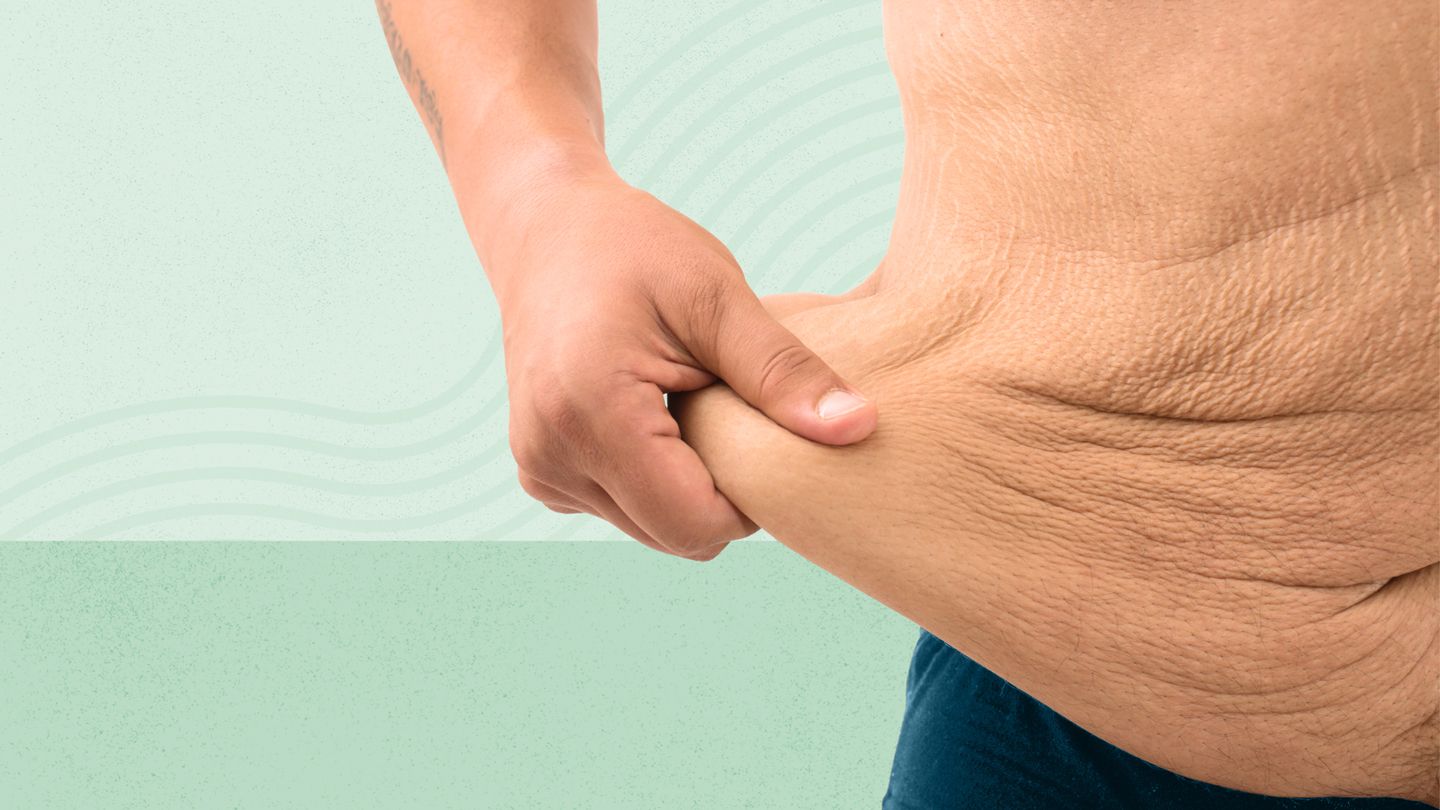
“Excess skin is a common concern after significant weight loss, whether that weight loss is medication-induced, related to pregnancy, or achieved through diet and exercise,” says Sabrina Fabi, MD, a dermatologist at Cosmetic Laser Dermatology in San Diego, California.
Here’s what experts say about this rarely discussed physical aftermath of shedding significant weight, along with tips for addressing it.
1. Excess Skin After Weight Loss Looks Different on Everyone
“Skin is elastic, but it has its limits. When the body carries extra weight for a long period of time, the skin stretches, and the underlying support structures weaken. If weight loss happens faster than the skin can adapt, the skin may not fully retract,” Dr. Basu says. “Long-term stretching alters the deeper collagen and connective tissue layers, which is why two patients with the same amount of weight loss can have very different outcomes.”
2. Your Skin Might Take Longer to Tighten Than for Weight to Drop
Your skin will naturally tighten a bit as it adjusts to your new weight. So you might continue to see changes in skin appearance after you see changes on the scale.
3. Where You’ll Have Excess Skin Is Somewhat Predictable
Some areas may be more troublesome than others, whether visually or physically.
“The abdomen is often the most bothersome because it can hang or fold — affecting a person’s clothing choices and confidence. Arms and inner thighs are also frequent concerns, especially in warmer climates, or when a patient wants to wear sleeveless clothing,” Basu says.
4. Exercise Helps, But Won’t Eliminate Excess Skin
Still, it’s important to have realistic expectations, Basu says. There are definite limitations to how much exercise can improve your skin’s structure and appearance.
“Exercise cannot eliminate excess skin, but it can make a noticeable difference in how the body looks and feels,” he says.
5. Excess Skin Can Cause Practical Problems Beyond Appearance
What’s more, discomfort experienced during exercise could interfere with sustained weight loss results, Basu says.
“Continued physical activity is important to maintain weight loss and for our overall health and wellness,” Basu says. “When movement becomes uncomfortable, patients may reduce activity, which can make it harder to maintain the progress they have worked to achieve.”
6. There Are Surgical and Nonsurgical Treatment Options
There are several options available to help tighten excess skin, whether for aesthetics, comfort, functionality, or all of the above.
In addition, to protect your health and safety, it’s important to select a licensed physician whom you trust and are comfortable with for aesthetic (or any) surgical procedures. You can verify a plastic surgeon’s board certification through the American Board of Medical Specialties, which designates clinicians who have met the specific training, experience, and expertise criteria required to obtain board certification and meet patient care standards.
7. Embracing Gratitude for Your Body and Accomplishments Can Help
Your weight-loss transformation — and the excess skin that may come along with it — can be an adjustment. Instead of beating yourself up about the physical remnants of your achievement, experts recommend focusing on celebrating the accomplishment.
“I remind patients that excess skin is evidence of their success,” says Basu, who suggests the following tips to help ease discomfort along the way:
- Wearing supportive clothing
- Staying active in ways that feel comfortable
- Talking openly with a trusted source about what you’re going through
“Most importantly, I encourage patients to be kind to themselves and commend them for the progress they’ve made in their journey to their healthiest self,” Basu says.
The Takeaway
- Experiencing quick or significant weight loss can lead to loose or excess skin in certain parts of the body.
- The rate at which your skin may shrink back depends on its elasticity, which involves factors like genetics, age, and lifestyle habits.
- Nonsurgical skin-tightening options, such as laser resurfacing and radiofrequency, are available for more subtle results. A healthcare provider may recommend surgical skin removal procedures for more significant change, or when excess skin becomes painful or interferes with daily activities.