

Key Takeaways
- A patellar tendon tear can cause knee pain, swelling, and difficulty walking.
- Patellar tendon tears often happen in sports involving jumping and can require surgery.
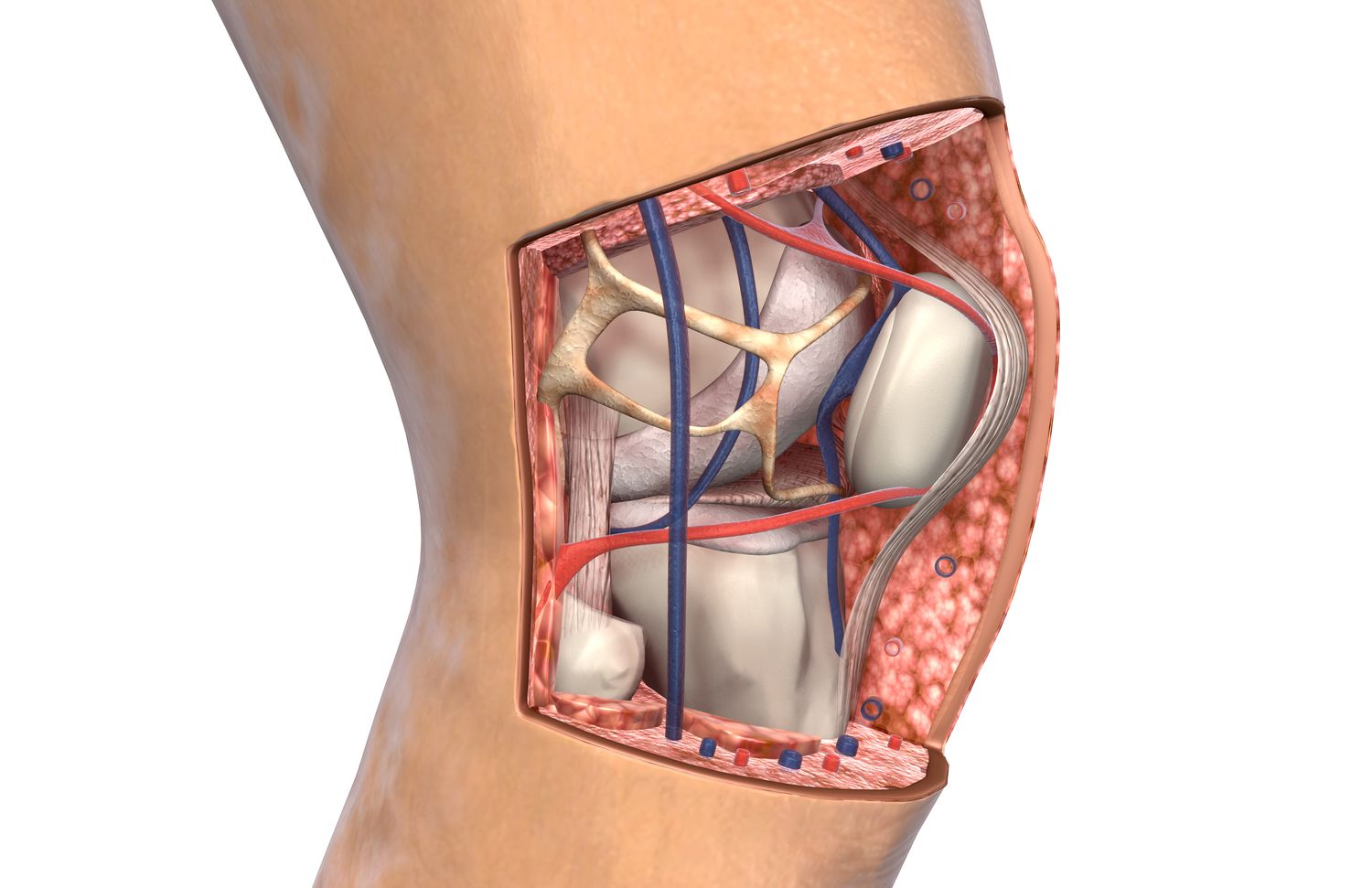
A patellar tendon tear is a serious knee injury that often affects active individuals, making it difficult to walk or straighten the leg. Known as “jumper’s knee,” this condition typically requires treatment ranging from immobilization and physical therapy to potentially surgical repair, depending on the severity of the tear.
Verywell / JR Bee
How to Recognize a Patellar Tendon Tear
Patellar tendon tears can be either partial or complete and often occur where the tendon connects to the kneecap. This injury can sometimes cause a piece of bone to break off.
Symptoms of a torn patellar tendon typically include:
- A snapping or popping sound when the tear occurs
- Pain directly below the kneecap
- Swelling and bruising at the front of the knee
- A noticeable soft area or indentation at the front of the knee
- Difficulty walking or participating in sports
- Inability to fully straighten the leg
The extent of the tear affects your ability to straighten the leg. A complete tear usually prevents you from straightening the knee, and the kneecap might move upward into the thigh.
Why Do They Happen?
Patellar tendon tears, also known as “jumper’s knee,” are frequently seen in sports that involve jumping and varying landings.
While traumatic knee injuries can lead to these tears, they are often the result of repetitive stress on the knee. Many individuals with a rupture have chronic tendinosis, an overuse condition, with tears generally occurring at the weakest point.
Jumper’s knee is common in sports such as basketball, volleyball, gymnastics, soccer, track, and long-distance running. It primarily affects those under 40 but can also occur in healthy teenagers.
Medical conditions that can weaken and lead to tendon tears include:
- Diabetes: A chronic condition that disrupts how the body processes sugar
- Lupus: An autoimmune disease causing inflammation throughout the body
- Obesity: Excess weight that places additional strain on the knees
- Overuse of oral corticosteroids (steroids): Medications that may weaken tendons
- Previous knee surgery: Procedures that might have weakened tendon strength
- Rheumatoid arthritis: An autoimmune disorder affecting the joints
- Severe knee infection: Infections that can damage tissues
How Tears Are Diagnosed
Patellar tendon tears are usually obvious. They prevent a person from extending the knee or performing a straight leg raise test. A healthcare provider can often feel a gap in the tendon below the kneecap.
An X-ray will help to differentiate between a patellar tendon tear and a patellar fracture, which can cause similar symptoms. On X-rays, the patella typically appears higher than normal as the quadricep pulls on the untethered kneecap.
Magnetic resonance imaging (MRI) confirms the diagnosis and assesses for additional knee damage. MRIs provide detailed images of soft tissues and can detect tiny tears that X-rays might miss.
Treatment Options
Whether patellar tendon tears require surgery depends on the severity of the rupture. Very small tears often respond well to nonsurgical treatments, while complete tears typically require surgical intervention.
Non-Surgical Treatment
For small tears that are unlikely to worsen, your orthopedic surgeon may recommend a conservative approach:
- Immobilization: Wear a knee immobilizer or brace for three to six weeks to keep your knee straight and help it heal. Crutches may be needed to avoid weight-bearing.
- Pain management: Apply an ice pack for 15-20 minutes several times a day to reduce swelling and pain. Elevate the leg. Nonsteroidal anti-inflammatory drugs (NSAIDs) like Advil (ibuprofen) and Aleve (naproxen) can also help.
- Physical therapy: Start with straight-leg raises in the knee brace. Later, progress to gentle range-of-motion exercises without a brace. Gradually include strengthening exercises and other therapies, such as ultrasound, electrical stimulation, and kinesiology taping.
Surgical Treatment
Many partial tears do not heal on their own and can lead to weakened quadriceps and reduced mobility if untreated.
Surgery to repair the tear is straightforward but challenging as the torn ends must be sewn together with the right tension. It’s especially tricky if a bone fragment is involved.
Most tendon repairs can be done on an outpatient basis, though some may stay in the hospital overnight. Surgery options include a spinal block, regional anesthesia, or general anesthesia which puts you to sleep.
The surgeon may directly stitch together the torn ends or use a device called a suture anchor to connect the tendon to the kneecap without having to drill holes. Wires or cables may be needed to help better support and stabilize the knee.
Recovery Time for Patellar Tendon Tears
Recovery from patellar tendon surgery can be difficult and take time. One of the most important factors influencing outcomes is the timing of surgery. Delaying surgery beyond a few weeks can cause significant retraction of the tendon, limiting your ability to fully recover.
Some factors can speed recovery. These involve a commitment to physical therapy along with taking appropriate measures to avoid overextending yourself. Rushing may cause reinjury, setting you back weeks or even months.
Even when taking the appropriate steps, you should expect a minimum of three to four months of rehabilitation before you can return to normal activities, and up to six months before sports can be resumed.
Athletes wanting to return to competitive sports may take a year or longer to return to their pre-injury level of performance.
While most people heal completely from a patellar tendon surgery, there can be long-term weakness even with a successful repair.
:max_bytes(150000):strip_icc()/Jonathan-Cluett_1000-2407608be738446cb867da6adba1642c.jpg)