
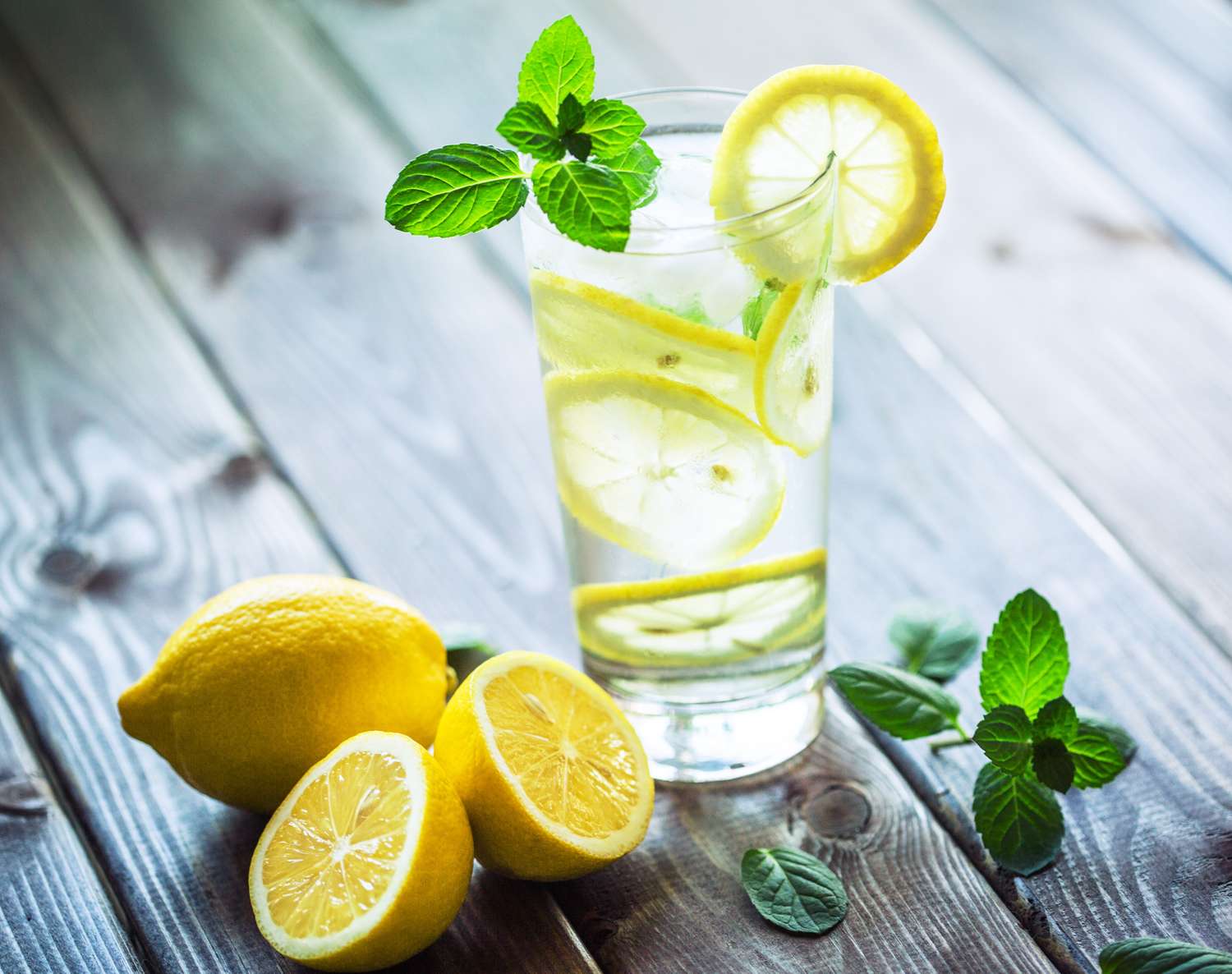
What Happens to Your Blood Pressure When You Drink Lemon Water Regularly

What Happens to Your Blood Pressure When You Drink Lemon Water Regularly

High blood pressure (hypertension) is common and increases the risk of heart disease and stroke, affecting about half of adults in the United States. Drinking lemon water regularly may help lower blood pressure over time.

1. Reduces Blood Pressure

Drinking water with fresh lemon juice regularly may lower blood pressure levels. Lemon juice is rich in several healthy nutrients, including:

  • Vitamin C
  • Citric acid
  • Potassium

These compounds support cardiovascular function and may help relax the blood vessels. When the blood vessels relax, the pressure against them decreases, lowering blood pressure and preventing damage. 

While the research linking lemon water to lower blood pressure is promising, most studies have been conducted in animals. More human studies are needed to determine if lemon water is an effective treatment for high blood pressure. 

2. Improves Hydration 

Drinking lemon water throughout the day may improve blood pressure by keeping you hydrated. Proper hydration is essential for heart health and healthy blood pressure. It also supports a healthy weight, which is beneficial for heart health.

Research shows that chronically dehydrated people are more likely to have high blood pressure. By providing needed hydration, lemon water may help lower some risk factors for high blood pressure. 

3. Prevents Water Retention

It sounds counterintuitive, but drinking more water can reduce water weight and bloating. That is because dehydration triggers your body to retain water to restore fluid levels. When you drink enough water each day, your body retains less fluid. 

Lemons are rich in potassium, an essential mineral that supports fluid balance. This is essential for achieving and maintaining a healthy blood pressure.

Fluid retention increases pressure on blood vessels, raising blood pressure. Proper hydration helps prevent water retention, which may support healthy blood pressure. 

4. Supports a Healthy Weight 

In addition to promoting heart health, proper hydration may also support a healthy weight. People who stay hydrated by regularly drinking water are less likely to have excess weight.

Drinking water before eating may help you feel less hungry and consume fewer calories. Over time, this may help you to achieve and maintain a healthy body weight. 

Increased hydration is linked with weight loss and improved heart health. Because obesity is a serious risk factor for high blood pressure, maintaining a healthy weight can lower your risk of hypertension. 

5. Reduces the Need for Caffeine

Research shows that drinking lemon water may boost energy levels and mood. Dehydration increases the risk of fatigue and depression. A study found that smelling lemons can help you feel more alert. 

If you are at risk of high blood pressure, consider swapping your morning coffee for hot water with lemon. The caffeine in coffee increases blood pressure. By cutting back on coffee and hydrating with lemon water, you may be able to lower your blood pressure. 

Foods and Drinks That Help Lower Blood Pressure

Drinking lemon water isn’t the only way to help lower your blood pressure. Other foods and drinks include:

  • Chia seeds: Although more research is needed, consuming 1 tablespoon of chia seeds regularly has been shown to lower blood pressure, likely due to their vitamins, minerals, and antioxidants.
  • Green tea: The catechins (antioxidants) found in green tea affect blood pressure by reducing inflammation in the veins and arteries, protecting against oxidation, and inhibiting thrombogenesis (blood clot formation).
  • Beet juice: Beets contain nitrates, which convert to nitric oxide. This widens blood vessels and increases oxygen and blood flow, in turn, helping to lower blood pressure.
  • Turmeric: One study found that participants who consumed turmeric for 12 weeks lowered their systolic blood pressure by 1.24 millimeters of mercury (mm Hg).
Verywell Health uses only high-quality sources, including peer-reviewed studies, to support the facts within our articles. Read our editorial process to learn more about how we fact-check and keep our content accurate, reliable, and trustworthy.
  1. Centers for Disease Control and Prevention. High blood pressure facts.

  2. U.S. Department of Agriculture. Lemon juice, raw.

  3. Kato Y, Domoto T, Hiramitsu M, et al. Effect on blood pressure of daily lemon ingestion and walking. J Nutr Metab. 2014;2014:912684. doi:10.1155/2014/912684

  4. Xu Y, Zheng H, Slabu I, Liehn EA, Rusu M. Vitamin C in cardiovascular disease: from molecular mechanisms to clinical evidence and therapeutic applications. Antioxidants (Basel). 2025;14(5):506. doi:10.3390/antiox14050506

  5. Zurbau A, Au‐Yeung F, Mejia SB, et al. Relation of different fruit and vegetable sources with incident cardiovascular outcomes: a systematic review and meta‐analysis of prospective cohort studies. J Am Heart Assoc. 2020;9(19):e017728. doi:10.1161/JAHA.120.017728

  6. Yang Y, Dong JY, Cui R, et al. Consumption of flavonoid-rich fruits and risk of CHD: a prospective cohort study. Br J Nutr. 2020;124(9):952-959. doi:10.1017/S0007114520001993

  7. Riebl SK, Davy BM. The hydration equation: Update on water balance and cognitive performance. ACSM’s health & fitness journal. 2013;17(6):21–28. doi:10.1249/FIT.0b013e3182a9570f

  8. Thornton SN. Increased hydration can be associated with weight loss. Front Nutr. 2016;3:18. doi:10.3389/fnut.2016.00018

  9. Mohammedin AS, AlSaid AH, Almalki AM, et al. Assessment of hydration status and blood pressure in a tertiary care hospital at al-khobar. Cureus. 2022;14(8):e27706. doi:10.7759/cureus.27706

  10. MedlinePlus. Fluid imbalance.

  11. National Institutes of Health Office of Dietary Supplements. Potassium.

  12. Iida T, Ishigami S, Kunishige M, et al. Effects of citric acid in lemon water on the human intestinal microbiota: A comparison between pre-meal intake of water and lemon water. International Medical Journal. 2021;28(6):625.

  13. Laja García AI, Moráis-Moreno C, Samaniego-Vaesken ML, et al. Influence of water intake and balance on body composition in healthy young adults from spain. Nutrients. 2019;11(8):1923. doi:10.3390/nu11081923

  14. Jeong JN. Effect of pre-meal water consumption on energy intake and satiety in non-obese young adults. Clin Nutr Res. 2018;7(4):291. doi:10.7762/cnr.2018.7.4.291

  15. Shariq OA, McKenzie TJ. Obesity-related hypertension: a review of pathophysiology, management, and the role of metabolic surgery. Gland Surg. 2020;9(1):80-93. doi:10.21037/gs.2019.12.03

  16. MedlinePlus. Dehydration.

  17. Zhang J, Zhang N, He H, Du S, Ma G. Different amounts of water supplementation improved cognitive performance and mood among young adults after 12 h water restriction in Baoding, China: A randomized controlled trial (RCT). Int J Environ Res Public Health. 2020;17(21):7792. doi:10.3390/ijerph17217792

  18. American Heart Association. People with very high blood pressure may want to go easy on the coffee.

  19. Teoh SL, Lai NM, Vanichkulpitak P, et al. Clinical evidence on dietary supplementation with chia seed (Salvia hispanica L.): a systematic review and meta-analysisNutr Rev. 2018;76(4):219-242. doi:10.1093/nutrit/nux071

  20. Xu R, Yang K, Ding J, et al. Effect of green tea supplementation on blood pressure: a systematic review and meta-analysis of randomized controlled trialsMedicine. 2020;99(6):e19047. doi:10.1097/MD.0000000000019047

  21. Zamani H, de Joode MEJR, Hossein IJ, et al. The benefits and risks of beetroot juice consumption: a systematic reviewCrit Rev Food Sci Nutr. 2021;61(5):788-804. doi:10.1080/10408398.2020.1746629

  22. Hadi A, Pourmasoumi M, Ghaedi E, et al. The effect of curcumin/turmeric on blood pressure modulation: a systematic review and meta-analysisPharmacol Res. 2019;150:104505. doi:10.1016/j.phrs.2019.104505 

Carrie Madormo

By Carrie Madormo, RN, MPH

Madormo is a health writer with over a decade of experience as a registered nurse. She has worked in pediatrics, oncology, chronic pain, and public health.