

Key Takeaways
- Beets contain nitrates and potassium, which help manage blood pressure, while potatoes are also a good source of potassium.
- Beets and potatoes with skins both contain fiber, which is important in digestion and for disease prevention.
- Both vegetables are sources of vitamin C and other beneficial nutrients for good health.
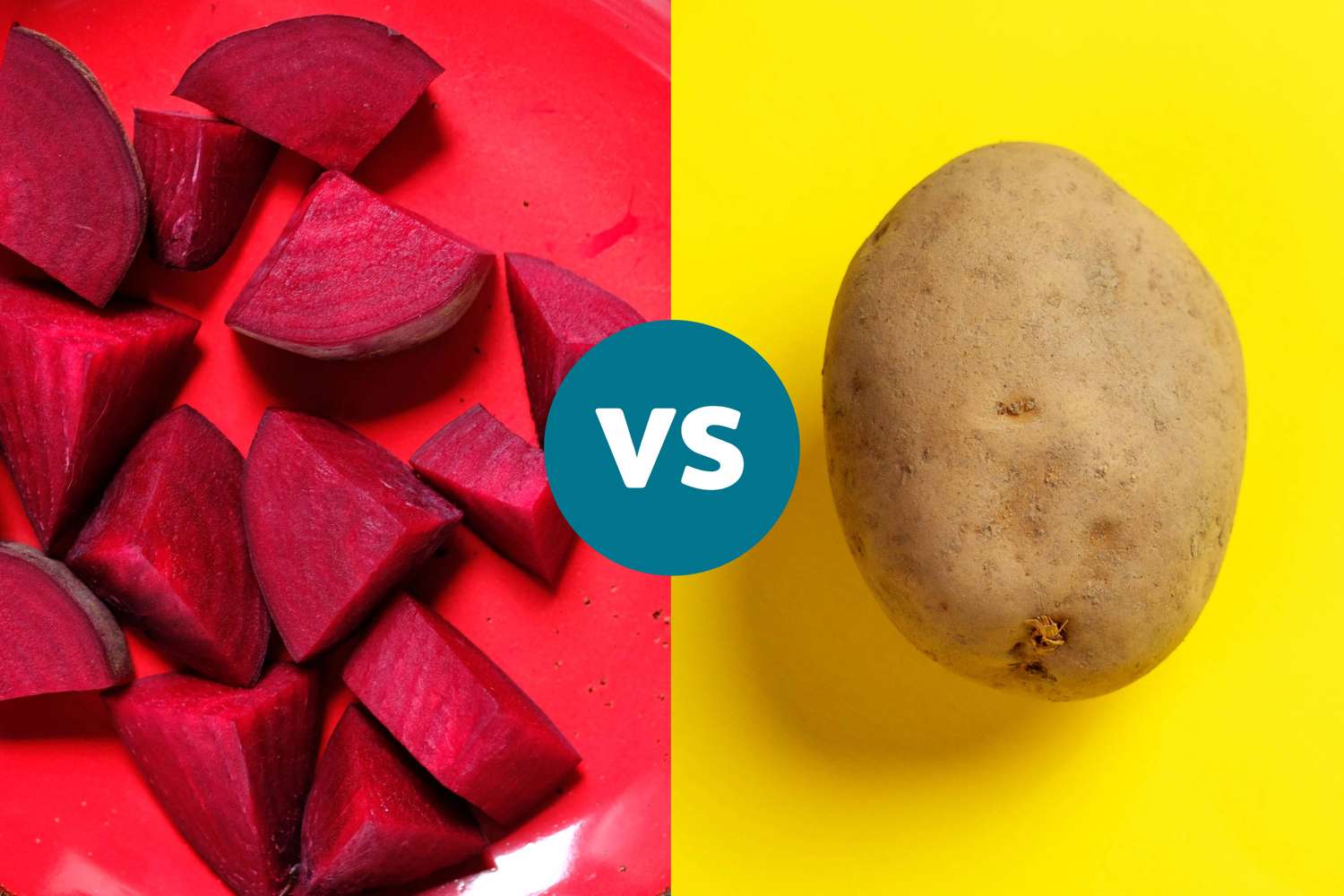
Beets and potatoes are vegetables that contain various vitamins and nutrients. They each have different strengths when added to the diet: beets contain slightly more fiber, vitamins, and minerals, while potatoes are a versatile source of nutrients and carbohydrates.
How Do Their Nutrients Compare?
Beetroot, the edible root of a beet plant (Beta vulgaris), is reddish-purple, with an earthy smell and taste. It contains many nutrients important to human health, including potassium, calcium, magnesium, copper, and iron.
Potatoes make up 20% of the vegetables in the American diet. Americans get 7% of their potassium from white potatoes and 3% from French fries.
The following chart compares 1/2 cup of cooked, sliced beets and 1/2 cup of baked Russet potato with skin, with measurements in grams (g), milligrams (mg), and micrograms (mcg).
| Nutrient | Beets | Potato |
|---|---|---|
| Calories | 37 | 59 |
| Protein | 1.43 g | 1.43 g |
| Fat | 0.15 g | 0.1 g |
| Carbohydrates | 8.47 g | 14 g |
| Fiber | 1.7 g | 1 g |
| Potassium | 259 mg | 313 mg |
| Folate | 68 mcg | 10 mcg |
| Manganese | 0.3 mg | 0.1 mg |
| Copper | 0.06 mg | 0.1 mg |
| Magnesium | 19.6 mg | 17 mg |
| Iron | 0.67 mg | 1 mg |
| Vitamin C | 3.06 mg | 4 mg |
| Vitamin B6 | 0.06 mg | 0.3 mg |
Beets vs Potatoes for Nutrients That Regulate Blood Pressure
Beets contain inorganic nitrate. The body has a process to convert inorganic nitrate into nitric oxide. Nitric oxide is a chemical messenger involved in several body functions.
One function of nitric oxide is to regulate blood pressure. Eating beets may increase nitric oxide levels, which may help manage high blood pressure (hypertension).
Potatoes and beets are good sources of potassium, with potatoes being somewhat higher in this essential mineral. One medium potato contains about 952 mg of potassium. Depending on age and sex, that could be 20% of the daily recommended potassium intake.
Potassium is important in managing blood pressure. Potassium deficiency increases blood pressure. Getting enough potassium in the diet helps lower blood pressure.
How Do Beets and Potatoes Compare for Digestive Health?
The gut microbiome contains many types of bacteria, fungi, viruses, and other organisms. The microbiome is important to overall health. When the microbiome is disturbed, it’s called dysbiosis. Dysbiosis contributes to many diseases and conditions.
Eating a high-fiber diet is important for overall health and supports the gut microbiome. People who consume between 25 and 29 grams of fiber every day have a lower risk of developing:
- Colorectal cancer
- Coronary heart disease
- Death after a stroke
- Type 2 diabetes
A 1/2 cup of beets contains about 0.8 grams of soluble fiber and 1 gram of insoluble fiber, which is more fiber than corn or cauliflower.
Potatoes contain both soluble and insoluble fiber. A medium potato has about 4 grams of fiber. Soluble fiber is food for the bacteria in the microbiome, and insoluble fiber helps with digestion, especially in cases of constipation.
Resistant Starch in Potatoes Benefits the Gut
Potatoes contain resistant starch. Resistant starch ferments into short-chain fatty acids in the digestive system. These fatty acids serve as food for the good bacteria in the microbiome.
Research shows that increasing dietary resistant starch helps improve the gut microbiome, leading to lower body weight and reduced body fat.
Preparing Potatoes
Part of getting the most benefit from potatoes is in how they’re prepared.
- Some of the nutrients in potatoes are in the skin, so including the skin is important.
- Avoiding frying potatoes in oil also helps, since fried foods tend to have higher fat content. Baking, boiling, or air frying are better choices.
- It’s also key to avoid topping potatoes with too many high-fat or high-cholesterol foods and condiments such as butter, bacon, sour cream, or cheese.
:max_bytes(150000):strip_icc()/AmberJ.Tresca_1000-03288146de15463da9ec7713d9c70c40.jpg)