

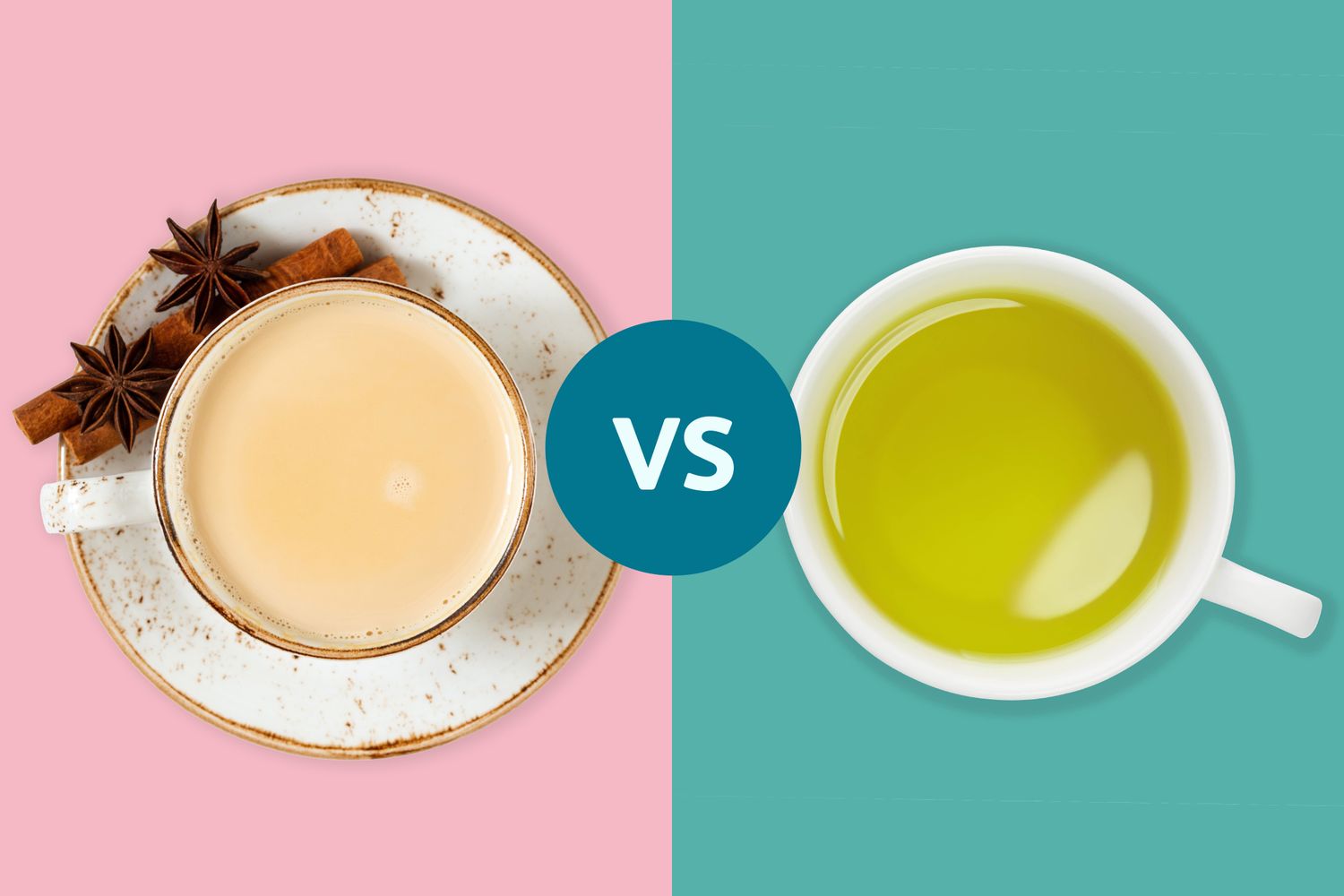
| Chai Tea | Green Tea | |
|---|---|---|
| How It’s Made | Made from fully oxidized black tea leaves | Made from minimally processed, unoxidized leaves (steamed/fired) |
| How It’s Consumed | As a blend of milk, black tea, spices (e.g., cloves, nutmeg, cinnamon, or ginger) | Without milk or sugar |
| Taste | Spicy, warm, and aromatic flavor | Has a grassy flavor |
| Caffeine Content | Typically higher caffeine content due to black tea base | Lower caffeine content than chai |
| Antioxidant Profile | Contains catechins, theaflavins, ad thearubigins | Contains highest amount of antioxidants than other teas; rich in catechins (e.g., EGCG) |
Which Is Better for Caffeine?
Caffeine is a naturally occurring chemical found in the leaves of tea plants. It is a central nervous system stimulant. Caffeine helps to:
- Increase alertness and reduce fatigue
- Improve brain function
- Increase metabolism
- Enhance exercise performance
The caffeine content of traditional chai and green tea differs. Traditional Masala Chai is made with black tea leaves. Black tea is made from fully oxidized leaves, a process that typically yields higher caffeine levels than found in green tea.
Because it is made from black tea, a standard 8-ounce (oz) cup of chai can contain about 47 milligrams (mg) of caffeine. One cup of green tea, on the other hand, contains about 30 mg of caffeine.
The choice of drink depends on your personal preference. If you need a drink that makes you alert and aware, a cup of chai is a better choice.
How Much Caffeine Is Safe to Consume?
The United States Food and Drug Administration recommends that most adults consume no more than 400 mg of caffeine per day. However, people who are more sensitive to caffeine’s effects may need to consume less.
Which Is Better for Antioxidants?
Polyphenols are the major antioxidant compounds present in tea. These types of antioxidants can help:
- Reduce inflammation
- Protect against oxidative stress
- Prevent cell damage
- Lower heart disease risk
Green tea contains the highest amounts of dietary antioxidants of any other tea. It contains approximately 90% polyphenols, including catechins such as epigallocatechin gallate (EGCG). It also contains carotenoids, tocopherols, essential minerals, and various phytochemical compounds.
Chai tea is also an excellent source of antioxidants, including catechins, theaflavins, and thearubigins, as well as essential minerals and vitamins. The spices in chai, such as cinnamon, ginger, cloves, and cardamom, have polyphenols and anti-inflammatory compounds with medicinal uses.
Overall, the antioxidant content of green tea is much higher than that of black tea. It may be due to the presence of higher levels of antioxidants, such as catechins, that are preserved during oxidation and fermentation processes.
Which One Is Better for Me?
Tea (Camellia sinensis) has a rich history and is widely used across many countries. It is processed into a variety of teas, including green, white, oolong, yellow, black, and dark teas.
These products share the same origin but differ in their constituents, flavors, health benefits, and tastes. It depends on your personal choice which kind of tea suits you better.
An early morning may be brightened with a cup of chai, which is rich in caffeine and has bold, spiced flavors. On the contrary, an afternoon cup of green tea can provide more antioxidant benefits.
:max_bytes(150000):strip_icc()/20210814_171303-4947aeb853b7494ba9f67537baae0cc2.jpg)