

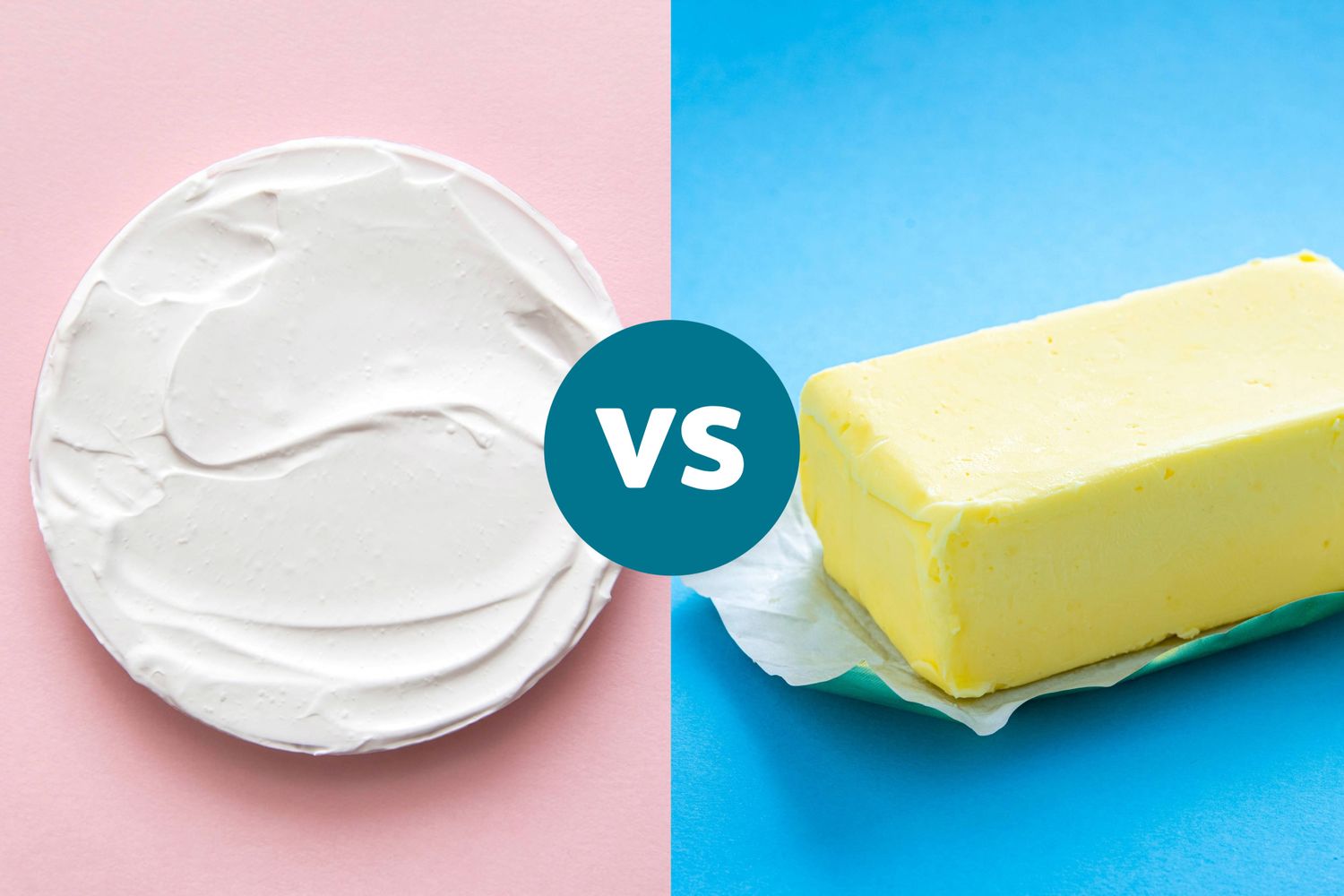
Key Takeaways
- Butter is high in saturated fat, which can raise low-density lipoprotein (LDL) “bad” cholesterol, while cream cheese is lower in saturated fat and comes in fat-free versions.
- Butter is higher in fat and calories than cream cheese.
- Cream cheese has more protein than butter, while unsalted butter is a good choice if you are watching your sodium intake.
Cream cheese and butter are popular spreads used in sweet or savory recipes. Find out how they compare in terms of your health, especially if you are watching your cholesterol.
How Do They Compare for Cholesterol?
Dairy products, such as butter and cream cheese, provide both fat and dietary cholesterol. Butter is high in saturated fat and cholesterol, while cream cheese is typically lower in fat and cholesterol and also comes in fat-free versions:
- Fat-free cream cheese is the best choice for low saturated fat and cholesterol.
- Regular dairy cream cheese is a better choice than butter if you are aiming to reduce saturated fat and dietary cholesterol.
Of concern is the saturated fat content in these products. Over time, excessive dietary saturated fat can raise LDL cholesterol levels. This contributes to the buildup of plaques in arteries (arteriosclerosis), which increases the risk of cardiovascular disease, including heart attack and stroke.
The American Heart Association recommends limiting saturated fat to 6% of total daily calories, which is about 13 grams for a 2,000-calorie diet. This would be less than 2 tablespoons of butter and about 4 tablespoons of cream cheese.
| Comparing 1 Tablespoon of Butter and Cream Cheese | ||||
|---|---|---|---|---|
| Amount and % of Recommended Daily Allowance (RDA) | Salted Butter | Unsalted Butter | Cream Cheese | Fat-Free Cream Cheese |
| Calories | 102 | 102 | 51 | 19 |
| Total fat | 11.5 gram (g), 15% | 11.5 g, 15% | 5 g, 6% | 0.18 g, 0% |
| Saturated fat | 7.3 g | 7.3 g | 2.9 g | 0.12 g |
| Cholesterol | 30.5 milligrams (mg), 10% | 30.5 mg, 10% | 14.6 mg, 5% | 2.2 mg, 1% |
| Sodium | 91.3 mg, 4% | 1.6 mg, 0% | 45.5 mg, 2% | 126.5 mg, 5% |
| Protein | 0.12 g, 0% | 0.12 g, 0% | 0.89 g, 2% | 2.8 g, 6% |
| Calcium | 3.4 mg, 0% | 3.4 mg, 0% | 14.1 mg, 1% | 63.2 mg, 5% |
| Potassium | 3.4 mg, 0% | 3.4 mg, 0% | 19.1 mg, 0% | 50 mg, 1% |
| Phosphorus | 3.4 mg, 0% | 3.4 mg, 0% | 15.5 mg, 1% | 94.1 mg, 8% |
How Do Their Calories Compare?
Butter and cream cheese provide calories, a measure of the energy your body produces from fat, protein, and carbohydrates. Butter has twice the calories of regular cream cheese (primarily from fat) and over five times the calories of fat-free cream cheese.
Your body uses calories to power your physical movements and internal body functions. If you eat food that supplies more calories than your body uses, extra calories are stored as fat—possibly causing you to gain weight. Obesity is linked to higher LDL and higher risks for cardiovascular disease.
Which Has More Protein and Calcium?
Protein is a component of your body’s muscles, hormones, and organs. Most dairy products, including butter and cream cheese, provide some protein. Cream cheese is higher in protein than butter, and fat-free cream cheese is far higher.
Calcium supports bone formation, muscle strength, and heart function. Cream cheese is higher in calcium than butter, and fat-free cream cheese may be even higher.
Do They Contain Salt?
Butter and cream cheese are usually manufactured with salt. Sodium, a mineral your body gets from salt, maintains your body’s fluid balance and nerve function. For most people, dietary salt is balanced efficiently by the kidneys.
Excessive salt can be unhealthy for people who have certain health conditions, including kidney disease, high blood pressure, and heart failure.
Unsalted butter is a better choice if you have a health condition that could be exacerbated by too much salt. You may also want to look for low-sodium varieties of fat-free cream cheese, which otherwise could be higher in sodium.
Are Cream Cheese and Butter Vegetarian or Vegan?
Cream cheese and butter are dairy products, and are usually considered vegetarian but not vegan, since they are made from animal milk. There are also vegan variations made with non-dairy ingredients.
Food Sensitivities and Safety
Comparisons for food sensitivities and safety include:
- Milk allergy: Children and adults with a milk allergy should avoid dairy butter and cream cheese, seeking non-dairy alternatives.
- Lactose intolerance: Butter is very low in lactose, while regular cream cheese is relatively low in lactose, and those with lactose intolerance may tolerate small amounts.
- Expiration and contamination: Butter and cream cheese are made with milk and can expire or be contaminated.
:max_bytes(150000):strip_icc()/Heidi-Moawad-MD-1000-2792fc644ba54e05a6e82c8a25ae988f.jpg)