

Key Takeaways
- Adult women should aim to consume 25 grams or less of added sugar daily, and men should have 36 grams or less.
- Granola often provides more added sugar per serving than whole-grain breakfast cereals.
- Overall, the healthiest choice balances low added sugar with high fiber, adequate protein, and meaningful nutritional value, whether you choose cereal or granola.
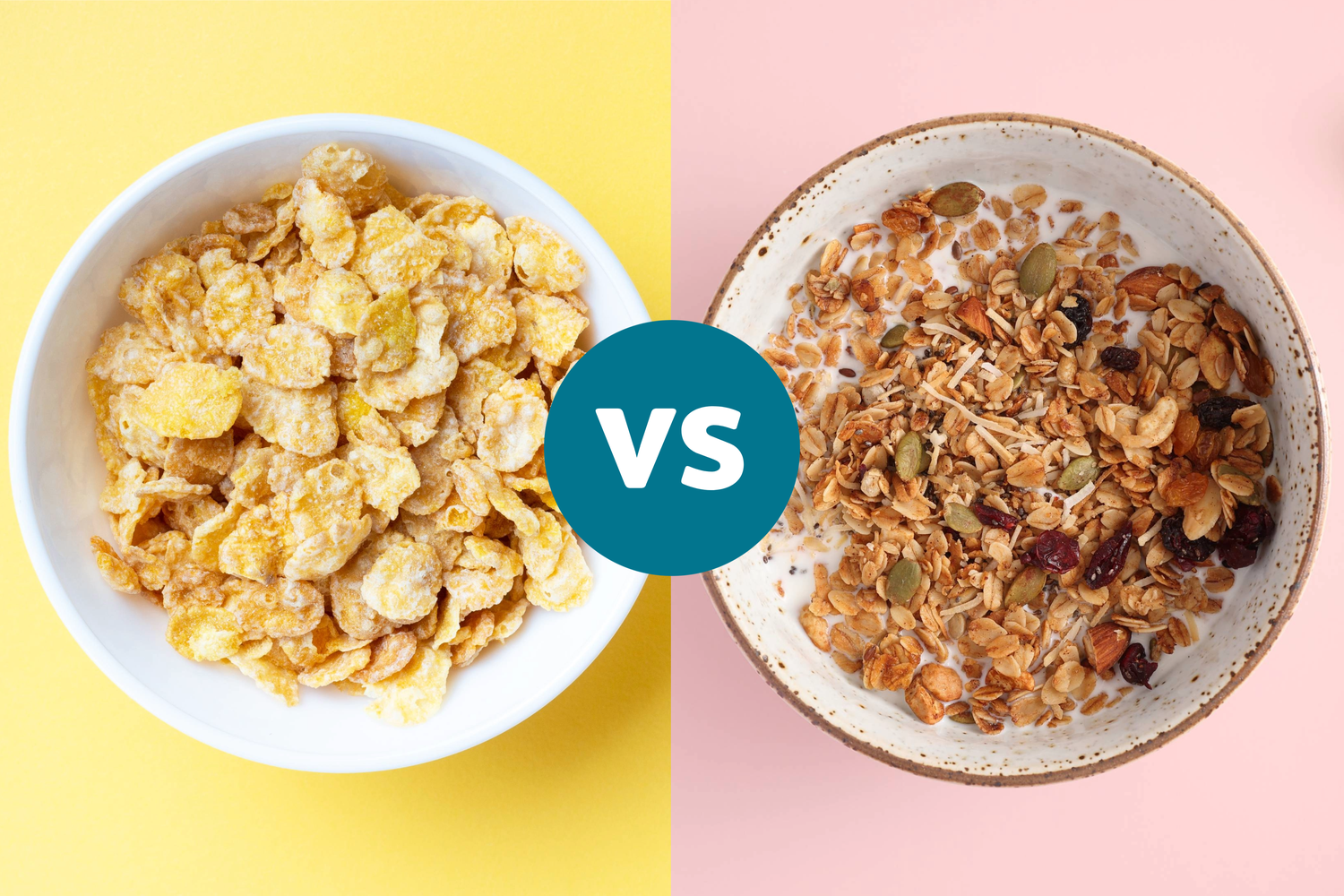
Granola and cereal are both popular breakfast foods. Granola is generally considered healthier overall, as it contains more protein and fiber per serving, despite having more added sugar than many cereals.
Understanding common sources of added sugar, recommended intake, and what to look for can help you decide between granola and cereal.
Cereal Usually Has Less Added Sugar
Cereal typically contains less sugar per serving than granola, though this varies by cereal type and brand. Below is the added sugar per cup of some well-known cereal and granola brands:
- Original Cheerios: 1 gram (g)
- Original shredded wheat: 1 g
- Original puffed rice: Less than 1 g
- Honey Nut O’s: 13 g
- Special K Original: 4.5g
- Bear Naked Honey Almond granola: 11 g
- Kind Healthy Grains Clusters: 21 g
- Quaker Simply Granola: 27 g
As you can see, granola typically contains more sugar per cup than cereal. Note that the standard serving size for many cereals and granolas is often less than one cup.
Why Granola Tends to Be Higher in Added Sugar
Granola sticks together in clumps because of added sweetening agents (like honey, maple syrup, brown sugar, or agave), which enhance flavor and optimize texture as it bakes.
Manufacturers of commercial granolas often use generous amounts of sweetener to achieve this desired effect. The cooking method also influences the total sugar content of granola, with baking, for example, yielding higher levels than microwaving.
Consider Other Nutrients in Cereal and Granola
Although it may generally contain less added sugar, cereal doesn’t necessarily have other nutritional qualities that make it healthier than granola. When choosing between cereal and granola, it can help to consider the entire nutrient profile:
- Fiber is an essential nutrient for satiety, blood sugar balance, and disease prevention, yet many cereals (and diet patterns) fall short of providing it. Look for breakfast options that contain at least 3-5 grams per serving, which is typically easier to find in a granola than a cereal.
- Protein, especially early in the day, is also important and may even help preserve lean muscle mass. Granola that contains nuts and seeds is usually more protein-rich than cereal (unless the cereal has been specifically protein-enriched).
- Complex carbohydrates: With either choice, look for whole grains as the first ingredient to ensure you’re getting complex carbohydrates (higher in fiber) rather than quickly digested refined flour.
- Vitamins and minerals: Check the overall nutrient density; some cereals are fortified with vitamins and minerals (such as vitamin D, B vitamins, and iron), while granola may offer more naturally occurring nutrients from nuts, seeds, and oats.
Putting Added Sugar Intake Into Context
The American Heart Association recommends no more than 25 grams of added sugar per day (6 teaspoons) for women and 36 grams per day (9 teaspoons) for men. Eating a single serving of one of the granola or cereal choices above could account for nearly half (or more) of a woman’s recommended daily intake of added sugar.
Most Americans consume two to three times this amount; the average intake is around 70 grams (17 teaspoons) of added sugar per day.
Choosing Breakfast Options Based on Your Priorities
Below are some practical tips for making the best breakfast choices for your goals.
- To reduce total added sugar intake: Opt for plain or unsweetened cereals, which generally provide 0-2 grams of added sugar per serving, especially when made with whole grains. If you want to make them a little sweeter, try adding fresh fruit (like banana slices or berries) or a drizzle of honey or agave nectar.
- If you want a crunch with satisfaction: Choose a lower-sugar granola (ideally providing 6 grams or less per serving) or make your own with minimal sweetener, then use it as a topping rather than a full bowl. For instance, you can sprinkle 2-3 tablespoons of granola over plain yogurt, chia seed pudding, or a low-sugar cereal for texture without overdoing it.
- For something convenient but still healthy: Granola makes a great to-go snack, but portion it out in advance since it’s easy to overeat straight from the bag. Alternatively, look for individually portioned cereal cups or make your own trail mix with unsweetened cereal or granola, nuts, and a small amount of dried fruit, like raisins.
:max_bytes(150000):strip_icc()/Lpanoffverywellphoto-f71f0b5c487943a382bbbdabc0a2fc1d.jpg)