

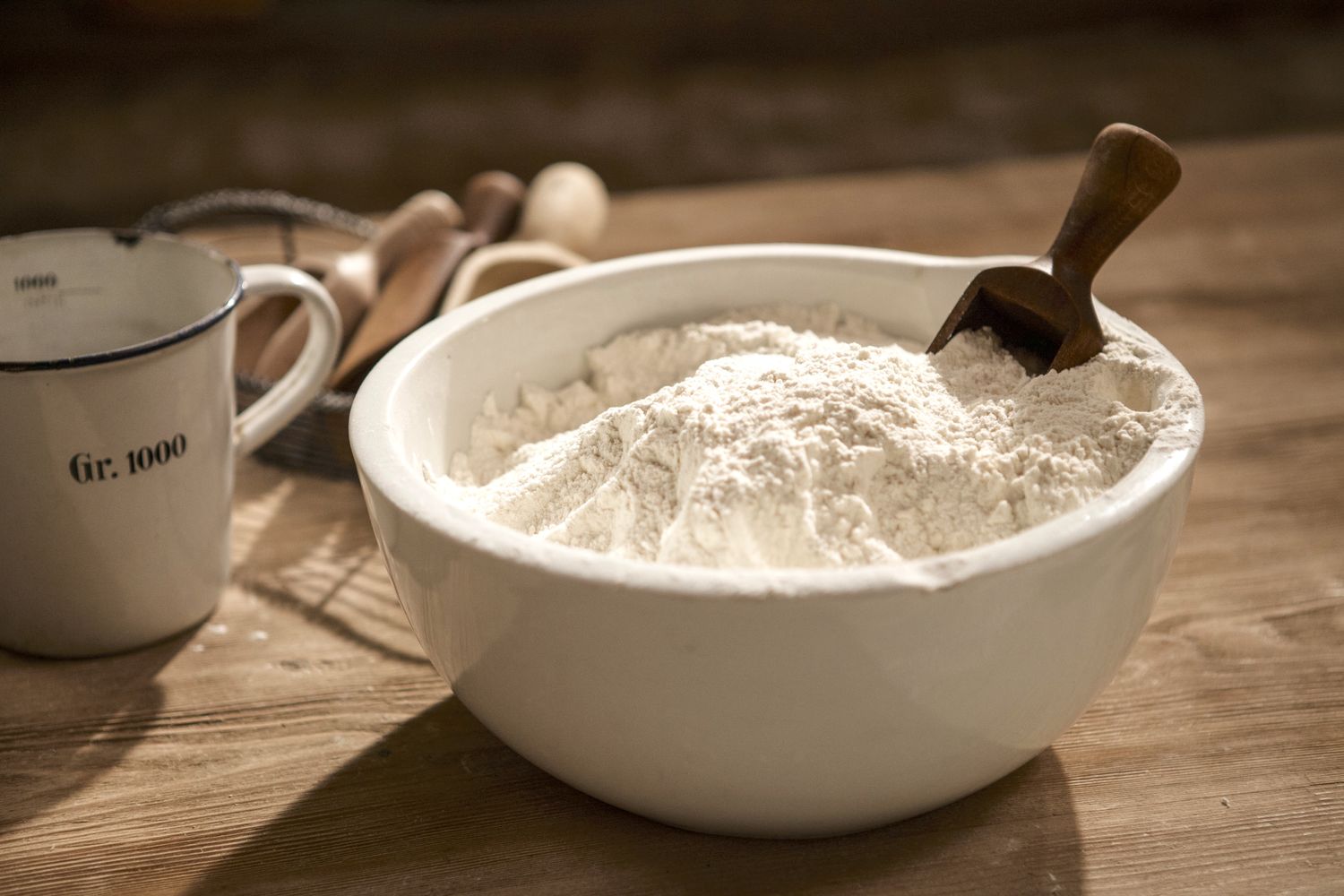
Key Takeaways
- Freshly milled flour offers a fresher and more complete nutrient profile than store-bought varieties, especially when there is minimal time between milling and consumption.
- Store-bought refined flours lose a portion of their natural fiber, vitamins, and minerals through processing and extended storage before use.
- When fresh milled isn’t an option, store-bought whole grain flour offers more natural nutrients than refined flour, although it has a shorter shelf life.
The nutritional value of flour can vary significantly depending on how it’s processed. Freshly milled flour, which is ground from whole grains shortly before use, preserves the grain’s natural components. Store-bought flour can range from whole-grain to refined and enriched varieties that have been processed for improved shelf stability and texture.
The Bottom Line: Fresh Milled Flour Delivers More Fiber and Natural Nutrients
- Freshly milled flour, which is ground from whole grains and typically consumed soon after milling, retains the entire grain kernel’s fiber, vitamins, minerals, and other phytonutrients (natural compounds in plants that act as antioxidants) at levels close to those found in the original grain.
- Store-bought 100% whole grain flour can retain most of the grain’s natural fiber and micronutrients, although long-term storage can cause some degradation of sensitive vitamins and phytonutrients.
- Research on the impact of wheat preparation on nutrient content indicates that levels of major and trace minerals are lowest in store-bought refined white flour when compared to fresh milled and store-bought whole wheat flour.
Fresh Milled Flour vs. Store Bought: How They Compare
- From the perspective of nutrients and fiber, fresh milled flour provides larger quantities of key nutrients, including three times as much protein, compared to store-bought flour.
- Freshly milled flour also provides more than four times the fiber and almost double the iron levels of store-bought flour.
| Nutrient and Fiber Comparison: Fresh Milled Flour vs. Store Bought Flour Per 1/4 Cup (50 g) | ||
|---|---|---|
| Nutrient | Fresh Milled Flour | Store Bought (All Purpose) Flour |
| Calories | 180 | 110 |
| Protein | 9 g (18% DV) | 3 g (6% DV) |
| Fiber | 4 g (14% DV) | 0.99 g (3% DV) |
| Iron | 2.3 mg (15% DV) | 1.5 mg (8% DV) |
| Riboflavin | 0.2 mg (15% DV) | 0.1 mg (10% DV) |
How Fresh Milled Flour Differs From Store Bought
- Fresh milled flour is ground from whole grain kernels in a process that retains all three components and their nutrients: the bran (contains fiber, B vitamins, minerals, and phytochemicals), the germ (contains vitamin E, B vitamins, healthy fats, and antioxidants), and the endosperm (contains carbohydrates and protein).
- Store-bought flour is often refined, meaning it has undergone a process in which the bran and germ, along with the dietary fiber, iron, and B vitamins they contain, are removed to produce a lighter, finer flour with a longer shelf life.
- According to a study on the effects of processing and baking on the nutrient content of flour, the levels of major minerals in whole wheat flours remained essentially the same from kernel to flour to bread. In contrast, the levels of several trace minerals increased after processing.
- In the same comparison of flours, key minerals decreased by up to 72% and trace minerals decreased by up to 64% in refined flour and bread.
- The removal of fiber and other components during refining increases the relative proportion of remaining components such as soluble starch and free sugars in refined flour, resulting in a product with a higher glycemic index.
Getting the Most Nutrients From Your Flour
- Use the freshest whole grain flour possible for optimal nutritional benefits and flavor.
- When stored in a cool, dry, and dark place, whole grain flour will remain fresh for 1 to 3 months at room temperature and 2 to 6 months in the freezer.
- Whether fresh milled flour is purchased locally or milled at home from intact whole grains, using it as close to milling as possible reduces the amount of time the flour is exposed to oxygen, thereby keeping nutrients intact.
- When purchasing store-bought refined flour, look for flour labeled as “enriched,” a requirement by the U.S. FDA that mandates restoring the iron and some B vitamins (thiamin, niacin, riboflavin, and folic acid) removed during processing. However, the lost fiber is not replaced.
:max_bytes(150000):strip_icc()/IMG_09172-9ca0040fa5e74df0b5aac42d8125d477.jpeg)