

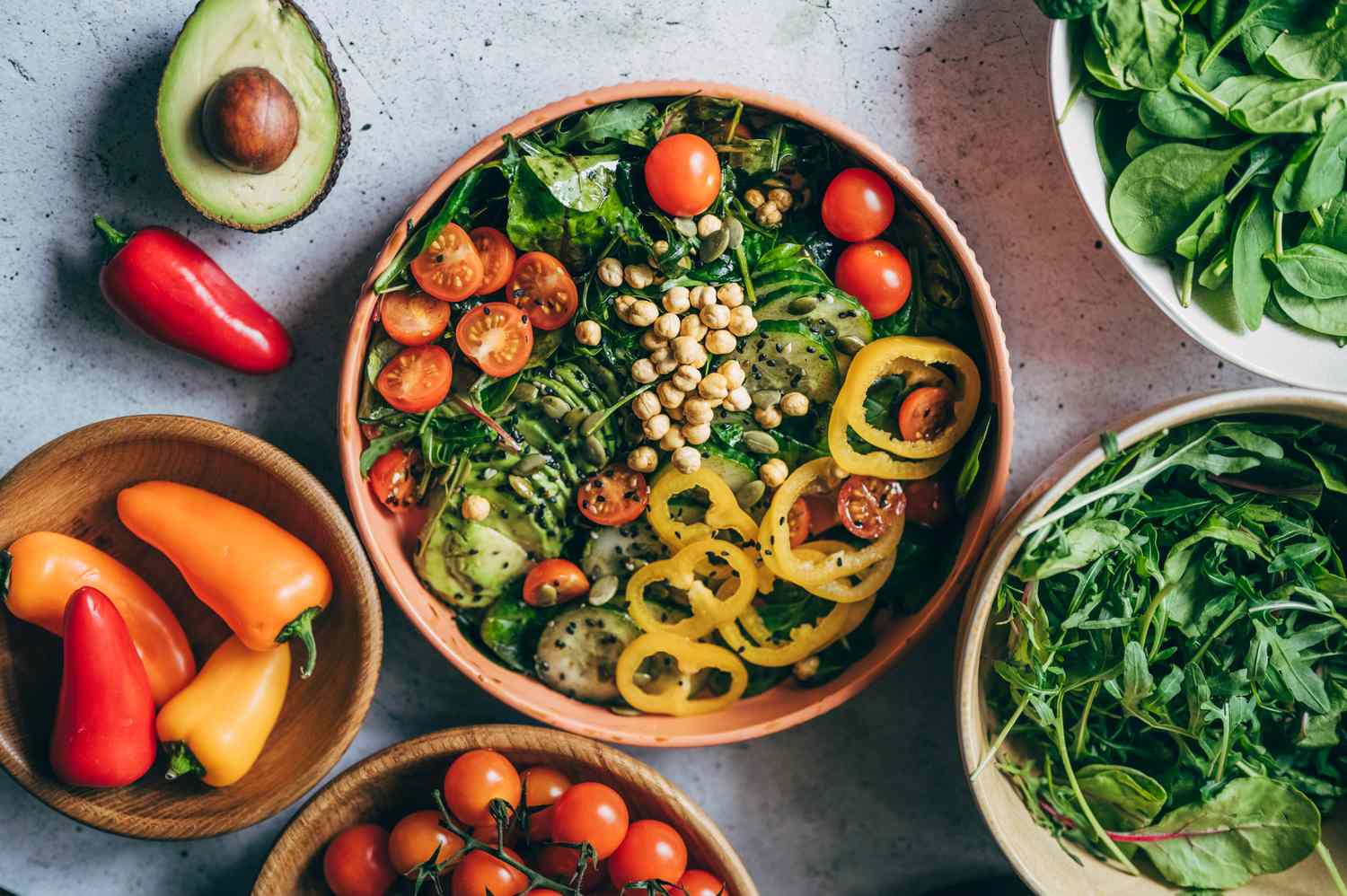
The ingredients you add to your salad can efficiently incorporate essential vitamins, nutrients, and fiber into your diet. Some of the most nutritious salad ingredients that can help boost your health include hard-boiled eggs, fresh fruit, dark leafy greens, and more.
1. Deep Green Lettuce
Ivan Pantic / Getty Images
Dietitians recommend a variety of flavorful dark-colored green and red lettuce varieties to serve as a nutritious foundational ingredient for your salad. That’s because types of lettuce like iceberg contain some fiber, but not nearly as much as other options. Some examples that also offer iron, calcium, vitamins A and C, and antioxidants include:
- Kale
- Spinach
- Arugula
- Red cabbage
- Romaine
2. Beans
Krit of Studio OMG / Getty Images
Beans are a plant-based source of protein and fiber for your salad. Consider cooking a mix of beans and topping your salad with them, whether canned, frozen, or dried. Some types of beans to try in a salad include:
3. Lean Protein
Ilia Nesolenyi / Getty Images
Including a lean protein source can help turn your salad into a more filling meal. Good salad toppers can include a portion of grilled chicken, canned salmon, or tofu for a vegetarian option.
In addition to getting essential nutrients, vitamins, and minerals, you can cook and season the lean protein to your taste preference.
4. Grains
MSPhotographic / Getty Images
Instead of an ingredient like croutons, add hearty grains to your salad for a filling component. Certain grains contain extra fiber and B vitamins and pair well with a mixture of salad greens. Some grains to try:
5. Raw or Cooked Veggies
fortyforks / Getty Images
Vegetables may seem like a no-brainer addition to your salad, but the ability to include them raw or cooked makes them a more versatile, nutritious ingredient.
Look for colorful veggies such as:
- Beets
- Peppers
- Broccoli
- Carrots
- Aparagus
These veggies offer a variety of vitamins, minerals, and disease-preventing antioxidants.
6. Nuts and Seeds
4nadia / Getty Images
Nuts and seeds add a dose of healthy fats to your salad, providing a savory crunch that can help keep you fuller for longer. The healthy fats in nuts and seeds can help your body properly absorb fat-soluble vitamins, including vitamins A, D, and E.
Some options to try include:
- Pecans
- Walnuts
- Almonds
- Pine nuts
- Pumpkin seeds
- Sunflower seeds
7. Avocado
Smitt / Getty Images
Heart-healthy monounsaturated fats are found in abundance in avocados. In addition, this ingredient offers fiber and other vitamins and minerals, like potassium and vitamin E.
Experts recommend adding avocados last, and topping them with a squeeze of lime to prevent browning.
8. Fresh Fruit
juefraphoto / Getty Images
Fresh fruit can help mix up the flavor combination of your salad while providing dietary fiber and other key nutrients. Depending on your taste preference, good options to try in a salad include:
- Berries
- Oranges
- Pears
- Apples
- Strawberries
- Blueberries
Canned or dried fruits, such as cranberries, apricots, or cherries, are another way to add a burst of sweetness and fiber to your salad. However, these varieties contain added sugar, so use them in moderation.
9. Hard-Boiled Eggs
robert6666 / Getty Images
Eggs aren’t only a traditional breakfast food; they can also be a nutritious salad ingredient. Chopping or slicing a hard-boiled egg is a great way to add protein, vitamin D, and other nutrients to your salad. Eggs are also hearty enough to replace lean animal protein, if desired.
10. Low-Fat Cheese
112233 / Getty Images
Cheese often gets a bad wrap for its calorie and sodium content. However, selecting a low-fat, low-sodium variety like Swiss, Parmesan, or mozzarella is a nutritious and flavorful addition to your salad.
Sprinkling shredded cheese on top of your salad can also add much-needed vitamin D and calcium to your diet.
11. Fresh or Dried Herbs
Eva-Katalin / Getty Images
Whether dried or fresh, topping your salad with herbs is a simple way to incorporate flavor, without added calories or fat. Research also suggests that certain herbs contain antioxidants that promote anti-inflammatory and disease prevention properties. Consider garnishing your salad with a combination of:
12. Olive Oil-Based Dressing
BURCU ATALAY TANKUT / Getty Images
Because store-bought versions can be high in sodium, sugar, and fat, experts recommend making your own healthy salad dressing with olive oil, vinegar, and herbs or spices.
Studies show that olive oil’s healthy fats help your salad absorb other nutrients. Add a splash of citrus, onions, or garlic to the dressing.
Other Tips for Nutritious Salads
In addition to incorporating nutritious ingredients, here are some other expert-backed tips for creating a healthier salad:
- Remain mindful of portion sizes and extra ingredients so as not to overdo it on calories.
- Experiment with different ingredients to get various nutrients.
- Check any canned or frozen produce to ensure they are low-sodium and without added sugar.
- Keep your greens crisp by draining, rinsing, and patting them dry before using.
- Adjust your salad ingredients throughout the year, switching out for seasonal produce.
:max_bytes(150000):strip_icc()/IMG_5047-9727550a95404c49a7515e66930004ef.JPG)