

Key Takeaways
- Psyllium can help lower LDL (“bad”) cholesterol, improve bowel regularity, and support blood sugar control when taken consistently.
- Taking psyllium shortly before or with meals can better reduce post-meal blood sugar spikes, while cholesterol benefits appear consistent regardless of timing.
- Aim for 10–15 grams per day in divided doses and drink plenty of water.
It’s generally recommended to take psyllium husk just before or with meals in divided doses. While this can reduce blood sugar spikes, it does not affect psyllium’s cholesterol-lowering benefits.
When Is the Best Time to Take Psyllium Husk?
Psyllium husk is typically taken in divided doses, either just before or with meals.
Studies have not found any specific timing (e.g., morning or evening) to be more beneficial for its cholesterol-lowering effects. More research is required to fully establish the results.
However, evidence does indicate taking psyllium husk shortly before or with a meal has the greater effect on reducing blood sugar spikes.
What Is Psyllium Husk?
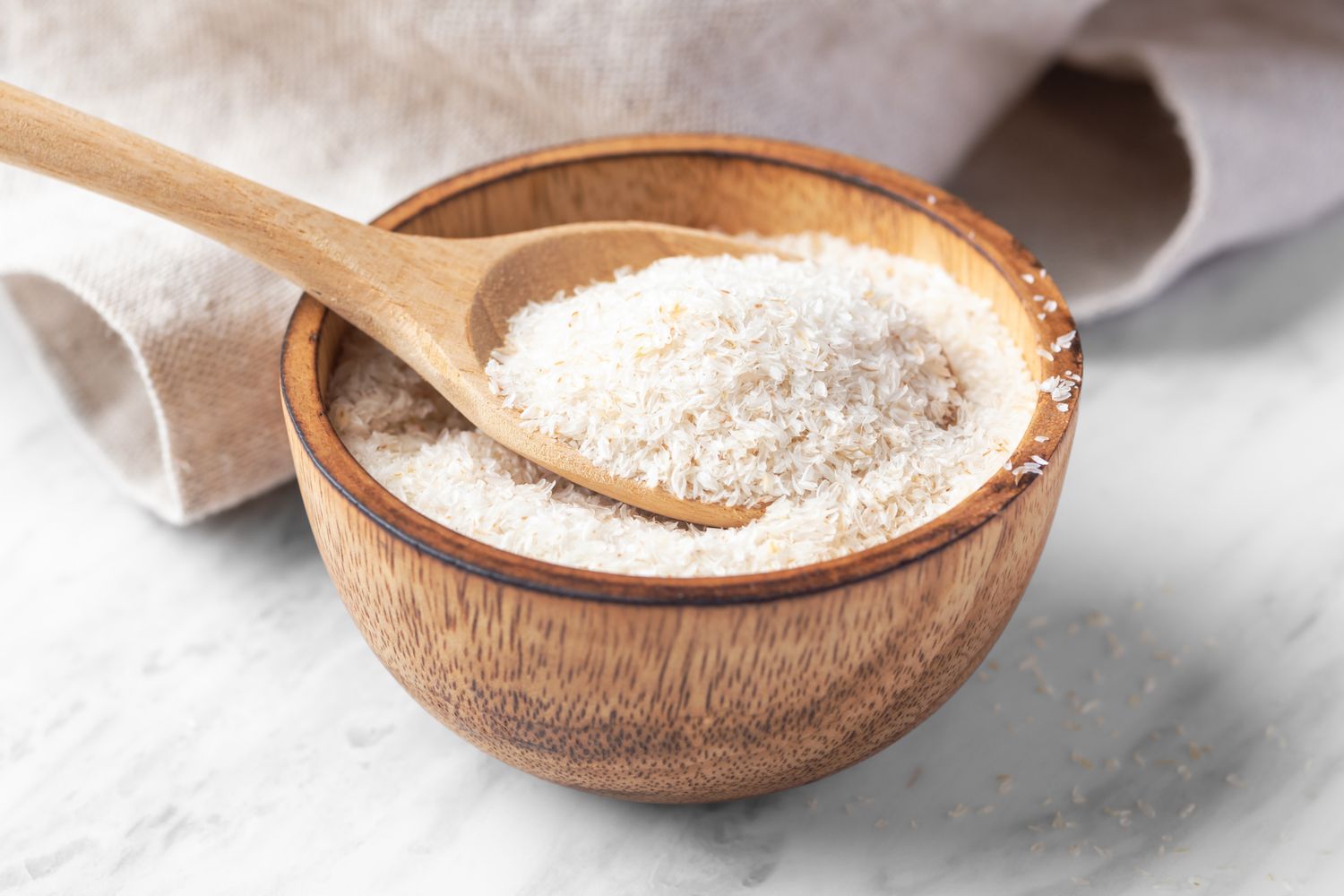
Psyllium is a natural, soluble dietary fiber derived from the seeds of Plantago ovata or Psyllium plantago. It is a traditional herb and non-fermented fiber widely available and used as a health supplement and food ingredient.
Psyllium is used as a natural supplement to improve symptoms of various conditions. It helps relieve constipation symptoms and has prebiotic effects. It is also helpful for people with metabolic syndrome and type 2 diabetes, improving glycemic (sugar) control, lowering serum cholesterol, and facilitating weight loss.
How Does Psyllium Husk Reduce Cholesterol?
Studies have shown that psyllium may reduce low-density lipoprotein (LDL) cholesterol, potentially complementing cardiovascular disease (CVD) treatment. Psyllium helps lower cholesterol through the following process:
- Psyllium stimulates the excretion of bile acids (compounds produced by the liver, primarily from cholesterol, to help digest dietary fats) and reduces absorption of intestinal cholesterol.
- It binds bile acids in the small intestine to prevent their reabsorption and promote their excretion in the stool. Generally, bile acids are reabsorbed and recycled in the liver to produce glucose.
- To replenish the low bile acid levels, the liver uses cholesterol from the bloodstream, particularly LDL cholesterol (LDL-C). This action effectively lowers the total and LDL cholesterol levels circulating in your blood.
How Does Psyllium Husk Lower Blood Sugar?
As a soluble, gel-forming fiber, psyllium affects blood sugar by:
- Slowing the absorption of glucose from food
- Delaying gastric emptying, or the rate at which food leaves the stomach
- Improving insulin sensitivity, or how effectively the body’s cells respond to insulin to absorb glucose for energy
What Is the Recommended Dose?
Dosing recommendations for psyllium husk vary:
- Common dosage: The most commonly indicated dose of psyllium husk is 10–15 grams (g)/day, taken in divided doses (three times daily at about 3.4–5 g) before main meals.
- Dosage for cholesterol: Some studies showed that taking 6 to 15 grams (g/d) of psyllium fiber helped lower cholesterol levels. In one meta-analysis, an average intake of 10 g/day of psyllium results in a 7% average reduction in LDL-C.
- Dosage for blood sugar: When it comes to blood sugar control, many studies used 5 to 15 g per day of psyllium, which showed improvements.
It is essential to drink plenty of water while taking psyllium. It works by absorbing water in the digestive tract, which can lead to dehydration or constipation.
:max_bytes(150000):strip_icc()/20210814_171303-4947aeb853b7494ba9f67537baae0cc2.jpg)