

Key Takeaways
- The best shoes for bunions have a wide toe box and support your heel, arch, and sole.
- Bunion pads can cushion the affected joint and reduce pain
- Stretching exercises like toe circles and spreading your toes may help reduce bunion pain.
The only way to “shrink” bunions is with surgery to reduce the bony growth that’s causing your pain and realign the affected toe and its nerves and ligaments. Home remedies may not be effective for people with chronic bunion pain that interferes with quality of life, and they can’t make bunions smaller or go away entirely.
Many people, though, can relieve bunion pain with over-the-counter medications, exercises, ice packs, and more. Talk with your healthcare provider about bunion treatments like custom shoe orthotics, as well as steps you can take to prevent bunions from getting worse.
SKashkin / Getty Images
1. Footwear That Fits
A bunion, or hallux valgus, is a bump on the metatarsophalangeal (MTP) joint at the base of the big toe. The ideal shoes for bunions have a wide toe box and offer support for your heel, arch, and sole. Make sure your shoes have enough room for your toes, ensuring the big toe joint doesn’t rub against the shoe’s inside.
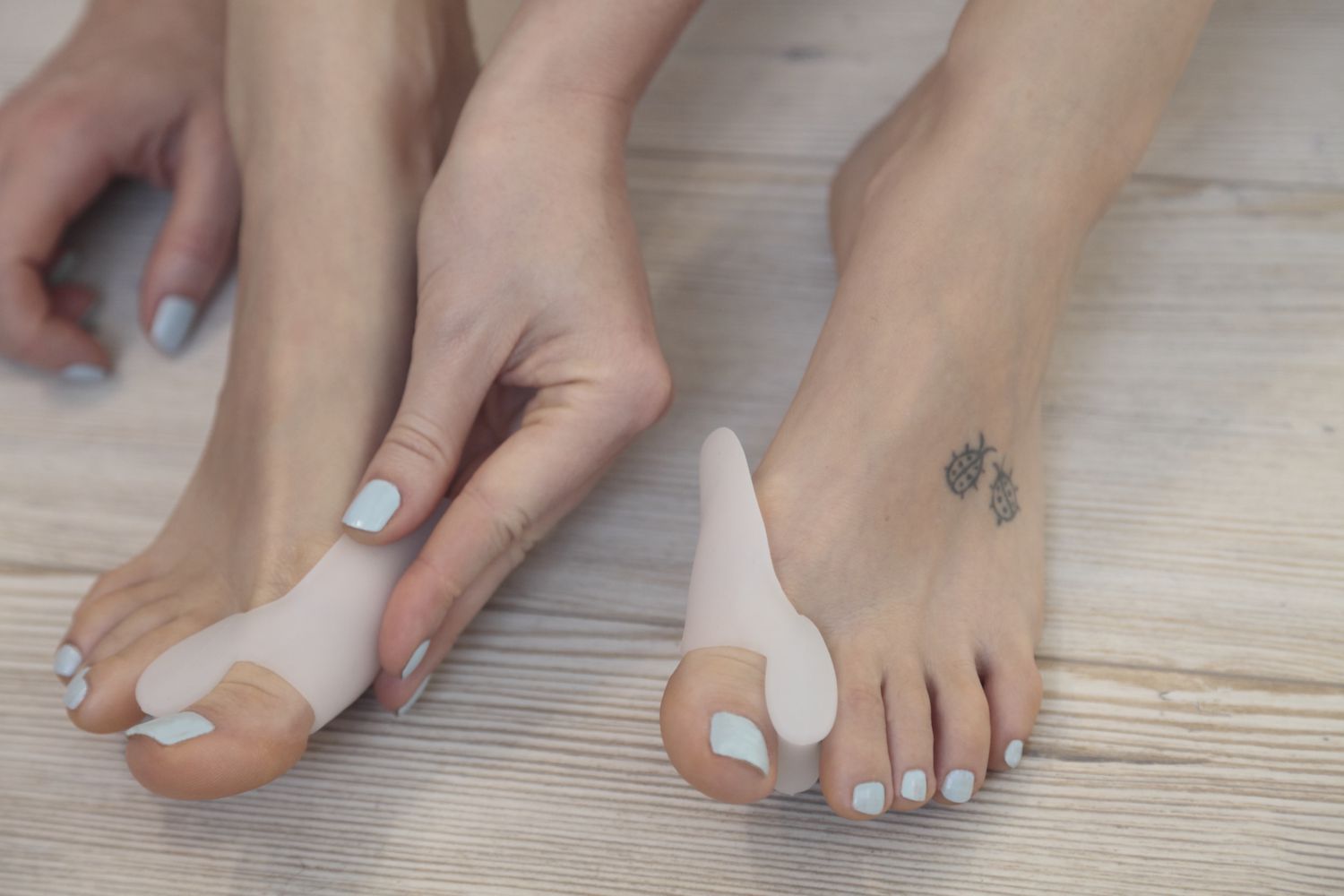
2. Bunion Pads
Sometimes, finding the right shoe fit for bunion pain can be challenging or time-consuming. Meanwhile, you can use bunion pads to reduce pressure on your big toe joint. Bunion pads, made from materials like moleskin or gel, should provide enough room for your toes in shoes. Available at drugstores and shoe stores, these pads offer cushioning to alleviate pressure and pain on the affected joint.
Sometimes finding the right shoe fit for bunion pain is more difficult or takes a little more time than expected. In the interim, you can reduce the pressure on your big toe joint by using bunion pads.
3. Bunion Stretches
Certain exercises and stretches can help relieve bunion pain. These include big toe circles, toe spreading, and heel raises. Performing these stretches daily can reduce bunion pressure and increase foot muscle strength and mobility.
4. Pain Relievers
Using nonsteroidal anti-inflammatory drugs (NSAIDs), such as Advil or Motrin (ibuprofen) and Aleve (naproxen), can help relieve pain and swelling. You can also consult with your healthcare provider about prescription-strength options to reduce pain.
5. Toe Splints and Braces
In some cases, orthotics and similar devices can correct bunions naturally. Orthotics are shoe inserts that help take pressure off the affected joint and prevent minor bunions from worsening, but they may not help larger ones.
Devices like toe splints and braces you wear overnight are aimed at reducing morning stiffness in the affected joint. While they may be able to provide temporary relief, they may not work as long-term treatment.
While bunion support devices may help bunions from getting worse, they have not been shown to actually shrink, flatten, or correct bunions. Talk to your podiatrist (foot doctor) or other healthcare provider treating you for bunions about all your options. The American Academy of Orthopaedic Surgeons cautions that inadequate “quick fixes” can do more harm than good.
6. Heat and Cold
Applying heat or cold may relieve symptoms, though it won’t shrink or flatten the bunion. Cold therapy with an ice pack can reduce inflammation and pain, especially if you elevate your foot. Warm soaks, like a whirlpool, can also ease soreness.
7. Foot Massage
A gentle foot massage may help with bunion pain symptoms. This is something you may be able to do for yourself to improve circulation and reduce your discomfort. You also may wish to consider a professional massage as part of a pedicure.
Studies suggest that foot massage may have other benefits, including stress relief and helping manage other conditions.
8. Ointments and Creams
Topical creams, applied to the skin, can help to relieve bunion pain. BioFreeze is a product that contains menthol to provide a cooling sensation on the skin, while lidocaine patches can numb the discomfort for up to 12 hours when applied to the bunion.
Surgery to Shrink Bunions
When natural methods don’t work or a bunion is very large, surgery becomes necessary. Bunion surgery realigns the joint by repositioning the toe bone and surrounding tendons, ligaments, and nerves. This shrinks bunions and alleviates the pain.
The following signs indicate someone may be a good candidate for surgery, although the decision is made on a case-by-case basis:
- Prescription NSAIDs are not working to relieve pain or inflammation related to bunions.
- Your foot pain limits daily activities.
- You have severe pain.
- You’re experiencing foot deformity.
Bunion surgery has a high success rate. Some risk factors influence surgery success, including bunion severity, a person’s total body mass index (BMI), and whether or not they previously had bunion surgery.
The American Academy of Orthopaedic Surgeons says that after bunion surgery, most people experience less foot pain and are better able to participate in everyday activities, but it’s important to be realistic about outcomes. Surgery recovery takes up to six months, with follow-up visits sometimes necessary for up to a year.
What Causes Bunions?
Joint instability due to abnormal motion and pressure over the toe causes bunions. In some cases, genetics may increase the risk of bunions. In others, they occur due to several factors that can lead to deformity. Among them are:
- High-intensity workouts or occupations that place stress on the feet
- Certain shoes, including high heels, too-tight shoes, or those with narrow toe boxes
- Foot injuries
- The shape of your foot (flat feet and low arches) and the way you walk
Congenital deformities present at birth also can lead to bunions, as well as arthritis, inflammatory conditions, and neuromuscular conditions.
:max_bytes(150000):strip_icc()/ProfilePicPugle-bc0d33cfdbbc46e08595e6ff62d19ffd.jpg)